
Business
Black Friday Spending Set to Surge Despite Economic Concerns

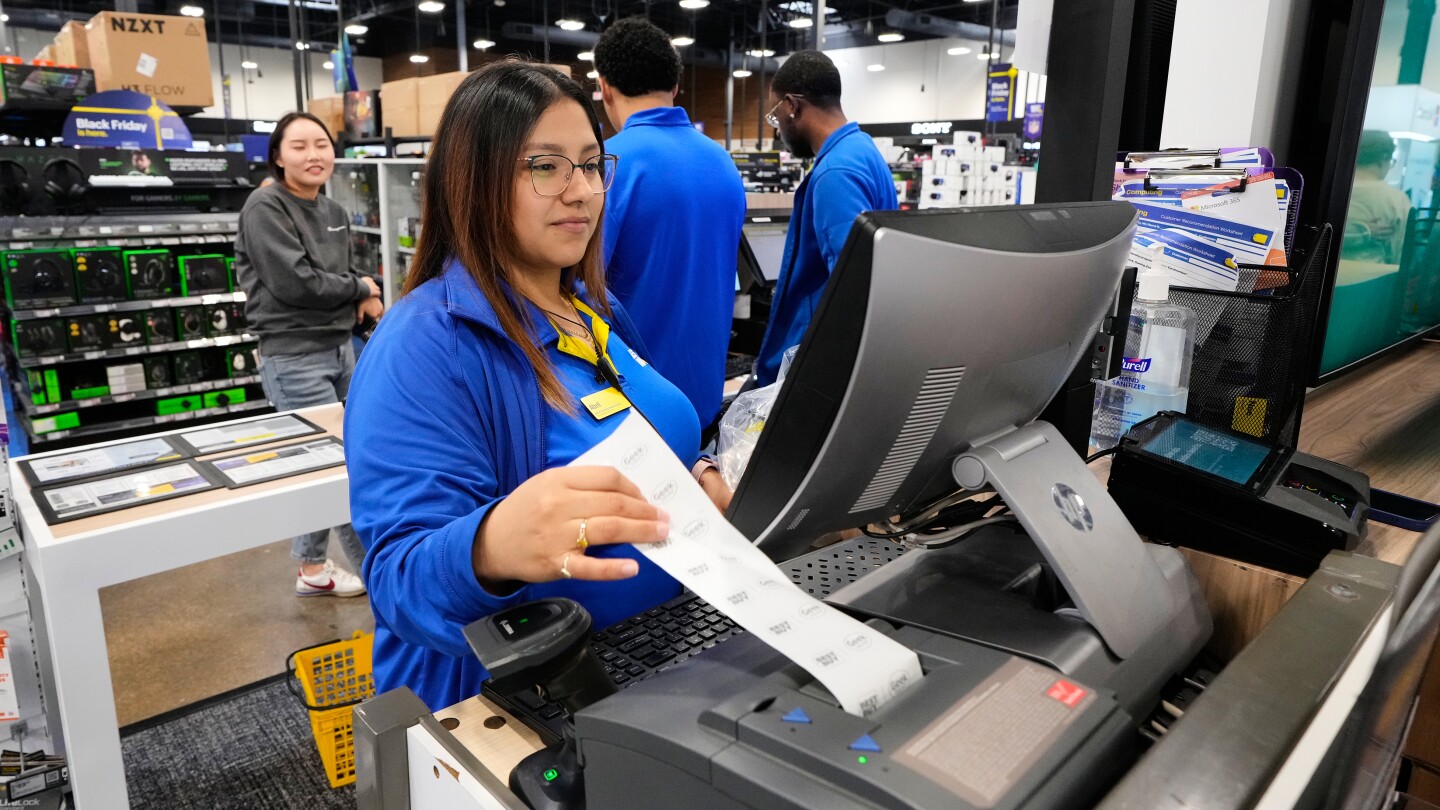
As Black Friday approaches, retailers anticipate a significant increase in consumer spending, despite a backdrop of economic uncertainty. This year’s shopping event, which kicks off the holiday season, is expected to draw enthusiastic shoppers, reinforcing its status as the largest shopping day in the United States.
Though the fervor of previous years, characterized by aggressive bargain hunting and chaotic scenes, may have diminished, consumer interest remains robust. Many retailers are navigating challenges posed by fluctuating tariffs and inflationary pressures, while also managing to offer attractive deals that entice shoppers.
Retailers Prepare for Busy Holiday Season
According to a report from The Conference Board, consumer confidence in the U.S. economy has dropped to its lowest level since April 2023, coinciding with the introduction of tariffs by former President Donald Trump. This decline follows a series of economic challenges, including a government shutdown and sluggish hiring rates. Despite these concerns, recent quarterly sales data from major retailers such as Walmart and Best Buy suggest that consumers are still willing to spend.
Aron Boxer, 50, a resident of Greenwich, Connecticut, has decided to postpone purchasing a new car due to tariff-related worries. He plans to look for toy deals on Cyber Monday, emphasizing a selective approach to shopping. “The tariffs definitely are not behind me, and I am concerned about it,” said Boxer, who runs an educational services company. “I’m willing to wait for the best discount.”
Retail executives remain optimistic, noting positive momentum leading into Black Friday. Jill Renslow, chief business development and marketing officer at the Mall of America in Bloomington, Minnesota, reported strong mall traffic, surpassing pre-pandemic levels. Renslow stated, “We’re seeing a very positive start to the holiday season,” highlighting plans for giveaways, including gift cards for the first 250 customers on Black Friday.
Forecasts Indicate Strong Holiday Sales
The National Retail Federation, the largest retail trade group in the U.S., forecasts that shoppers will spend between $1.01 trillion and $1.02 trillion during the holiday season this year. This represents an increase of 3.7% to 4.2% compared to last year’s figures. In 2022, retailers recorded $976 billion in holiday sales, reflecting a 4.3% increase from 2021.
Mastercard SpendingPulse predicts a 3.6% increase in holiday sales from November 1 through December 24, slightly lower than the 4.1% growth experienced last year. Michelle Meyer, chief economist at Mastercard, acknowledged the prevailing uncertainty but noted that consumer behavior has not significantly shifted. “Clearly, there’s uncertainty. Consumers feel on edge. But at the moment, it doesn’t seem like it’s changing how they are showing up for this season,” Meyer stated.
Online sales have also shown promising trends, with consumers spending $79.7 billion from November 1 to the Sunday before Black Friday, marking a 7.5% increase compared to the previous year.
The impact of tariffs is evident in retailers’ pricing strategies. Many have accelerated shipments of holiday merchandise ahead of tariff deadlines while absorbing some increased import costs. Nevertheless, some expenses have been passed on to consumers, especially for products sourced from China. Market research from Circana revealed that 40% of general merchandise sold in September experienced price increases of at least 5% compared to earlier in the year.
Toys and baby products have been particularly affected, with 83% of toys sold in September seeing price hikes of at least 5%. This figure was up from 32% in June and is expected to rise further as the season progresses.
As retailers gear up for Black Friday, some have adjusted their discount strategies. Renslow from the Mall of America noted that holiday discounts appeared later than anticipated, but many stores are now offering reductions between 30% and 50%. Stephen Lebovitz, CEO of CBL Properties, which manages 85 shopping properties, mentioned that while holiday discounts have not been as aggressive, leaner inventory levels could enable retailers to maintain pricing power.
With the stage set for Black Friday, retailers are hopeful that consumer enthusiasm will translate into strong sales despite the economic challenges that loom.

Criminal Probe Raises Urgent Question: Will Powell Leave Fed May 15?

Giants Sign Top Prospect Luis Hernandez to $5M Deal Today

Three Robbers Steal $100,000 in Merchandise from NYC Pokémon Store

Boys Swimming Regular Season Heats Up: Champions Crowned Now

Nancy Cartwright Celebrates Special Bond With Niece Sabrina Carpenter

Insights from J.P. Morgan Healthcare Conference 2026

Save 50% on Ninja Foodi NeverStick Cookware: A Kitchen Revolution

Congress Approves Initial Funding Bills Following Shutdown

Researchers Unveil Breakthrough in Perovskite Display Technology

University of Hawaiʻi Joins $25.6M AI Initiative to Monitor Disasters

Interstellar Object 3I/ATLAS Emits Unprecedented Metal Alloy

Toledo City League Announces Hall of Fame Inductees for 2024

DOJ Seizes $15 Billion in Bitcoin from Major Crypto Fraud Network

Western Executives Confront Harsh Realities of China’s Manufacturing Edge

Sharp Launches Five New Aquos QLED 4K Ultra HD Smart TVs

Mutual Advisors LLC Increases Stake in SPDR Portfolio ETF

Community Unites for 7th Annual Walk to Raise Mental Health Awareness

Celtics Coach Joe Mazzulla Dominates Local Media in Scrimmage
-
Science2 months ago
University of Hawaiʻi Joins $25.6M AI Initiative to Monitor Disasters
-
 Science3 months ago
Interstellar Object 3I/ATLAS Emits Unprecedented Metal Alloy
-
 Lifestyle3 months ago
Toledo City League Announces Hall of Fame Inductees for 2024
-
 Business3 months ago
DOJ Seizes $15 Billion in Bitcoin from Major Crypto Fraud Network
-
 Science3 months ago
Western Executives Confront Harsh Realities of China’s Manufacturing Edge
-
 Top Stories3 months ago
Sharp Launches Five New Aquos QLED 4K Ultra HD Smart TVs
-
 Politics3 months ago
Mutual Advisors LLC Increases Stake in SPDR Portfolio ETF
-
 Health3 months ago
Community Unites for 7th Annual Walk to Raise Mental Health Awareness
-
 Sports3 months ago
Celtics Coach Joe Mazzulla Dominates Local Media in Scrimmage
-

 Politics3 months ago
Major Networks Reject Pentagon’s New Reporting Guidelines
-

 World3 months ago
INK Entertainment Launches Exclusive Sofia Pop-Up at Virgin Hotels
-

 Top Stories3 months ago
Microsoft Releases Urgent Windows 11 25H2 Update for All Users