
Science
Submerged Cave in Yucatán Reveals Secrets of the Ice Age

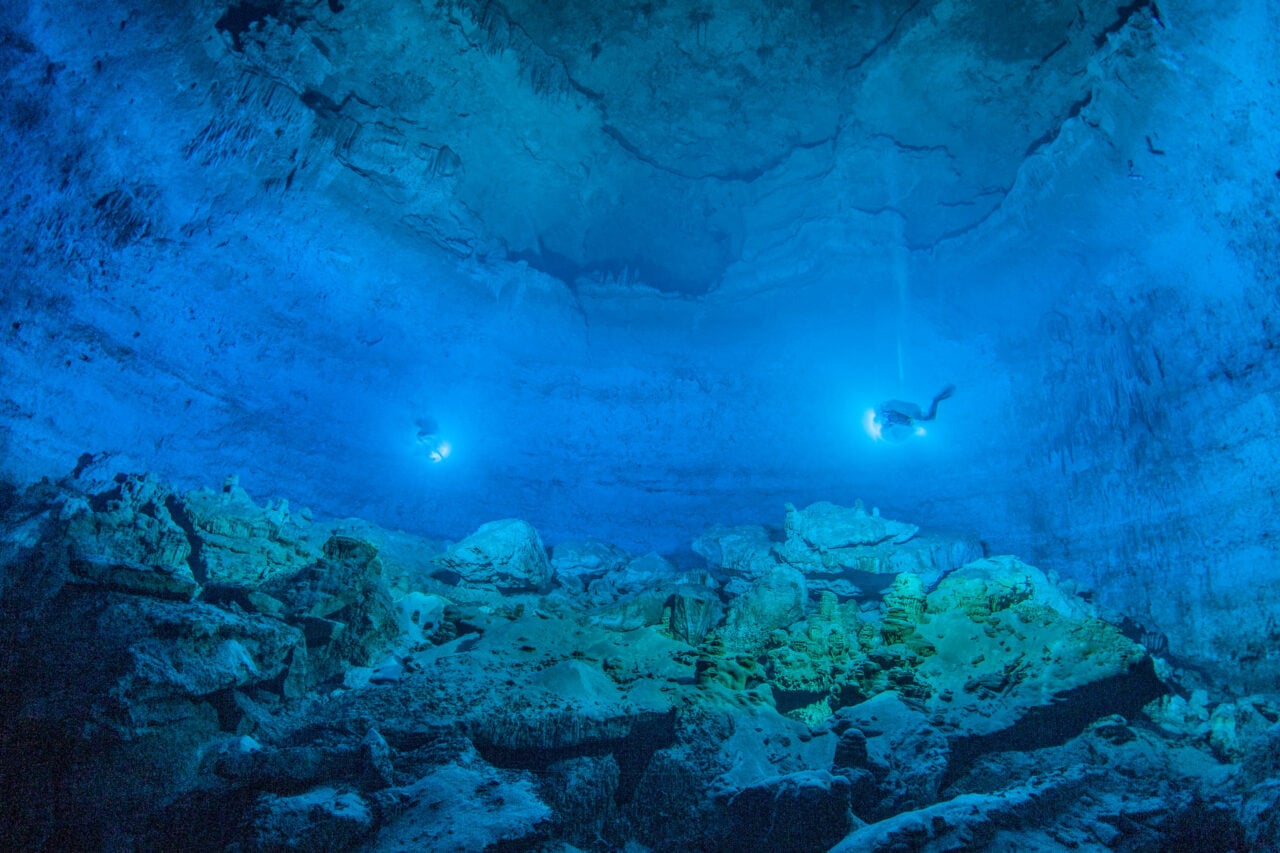
Deep beneath the lush canopies of the Yucatán Peninsula, an extensive submerged cave system known as Hoyo Negro offers a remarkable glimpse into the past. This cavern, part of the Sac Actun system, has revealed fossils and remains from the Pleistocene Epoch, a time when both animals and humans traversed its now-flooded tunnels. Among its treasures is the well-preserved skeleton of Naia, one of the oldest known human remains in the Americas, dating back approximately 12,970 to 12,770 years.
The discovery of Hoyo Negro was made by divers Alejandro Alvarez, Franco Attolini, and Alberto Nava Blank in 2007. Their efforts led to the establishment of the Hoyo Negro Underwater Archaeological Project by Mexico’s Instituto Nacional de Antropología e Historia (INAH) in 2010. This interdisciplinary team of paleontologists, archaeologists, and divers from Mexico, Canada, and the United States has uncovered significant evidence of ancient life and human activity in the cave system.
Exploring the Unknown
Diving into Hoyo Negro presents unique challenges. Roberto Chávez Arce, a co-director of the project, has been exploring these underwater tunnels since 2011. He notes the dangers involved, as many of the passageways were initially unmapped and completely dark. Divers must carry essential safety equipment, including breathing gear, navigation lines, and lights, alongside cameras and video recording devices to document their findings.
Initially, access to Hoyo Negro required divers to enter from a cenote located about 3,000 feet (914 meters) away, taking nearly an hour to swim to the pit. However, advancements in exploration have improved access. A newly discovered cenote now lies only 250 to 300 feet (76 to 91 meters) from Hoyo Negro, and divers can use motorized scooters to navigate the waters more efficiently.
Mapping the cave system has evolved from basic tools like compasses and tape measures to sophisticated structure-from-motion (SfM) photogrammetry, which creates detailed three-dimensional models of the cave. This gradual transition has opened new avenues for research, allowing scientists to analyze the underwater environment without needing to dive extensively themselves.
Insights from the Past
Research conducted by the team indicates that water levels within Hoyo Negro fluctuated dramatically over thousands of years. Sediment samples reveal that the cave was dry and accessible well over 9,850 years ago. As sea levels rose, flooding ensued, transforming the once-explorable tunnels into submerged passageways.
The cave’s ecosystems during the Pleistocene were vastly different from today’s tropical environment. The area was likely a savanna, drawing humans and animals alike to the freshwater resources available within the caves. Evidence of fossils found within Hoyo Negro includes a variety of extinct megafauna, such as the short-faced bear known as Arctotherium wingei, and the newly identified sloth species, Nohochichak xibalbahkah.
The remains of Naia, discovered by the same trio of divers, add a poignant layer to the narrative of human life in the region. Estimated to have been between 15 to 17 years old at the time of her death, Naia’s skeleton reveals insights into her life, including signs of a broken pelvis likely resulting from a fall into the pit. Dr. James Chatters, a co-director of the project, highlights the significance of her findings, noting that the injuries and dental wear suggest she experienced nutritional deficiencies, which challenges previous assumptions about the diets of early humans in the region.
The ongoing research in Hoyo Negro continues to unravel the complexities of ancient life and human interaction with the environment. The team has also identified evidence of ochre mining, indicating that prehistoric peoples valued this mineral for various cultural uses. In addition to human remains, the cave is rich with animal fossils, offering insights into the biogeographic implications of species migrations during the Pleistocene.
As exploration and research continue, the Hoyo Negro site remains a vital location for understanding not only the lives of its ancient inhabitants but also the broader ecological transitions that occurred in North America during and after the Ice Age. The findings from this remarkable cave system promise to reshape our understanding of the past and reveal the intricate connections between humans and their environments.

Designers Unveil 5 Urgent Tricks to Transform Outdoor Eyesores

Shark Teeth Research Reveals Urgent Need to Protect Species

Church Members Unite in Resilience After Thanksgiving Fire

Community Unites to Attempt World Record for Largest Cookie Exchange

Mayor Lurie Appoints Alan Wong to District 4 Seat Amid Controversy

Mayor Appoints Alan Wong as New Supervisor for District 4

UK Report Reveals AI’s Role in Evaluating University Research Quality

Gabriela Jaquez Shines as No. 3 UCLA Dominates No. 14 Tennessee

Trump Promises to Release MRI Results Despite Uncertainty on Scan

University of Hawaiʻi Joins $25.6M AI Initiative to Monitor Disasters

Toledo City League Announces Hall of Fame Inductees for 2024

DOJ Seizes $15 Billion in Bitcoin from Major Crypto Fraud Network

Sharp Launches Five New Aquos QLED 4K Ultra HD Smart TVs

Celtics Coach Joe Mazzulla Dominates Local Media in Scrimmage

Mutual Advisors LLC Increases Stake in SPDR Portfolio ETF

Community Unites for 7th Annual Walk to Raise Mental Health Awareness

Western Executives Confront Harsh Realities of China’s Manufacturing Edge

INK Entertainment Launches Exclusive Sofia Pop-Up at Virgin Hotels
-
Science4 weeks ago
University of Hawaiʻi Joins $25.6M AI Initiative to Monitor Disasters
-
 Lifestyle2 months ago
Toledo City League Announces Hall of Fame Inductees for 2024
-
 Business2 months ago
DOJ Seizes $15 Billion in Bitcoin from Major Crypto Fraud Network
-
 Top Stories2 months ago
Sharp Launches Five New Aquos QLED 4K Ultra HD Smart TVs
-
 Sports2 months ago
Celtics Coach Joe Mazzulla Dominates Local Media in Scrimmage
-
 Politics2 months ago
Mutual Advisors LLC Increases Stake in SPDR Portfolio ETF
-
 Health2 months ago
Community Unites for 7th Annual Walk to Raise Mental Health Awareness
-
 Science2 months ago
Western Executives Confront Harsh Realities of China’s Manufacturing Edge
-
 World2 months ago
INK Entertainment Launches Exclusive Sofia Pop-Up at Virgin Hotels
-

 Politics2 months ago
Major Networks Reject Pentagon’s New Reporting Guidelines
-

 Science1 month ago
Astronomers Discover Twin Cosmic Rings Dwarfing Galaxies
-

 Top Stories1 month ago
Randi Mahomes Launches Game Day Clothing Line with Chiefs