
Sports
Michael Jordan’s Racing Team Takes NASCAR to Court Over Antitrust Claims

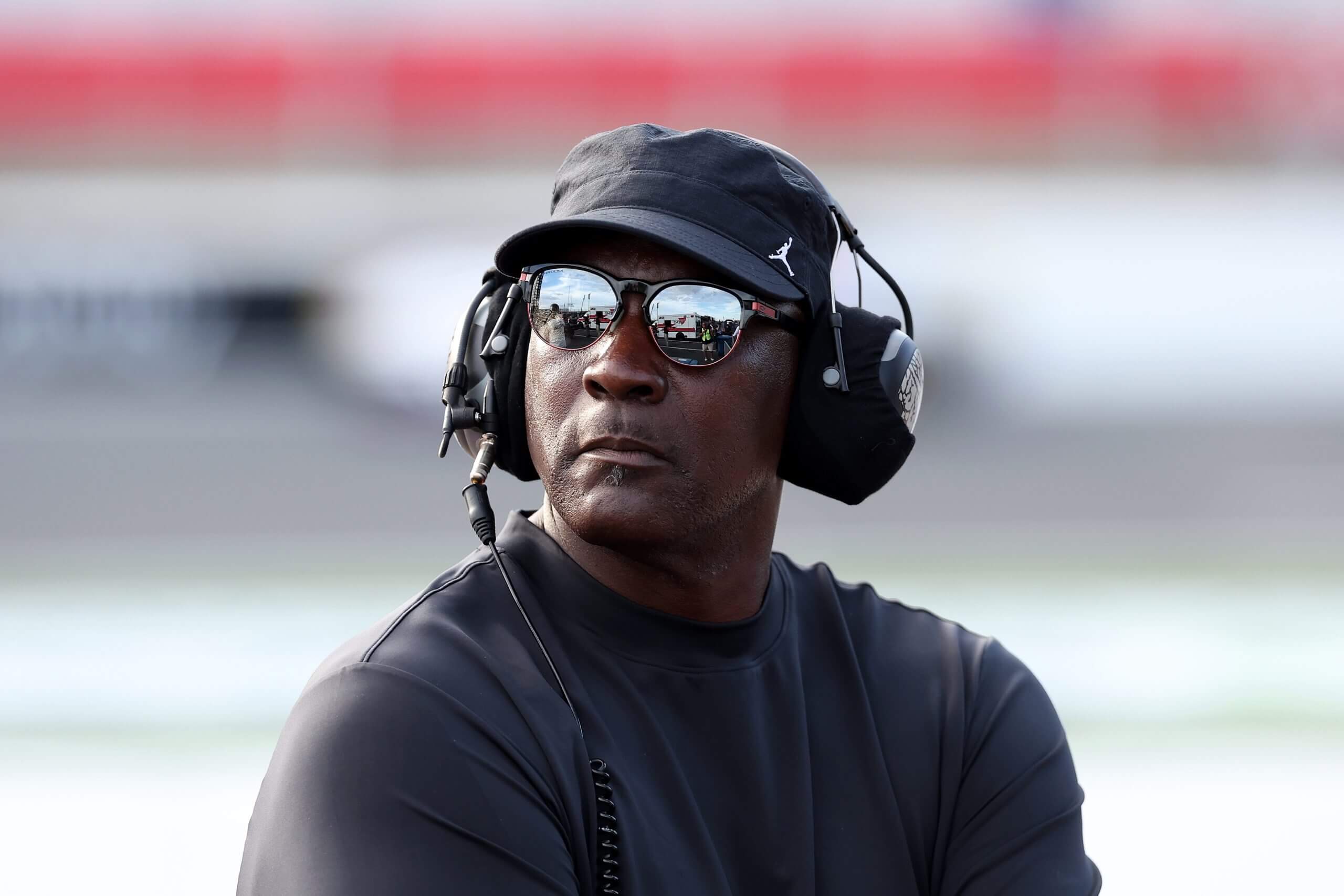
A federal antitrust trial involving NASCAR and two racing teams, including one owned by basketball legend Michael Jordan, commenced on March 4, 2024, in Charlotte, North Carolina. The case centers on allegations that NASCAR has engaged in monopolistic practices that have adversely impacted the teams’ ability to compete.
Jordan, who is the majority owner of 23XI Racing, co-founded the team with three-time Daytona 500 winner Denny Hamlin. Alongside Front Row Motorsports, led by fast food franchise owner Bob Jenkins, these organizations claim that NASCAR has misused its power to maintain a monopoly over stock car racing. This includes allegations of unfair business practices during negotiations for the charter system, which grants certain teams guaranteed revenue and starting positions in races.
The trial, overseen by Judge Kenneth D. Bell, is expected to last more than two weeks. Judge Bell has already ruled that NASCAR holds a monopoly in the premier stock car racing market. The jury will now determine if NASCAR unlawfully exploited that power, thereby violating antitrust laws.
The stakes in this case are significant. If the teams lose, they risk financial ruin, as they cannot afford to operate as non-chartered teams. The charter system provides crucial revenue guarantees, with Curtis Polk, co-owner of 23XI, estimating a potential loss of $24 million in revenue should the team’s cars lack charters. Conversely, if NASCAR loses, it could face drastic changes, potentially leading to the sale of its racetracks or a dismantling of the charter system, which could alter the landscape of stock car racing fundamentally.
The legal framework for this case has evolved. Initially, the teams sued NASCAR under two sections of the Sherman Antitrust Act, but the scope has narrowed. Notably, NASCAR’s counterclaim against the teams was dismissed, removing the relevance of the teams’ actions during negotiations from the trial. The focus now rests solely on whether NASCAR’s monopoly power has been abused to the detriment of the teams.
Both 23XI and Front Row allege that NASCAR engaged in exclusionary practices to maintain its monopoly. These claims include controlling racetracks through agreements that prevent other series from using those venues, restricting teams from competing in other series, and acquiring the ARCA series to eliminate potential competition.
In its defense, NASCAR argues that unlike major professional sports, its teams do not operate as traditional franchises. Instead, they hold limited-term charters, which provide benefits such as guaranteed entry into races. NASCAR contends that the recent increase in payouts from a new media rights deal signed in 2024 demonstrates that it cannot be classified as a monopoly.
The case has been fueled by a history of contentious negotiations. Tensions peaked three years ago during discussions about extending the charter agreement. Hardliners among the team owners, including Polk, advocated for permanent charters, leading to threats of legal action when NASCAR did not comply. The suit ultimately emerged following failed negotiations, which NASCAR attributes to dissatisfaction rather than antitrust violations.
Settlement discussions have been attempted, including court-ordered arbitration sessions that yielded no resolution. Recent communications between NASCAR executives, which surfaced during the discovery process, have further complicated matters. In these messages, there were derogatory remarks directed at fellow team owners, which may have exacerbated tensions.
NASCAR’s financial health is also under scrutiny. The organization reported a profit of $102.6 million on revenues of $1.7 billion in the previous year. However, significant payouts to the France Family Trust, exceeding $100 million annually, have raised eyebrows. Teams have reported financial losses, with an average loss exceeding $1 million per car from 2021 to 2024. While 23XI reported an average profit of $2.2 million annually from 2021 to 2023, it faced a loss of $2.1 million in 2024.
The outcome of this trial could have profound implications for the future of NASCAR and the teams involved. As the jury deliberates, the racing community watches closely, aware that the decisions made in this courtroom could reshape the sport for years to come.

Easton Launches Free Business Consulting Program with Lehigh U

Fed Chair Powell to Speak Tonight; No Monetary Policy Insights Expected

NSW Government Orders 6-Hour Shutdown of Gambling Machines

Research Sheds Light on ‘Covert Consciousness’ in Patients

Chicago Remembers Tragic Our Lady of the Angels Fire, 92 Lives Lost

Michael Jordan’s Racing Team Takes NASCAR to Court Over Antitrust Claims

Star-Studded British Independent Film Awards Celebrate Top Talent

Cyber Monday 2023: Top Deals and Discounts to Grab Now

TikTok Shop Transforms Shopping with $19 Billion in Sales

University of Hawaiʻi Joins $25.6M AI Initiative to Monitor Disasters

Toledo City League Announces Hall of Fame Inductees for 2024

DOJ Seizes $15 Billion in Bitcoin from Major Crypto Fraud Network

Sharp Launches Five New Aquos QLED 4K Ultra HD Smart TVs

Celtics Coach Joe Mazzulla Dominates Local Media in Scrimmage

Community Unites for 7th Annual Walk to Raise Mental Health Awareness

Mutual Advisors LLC Increases Stake in SPDR Portfolio ETF

Western Executives Confront Harsh Realities of China’s Manufacturing Edge

INK Entertainment Launches Exclusive Sofia Pop-Up at Virgin Hotels
-
Science4 weeks ago
University of Hawaiʻi Joins $25.6M AI Initiative to Monitor Disasters
-
 Lifestyle2 months ago
Toledo City League Announces Hall of Fame Inductees for 2024
-
 Business2 months ago
DOJ Seizes $15 Billion in Bitcoin from Major Crypto Fraud Network
-
 Top Stories2 months ago
Sharp Launches Five New Aquos QLED 4K Ultra HD Smart TVs
-
 Sports2 months ago
Celtics Coach Joe Mazzulla Dominates Local Media in Scrimmage
-
 Health2 months ago
Community Unites for 7th Annual Walk to Raise Mental Health Awareness
-
 Politics2 months ago
Mutual Advisors LLC Increases Stake in SPDR Portfolio ETF
-
 Science2 months ago
Western Executives Confront Harsh Realities of China’s Manufacturing Edge
-
 World2 months ago
INK Entertainment Launches Exclusive Sofia Pop-Up at Virgin Hotels
-

 Politics2 months ago
Major Networks Reject Pentagon’s New Reporting Guidelines
-

 Science1 month ago
Astronomers Discover Twin Cosmic Rings Dwarfing Galaxies
-

 Top Stories1 month ago
Randi Mahomes Launches Game Day Clothing Line with Chiefs