
World
Russia Launches Major Drone and Missile Assault on Ukraine

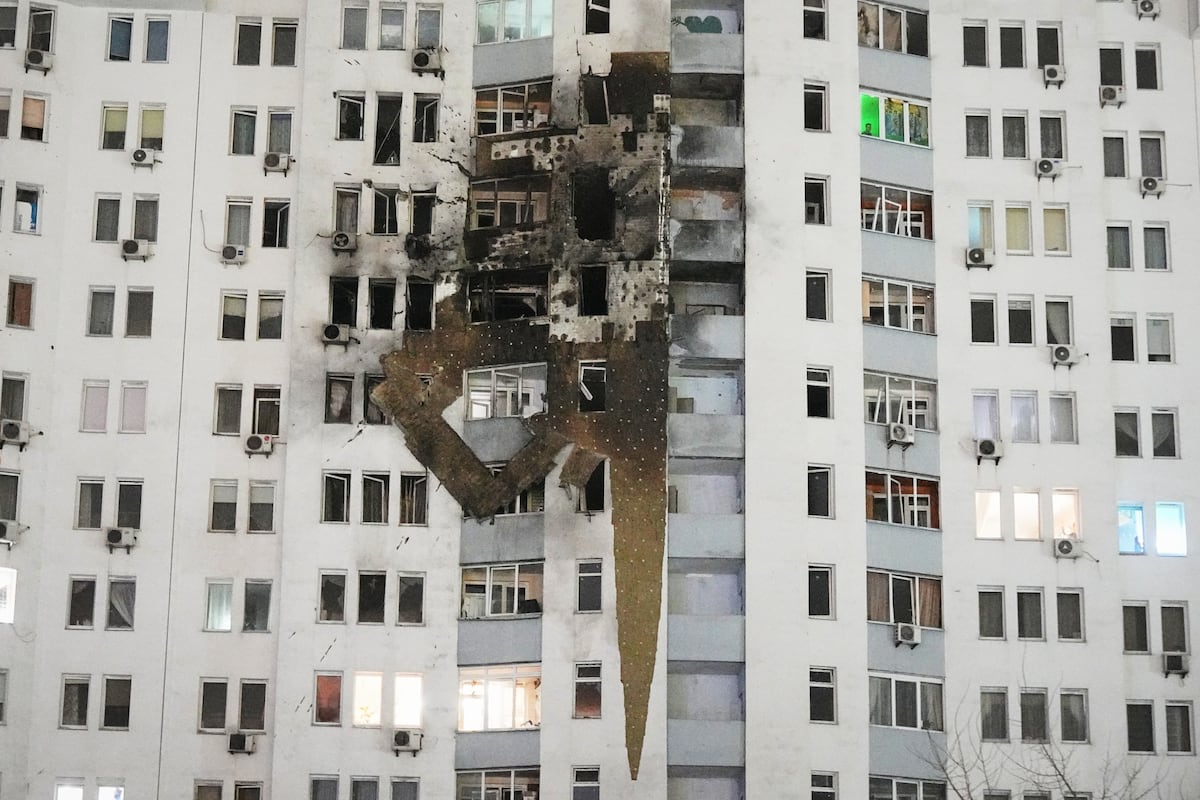
Russia has conducted a large-scale attack on Ukraine, deploying hundreds of drones and dozens of missiles during an overnight assault that has left at least four people dead and over 22 injured. This marked the second use of the new ballistic Oreshnik missile, which Russian officials claim can travel at speeds of up to Mach 10 and evade missile defense systems.
The attack occurred just days after Ukrainian and allied officials reported significant progress toward establishing a framework for defending against future Russian aggression, should a peace agreement be reached to conclude Russia’s nearly four-year invasion. Despite months of U.S.-led diplomatic efforts, the fighting continues unabated. Ukrainian President Volodymyr Zelenskyy indicated that discussions with U.S. representatives have advanced, yet Moscow has not shown any willingness to adjust its demands.
Relations between Washington and Moscow have further deteriorated following Russia’s condemnation of the U.S. seizure of an oil tanker in the North Atlantic. Additionally, U.S. President Donald Trump has indicated support for a new sanctions package aimed at crippling the Russian economy.
According to the Kyiv City Military Administration, the assault on the Ukrainian capital resulted in significant casualties. Among the dead was an emergency medical aid worker, as reported by Tymur Tkachenko. Five rescue workers were also injured while responding to the ongoing crisis, and the attack inflicted damage on the Qatari Embassy in Kyiv. President Zelenskyy highlighted Qatar’s role in mediating prisoner exchanges and called for a decisive response from the international community, particularly the United States.
In a statement from Russia’s Defense Ministry, the attack was described as retaliation for what Moscow claimed was a Ukrainian drone strike on President Vladimir Putin’s residence last month. Both Ukraine and U.S. officials have denied this assertion. Putin has previously characterized the Oreshnik missile as capable of striking its target with devastating speed, likening its descent to that of a meteorite. He has warned that strikes using this missile could have consequences similar to a nuclear attack, especially against nations supporting Ukraine’s military efforts.
Ukrainian intelligence reports that the Oreshnik missile is equipped with six warheads, each containing six submunitions. While the exact targets of the missile strikes were not disclosed, Russian media suggested that it aimed at a significant underground natural gas storage facility in Ukraine’s Lviv region, an area crucial for foreign military aid transit, bordering Poland.
The Oreshnik missile was first deployed in November 2024 against the city of Dnipro. Analysts note that its introduction adds a new dimension to the psychological warfare tactics employed by Russia, potentially unsettling both Ukrainian citizens and Western nations providing military aid.
In response to the missile strikes, Ukrainian Foreign Minister Andrii Sybiha announced plans to initiate international action, which includes calling for an urgent meeting of the UN Security Council and convening the Ukraine-NATO Council. He emphasized that such attacks near the borders of the EU and NATO represent a significant threat to European security and demand a robust reaction from the transatlantic community.
During the assault on Kyiv, multiple districts were targeted. Reports indicate that a drone crashed into the roof of a multi-story building in the Desnyanskyi district, while other residential structures sustained damage from falling debris. In the Dnipro district, parts of a drone caused a fire in a high-rise building. Local resident Dmytro Karpenko recounted his experience, stating that he rushed to assist a neighbor whose home was ablaze. “What Russia is doing shows that they do not want peace. But people really want peace; people are suffering, people are dying,” he said.
Following the attacks, Kyiv Mayor Vitali Klitschko reported disruptions to running water and electricity in several areas of the capital. The assault unfolded shortly after President Zelenskyy alerted the nation to anticipate a large-scale offensive, emphasizing that Russia would likely exploit the ongoing harsh winter conditions in the capital, which have made roads and streets perilously icy.

Salesforce CEO Calls AI-Related Suicides ‘Darkest Aspect’ of Tech

Navigating Family Dynamics: Finding Your Voice Amid Exclusion

Tensions Rise as Denmark and U.S. Discuss Greenland’s Future

New Study Redefines Dark Matter: From Cold to Hot Origins

Penguins Secure Victory, Reclaim First Place in Atlantic Division

Investigators Identify Faulty Part in UPS MD-11 Crash

Elon Musk Denies Grok AI Generated Explicit Images of Minors

Willow Smith Stuns in Daring Swimwear Look, Fans React Now!

South Korea Unveils Ramen Experiences for Tourists at Airports

University of Hawaiʻi Joins $25.6M AI Initiative to Monitor Disasters

Interstellar Object 3I/ATLAS Emits Unprecedented Metal Alloy

Toledo City League Announces Hall of Fame Inductees for 2024

DOJ Seizes $15 Billion in Bitcoin from Major Crypto Fraud Network

Western Executives Confront Harsh Realities of China’s Manufacturing Edge

Sharp Launches Five New Aquos QLED 4K Ultra HD Smart TVs

Mutual Advisors LLC Increases Stake in SPDR Portfolio ETF

Community Unites for 7th Annual Walk to Raise Mental Health Awareness

Celtics Coach Joe Mazzulla Dominates Local Media in Scrimmage
-
Science2 months ago
University of Hawaiʻi Joins $25.6M AI Initiative to Monitor Disasters
-
 Science3 months ago
Interstellar Object 3I/ATLAS Emits Unprecedented Metal Alloy
-
 Lifestyle3 months ago
Toledo City League Announces Hall of Fame Inductees for 2024
-
 Business3 months ago
DOJ Seizes $15 Billion in Bitcoin from Major Crypto Fraud Network
-
 Science3 months ago
Western Executives Confront Harsh Realities of China’s Manufacturing Edge
-
 Top Stories3 months ago
Sharp Launches Five New Aquos QLED 4K Ultra HD Smart TVs
-
 Politics3 months ago
Mutual Advisors LLC Increases Stake in SPDR Portfolio ETF
-
 Health3 months ago
Community Unites for 7th Annual Walk to Raise Mental Health Awareness
-
 Sports3 months ago
Celtics Coach Joe Mazzulla Dominates Local Media in Scrimmage
-
 Politics3 months ago
Major Networks Reject Pentagon’s New Reporting Guidelines
-

 World3 months ago
INK Entertainment Launches Exclusive Sofia Pop-Up at Virgin Hotels
-

 Top Stories3 months ago
Microsoft Releases Urgent Windows 11 25H2 Update for All Users