
World
Thomas Paine’s “Common Sense” at 250: A Revolutionary Legacy

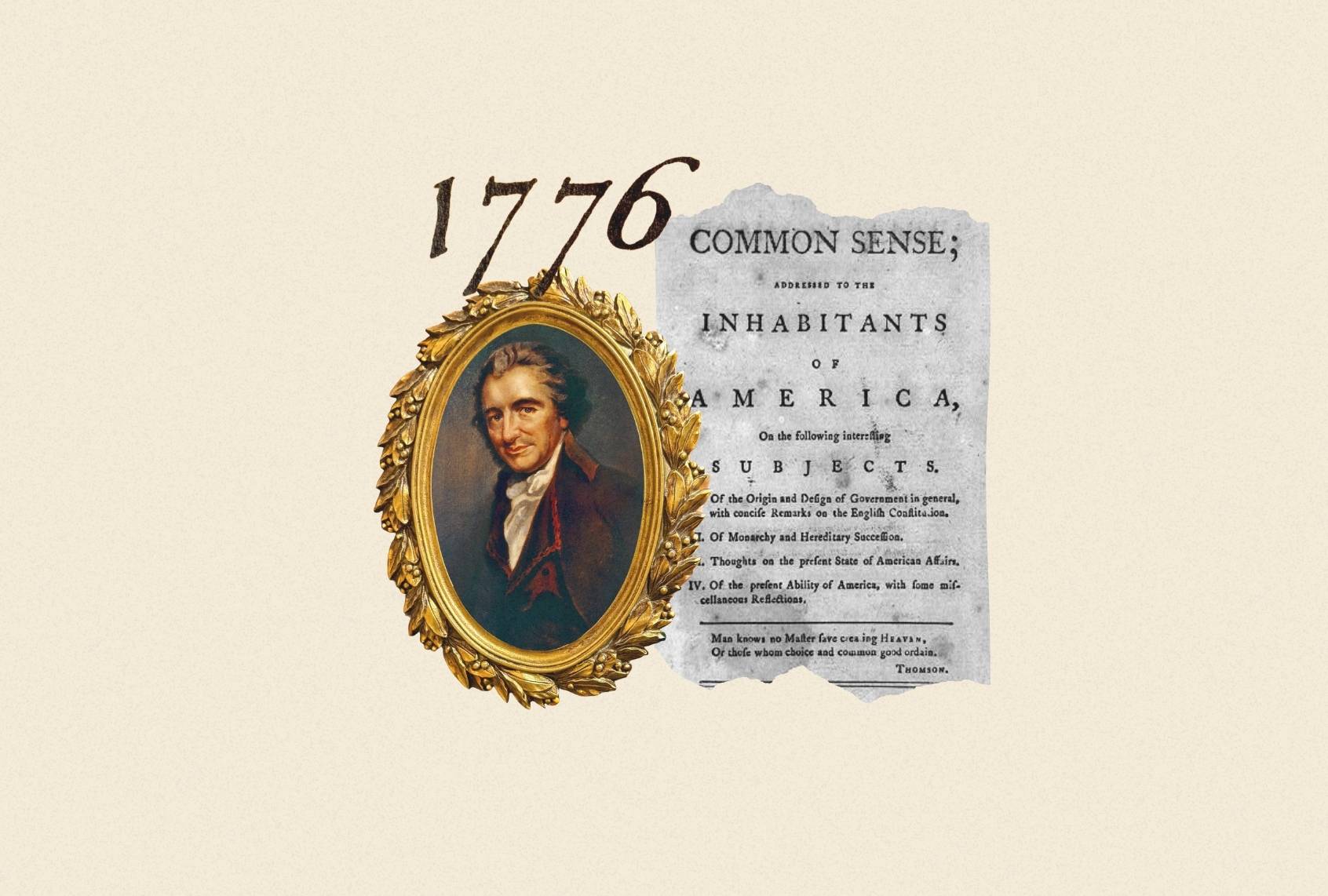
On January 10, 1776, Thomas Paine published his influential pamphlet, Common Sense, which played a pivotal role in shaping the American Revolution. In this work, Paine boldly declared, “We have it in our power to begin the world over again.” His arguments transformed the colonial struggle for rights under British rule into a broader quest for liberty and representation.
Paine’s timing proved crucial. Just a year prior, the concept of independence would have been dismissed. Patriotic sentiment had primarily focused on securing rights as British subjects, particularly following the Stamp Act Crisis of 1765, which imposed taxes without representation. Even after the establishment of the Continental Army in 1775, Congress remained loyal to the king, asserting its fight was for rights rather than independence.
The situation shifted dramatically when King George III refused to acknowledge the Olive Branch Petition sent by Congress, which appealed for reconciliation and respect for colonial rights. Instead, he labeled the colonies as being in “open and avowed rebellion” and promised to suppress the dissent using the largest military force Britain had ever dispatched overseas. This declaration coincided with reports of British naval attacks on Norfolk, Virginia, further inflaming colonial sentiment against the crown.
Paine, motivated by the prevailing unrest and supported by prominent figures such as Benjamin Rush, Benjamin Franklin, and Samuel Adams, spent months crafting Common Sense. The pamphlet marked a significant shift in American political thought. Paine laid out a vision where people, born free and equal, formed governments to protect their liberty. He argued that monarchy disrupted this natural order, with taxation without representation being an inevitable outcome of misplaced power.
In his compelling prose, Paine famously asserted, “The palaces of Kings are built on the ruins of the bowers of Paradise.” He contended that authoritarian leaders inevitably prioritize their interests over those of the populace. At a time when absolute monarchies dominated much of the world, Common Sense called for governments accountable to the people through regular elections, emphasizing that “Of more worth is one honest man to society and in the sight of God than all the crowned ruffians that ever lived.”
Paine’s work quickly resonated throughout the colonies. Within weeks of its release, it became the bestselling pamphlet of the time, with over 100,000 copies distributed by April and reaching around 500,000 by 1778. It was read in public forums, clubs, and schools, and even recited in sermons. George Washington recognized its impact, having it read aloud to troops besieging Boston, noting that it was “working a powerful change in the minds of many men.”
Paine’s words encapsulated the spirit of a burgeoning movement that sought to elevate American resistance to British policies into a worldwide struggle for liberty. He asserted that “the cause of America is in a great measure the cause of all mankind,” framing the fight for independence as a universal quest for freedom and justice.
In the pamphlet’s roughly 80 pages, Paine articulated the ideals of liberty and security as the core objectives of government. He envisioned a democratic system aimed at maximizing individual happiness while minimizing national costs, assuring readers that Americans could prevail against any force Britain could muster.
Paine’s assertion that “the law is king” resonated deeply, contrasting the arbitrary power of monarchs with the rule of law that should govern a free society. He argued that, unlike in absolute regimes where “the King is law,” in America, the law should be the highest authority.
As the United States approaches its 250th anniversary, revisiting Paine’s Common Sense offers a timely reflection on the principles that underpin democratic governance. This foundational document not only denounced tyranny but also championed radical representation and individual liberties, ideals that remain relevant today.
Ultimately, Common Sense stands as a testament to the enduring struggle against authoritarianism and the ongoing pursuit of political equality, making it as significant now as it was in the revolutionary era.

Salesforce CEO Calls AI-Related Suicides ‘Darkest Aspect’ of Tech

Navigating Family Dynamics: Finding Your Voice Amid Exclusion

Tensions Rise as Denmark and U.S. Discuss Greenland’s Future

New Study Redefines Dark Matter: From Cold to Hot Origins

Penguins Secure Victory, Reclaim First Place in Atlantic Division

Investigators Identify Faulty Part in UPS MD-11 Crash

Elon Musk Denies Grok AI Generated Explicit Images of Minors

Willow Smith Stuns in Daring Swimwear Look, Fans React Now!

South Korea Unveils Ramen Experiences for Tourists at Airports

University of Hawaiʻi Joins $25.6M AI Initiative to Monitor Disasters

Interstellar Object 3I/ATLAS Emits Unprecedented Metal Alloy

Toledo City League Announces Hall of Fame Inductees for 2024

DOJ Seizes $15 Billion in Bitcoin from Major Crypto Fraud Network

Western Executives Confront Harsh Realities of China’s Manufacturing Edge

Sharp Launches Five New Aquos QLED 4K Ultra HD Smart TVs

Mutual Advisors LLC Increases Stake in SPDR Portfolio ETF

Celtics Coach Joe Mazzulla Dominates Local Media in Scrimmage

Community Unites for 7th Annual Walk to Raise Mental Health Awareness
-
Science2 months ago
University of Hawaiʻi Joins $25.6M AI Initiative to Monitor Disasters
-
 Science3 months ago
Interstellar Object 3I/ATLAS Emits Unprecedented Metal Alloy
-
 Lifestyle3 months ago
Toledo City League Announces Hall of Fame Inductees for 2024
-
 Business3 months ago
DOJ Seizes $15 Billion in Bitcoin from Major Crypto Fraud Network
-
 Science3 months ago
Western Executives Confront Harsh Realities of China’s Manufacturing Edge
-
 Top Stories3 months ago
Sharp Launches Five New Aquos QLED 4K Ultra HD Smart TVs
-
 Politics3 months ago
Mutual Advisors LLC Increases Stake in SPDR Portfolio ETF
-
 Sports3 months ago
Celtics Coach Joe Mazzulla Dominates Local Media in Scrimmage
-
 Health3 months ago
Community Unites for 7th Annual Walk to Raise Mental Health Awareness
-

 Politics3 months ago
Major Networks Reject Pentagon’s New Reporting Guidelines
-

 World3 months ago
INK Entertainment Launches Exclusive Sofia Pop-Up at Virgin Hotels
-

 Top Stories3 months ago
Microsoft Releases Urgent Windows 11 25H2 Update for All Users