
Health
NASA Executes First Medical Evacuation from Space Due to Health Issue

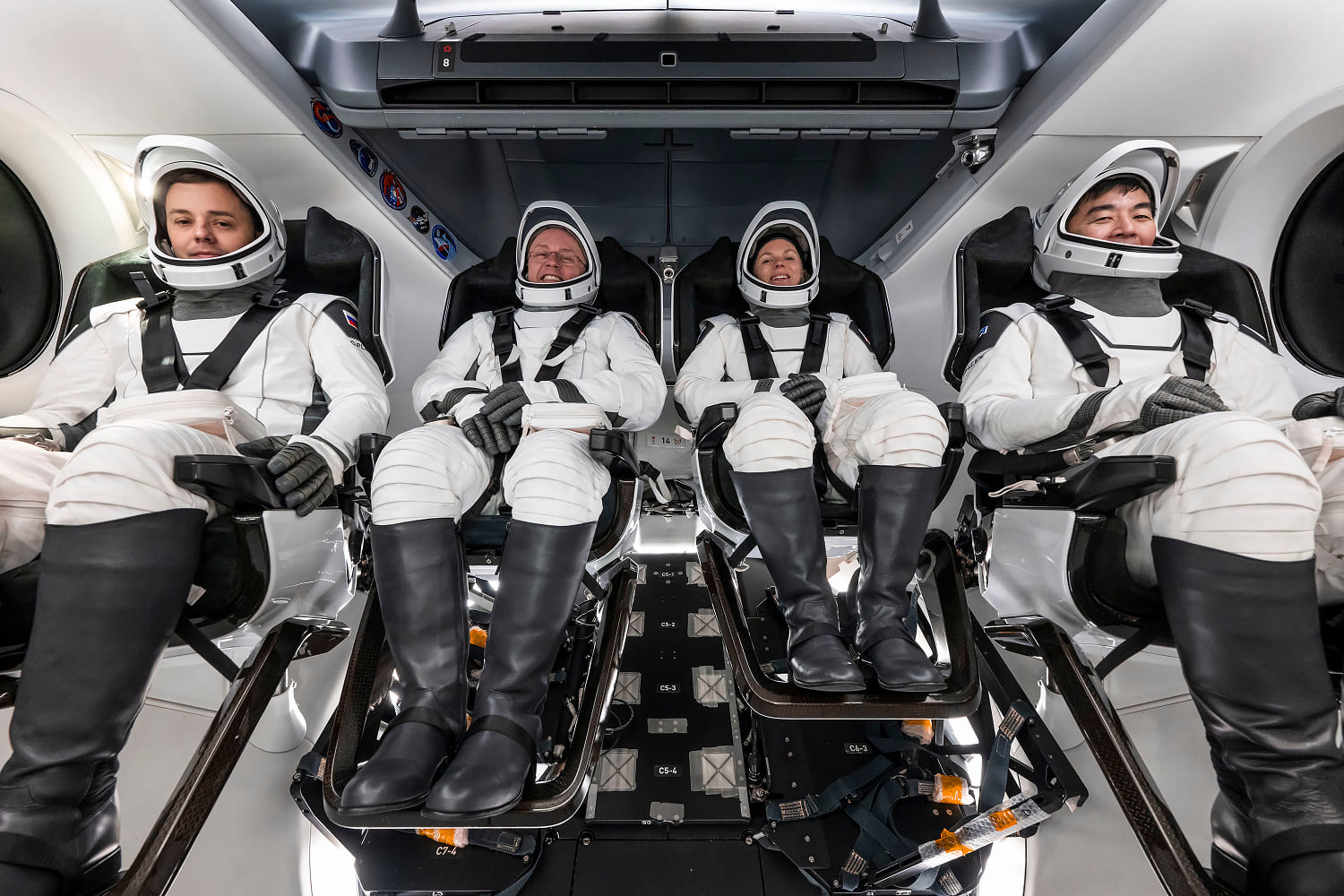
A medical evacuation from the International Space Station (ISS) is set to occur as an astronaut has developed an unexpected health issue. NASA announced that astronauts Zena Cardman, Mike Fincke, Kimiya Yui, and cosmonaut Oleg Platonov are scheduled to return to Earth off the coast of California in the early hours of January 15, 2026. This evacuation is occurring weeks ahead of the planned timeline for the SpaceX Crew-11 mission.
NASA confirmed that one of the four crew members is experiencing a “medical concern,” but further details about the individual or the specific nature of the issue have not been disclosed due to medical privacy protocols. In a statement on LinkedIn, Mike Fincke reassured the public that all astronauts on board are stable and well cared for, emphasizing the decision to return early was made to facilitate comprehensive medical evaluations on Earth.
This incident marks a significant moment in the 25-year history of the ISS, as it is the first time a medical issue has necessitated an early mission termination. The SpaceX Crew-11 mission, which launched in August 2025, was originally scheduled to last six months. The crew’s return had been planned for February 2026.
Health Challenges for Astronauts in Space
Astronauts are subjected to a range of health challenges while on the ISS, which can impact their well-being both during and after their missions. Research has shown that astronauts can experience numerous changes upon returning to Earth, affecting various bodily systems.
One notable concern is the alteration of brain position due to microgravity. A recent study analyzing MRI scans of 26 astronauts found that their brains shift upward and backward within the skull during spaceflight. These changes typically normalize within six months of returning to Earth.
Astronauts also face significant bone and muscle density loss in space. According to NASA, bones can lose about 1% of their density for every month spent in microgravity, particularly affecting the legs, hips, and spine. To mitigate these effects, astronauts engage in daily exercise routines lasting up to two hours, which include both cardio and resistance training. Nevertheless, the adjustment back to Earth’s gravity can be challenging. Former NASA astronaut Peggy Whitson noted that returning to Earth feels like a shock to the body, as everything suddenly seems heavy.
Long-term Health Effects of Spaceflight
In addition to bone and muscle loss, astronauts may experience a range of other health issues upon returning from space. These include changes to the immune system, which can become suppressed during extended missions. Dr. Mark Rosenberg, director of the aerospace neurology and human performance program at the Medical University of South Carolina, highlighted that astronauts must readjust to Earth’s environment, which exposes them to various pathogens.
Astronauts can also experience changes in their vision due to shifts in bodily fluids that occur in microgravity, leading to conditions such as spaceflight-associated neuro-ocular syndrome. This may result in pressure on the eyes and potentially long-lasting vision issues.
Another intriguing effect of prolonged spaceflight is the increase in height experienced by astronauts, as the spinal column expands without the constraints of gravity. Upon returning to Earth, the spine compresses again, which can lead to discomfort and back pain, as reported by former astronaut Frank Rubio, who spent a record 371 days on the ISS.
As NASA continues to explore the effects of long-duration space missions, the agency remains committed to ensuring the health and safety of its astronauts. The situation surrounding the early return of Crew-11 underscores the importance of ongoing research into the medical challenges posed by space travel.

Chinese Researchers Develop Accurate Lunar Clock Incorporating Relativity

Falcons Miss Out on Harbaugh as Giants Secure Coach for 2026

China’s Central Bank Cuts Rates to Support Strategic Sectors

AAR Corp. Secures “Buy” Consensus Rating from Analysts

Sydney Sweeney’s Daring Look in Euphoria Season 3 Sparks Buzz

Legacy of Hepatitis B Vaccine Innovator Faces New Challenges

Harden Declares Clippers Ready to Surge Back into Playoffs

Salesforce CEO Calls AI-Related Suicides ‘Darkest Aspect’ of Tech

Navigating Family Dynamics: Finding Your Voice Amid Exclusion

University of Hawaiʻi Joins $25.6M AI Initiative to Monitor Disasters

Interstellar Object 3I/ATLAS Emits Unprecedented Metal Alloy

Toledo City League Announces Hall of Fame Inductees for 2024

DOJ Seizes $15 Billion in Bitcoin from Major Crypto Fraud Network

Western Executives Confront Harsh Realities of China’s Manufacturing Edge

Sharp Launches Five New Aquos QLED 4K Ultra HD Smart TVs

Mutual Advisors LLC Increases Stake in SPDR Portfolio ETF

Celtics Coach Joe Mazzulla Dominates Local Media in Scrimmage

Community Unites for 7th Annual Walk to Raise Mental Health Awareness
-
Science2 months ago
University of Hawaiʻi Joins $25.6M AI Initiative to Monitor Disasters
-
 Science3 months ago
Interstellar Object 3I/ATLAS Emits Unprecedented Metal Alloy
-
 Lifestyle3 months ago
Toledo City League Announces Hall of Fame Inductees for 2024
-
 Business3 months ago
DOJ Seizes $15 Billion in Bitcoin from Major Crypto Fraud Network
-
 Science3 months ago
Western Executives Confront Harsh Realities of China’s Manufacturing Edge
-
 Top Stories3 months ago
Sharp Launches Five New Aquos QLED 4K Ultra HD Smart TVs
-
 Politics3 months ago
Mutual Advisors LLC Increases Stake in SPDR Portfolio ETF
-
 Sports3 months ago
Celtics Coach Joe Mazzulla Dominates Local Media in Scrimmage
-
 Health3 months ago
Community Unites for 7th Annual Walk to Raise Mental Health Awareness
-

 Politics3 months ago
Major Networks Reject Pentagon’s New Reporting Guidelines
-

 World3 months ago
INK Entertainment Launches Exclusive Sofia Pop-Up at Virgin Hotels
-

 Top Stories3 months ago
Microsoft Releases Urgent Windows 11 25H2 Update for All Users