
Health
Scientists Uncover Persistent 3D Loops in Cell Division Process

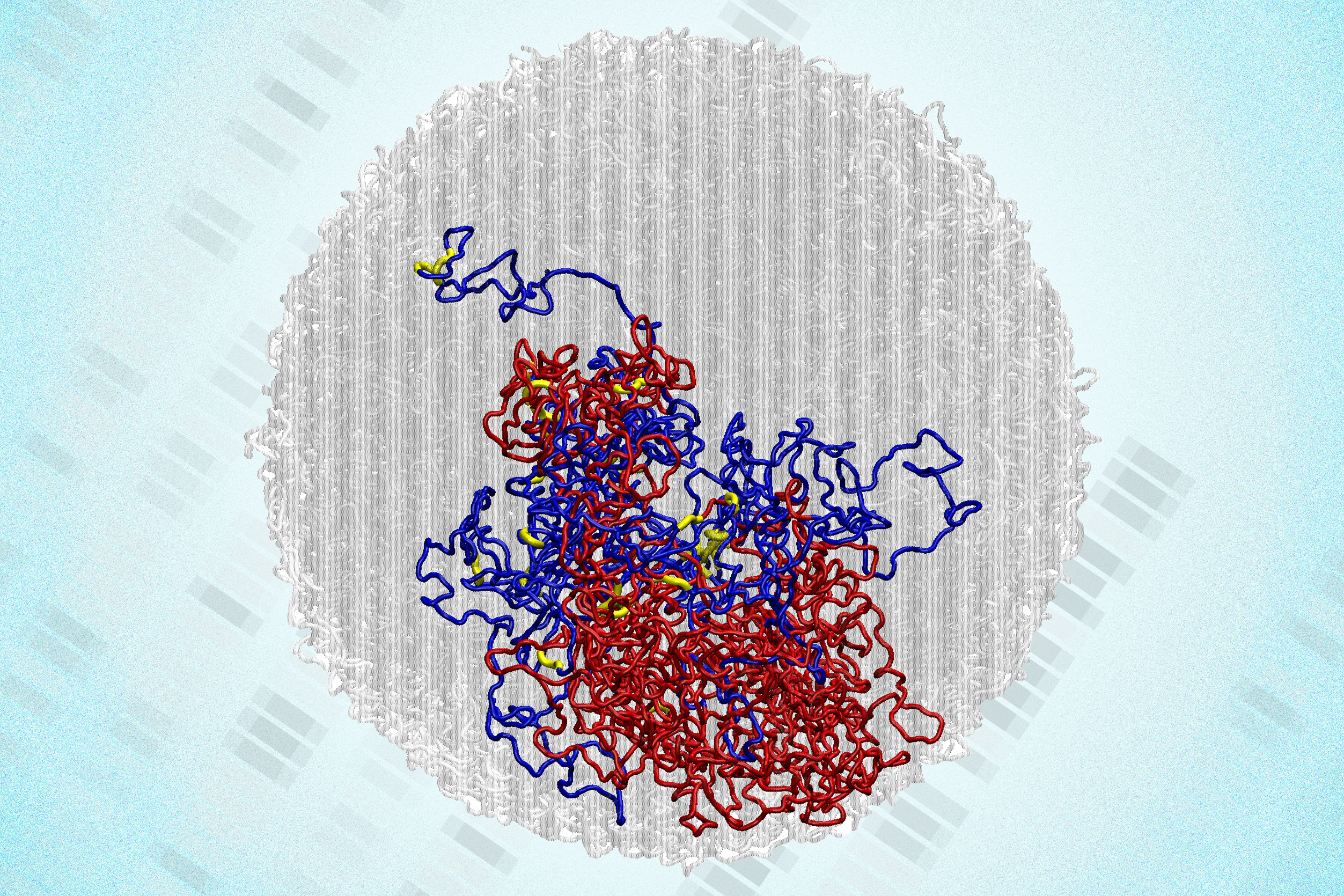
In a groundbreaking study, researchers at the Massachusetts Institute of Technology (MIT) have discovered that tiny 3D loops in the genomes of dividing cells persist during cell division, challenging long-held beliefs about the genetic architecture during mitosis. Traditionally, scientists thought that the genome loses its distinctive 3D structure during this critical process, leading to a reset in gene activity. However, this new research reveals that small loops connecting regulatory elements and genes remain intact, offering fresh insights into how genes are regulated.
The study, led by Anders Sejr Hansen, an associate professor of biological engineering at MIT, utilized a novel genome mapping technique with unprecedented resolution. This approach allowed the research team to observe that these 3D loops not only endure but actually strengthen as chromosomes become more compact in preparation for cell division. “This study really helps to clarify how we should think about mitosis,” Hansen stated. “In the past, mitosis was thought of as a blank slate. Now we know that structure is always present; it never goes away.”
### New Insights into Genome Structure
The research team employed a technique known as Region-Capture Micro-C (RC-MC), which provides 100 to 1,000 times greater resolution than previous methods. This advancement enables researchers to analyze specific genome regions in detail, revealing previously unseen structures they termed “microcompartments.” These microcompartments form when enhancers, short sequences of DNA that activate gene transcription, stick together with nearby promoters.
Historically, scientists have mapped 3D genome structures using techniques like Hi-C, which, while effective, lacked the resolution to pinpoint intricate interactions between genes and their regulatory elements. With the RC-MC technique, Hansen and his colleagues could track these structures throughout cell division, leading to surprising findings about their persistence during mitosis.
### A Shift in Understanding Gene Regulation
During mitosis, it was believed that gene transcription halted completely. However, the MIT study suggests that a brief spike in transcription occurs towards the end of this phase. The researchers noted that the microcompartments were frequently located near genes that experience this spike in activity. As chromosomes compact, enhancers and promoters come closer together, facilitating the formation of these loops. Once established, they may inadvertently activate gene transcription before being suppressed as the cell completes its division.
“This transcriptional spiking in mitosis seems like an undesirable accident, arising from the conditions that favor microcompartment formation,” Hansen explained. “The cell quickly prunes those loops when it enters G1, ensuring fidelity in gene expression.”
### Implications for Future Research
The findings from this study open new avenues for understanding the relationship between genome structure and function, particularly in the context of how cells remember interactions across cell cycles. The research team, which included lead author Viraat Goel and senior authors Edward Banigan and others, emphasized the importance of these insights for the field of gene regulation.
Hansen expressed interest in exploring how variations in cell size and shape might influence genome structure. “We’re looking at biological scenarios where cells change shape and size, and how that could explain some 3D genome changes,” he noted.
The research received funding from various organizations, including the National Institutes of Health and the National Science Foundation, highlighting its significance in advancing the understanding of cellular biology. The full study appears in the prestigious journal Nature Structural and Molecular Biology, marking a pivotal moment in the exploration of genomic organization during cell division.

Hallmark’s ‘Christmas at the Catnip Café’ Premieres Tonight!

Millville Woman Arrested for Threatening U-Haul Worker with Baton

Japan’s PM Takaichi Confirms Continued Fiscal Management Strategy

Bitcoin Plummets Below $88K Amid Tether Concerns and Warnings

Designers Unveil 5 Urgent Tricks to Transform Outdoor Eyesores

Shark Teeth Research Reveals Urgent Need to Protect Species

Church Members Unite in Resilience After Thanksgiving Fire

Community Unites to Attempt World Record for Largest Cookie Exchange

Mayor Lurie Appoints Alan Wong to District 4 Seat Amid Controversy

University of Hawaiʻi Joins $25.6M AI Initiative to Monitor Disasters

Toledo City League Announces Hall of Fame Inductees for 2024

DOJ Seizes $15 Billion in Bitcoin from Major Crypto Fraud Network

Sharp Launches Five New Aquos QLED 4K Ultra HD Smart TVs

Celtics Coach Joe Mazzulla Dominates Local Media in Scrimmage

Mutual Advisors LLC Increases Stake in SPDR Portfolio ETF

Community Unites for 7th Annual Walk to Raise Mental Health Awareness

Western Executives Confront Harsh Realities of China’s Manufacturing Edge

Major Networks Reject Pentagon’s New Reporting Guidelines
-
Science4 weeks ago
University of Hawaiʻi Joins $25.6M AI Initiative to Monitor Disasters
-
 Lifestyle2 months ago
Toledo City League Announces Hall of Fame Inductees for 2024
-
 Business2 months ago
DOJ Seizes $15 Billion in Bitcoin from Major Crypto Fraud Network
-
 Top Stories2 months ago
Sharp Launches Five New Aquos QLED 4K Ultra HD Smart TVs
-
 Sports2 months ago
Celtics Coach Joe Mazzulla Dominates Local Media in Scrimmage
-
 Politics2 months ago
Mutual Advisors LLC Increases Stake in SPDR Portfolio ETF
-
 Health2 months ago
Community Unites for 7th Annual Walk to Raise Mental Health Awareness
-
 Science2 months ago
Western Executives Confront Harsh Realities of China’s Manufacturing Edge
-
 Politics2 months ago
Major Networks Reject Pentagon’s New Reporting Guidelines
-

 World2 months ago
INK Entertainment Launches Exclusive Sofia Pop-Up at Virgin Hotels
-

 Science1 month ago
Astronomers Discover Twin Cosmic Rings Dwarfing Galaxies
-

 Top Stories1 month ago
Randi Mahomes Launches Game Day Clothing Line with Chiefs