
Science
China’s Zhuque-3 Rocket Successfully Completes Key Static Test

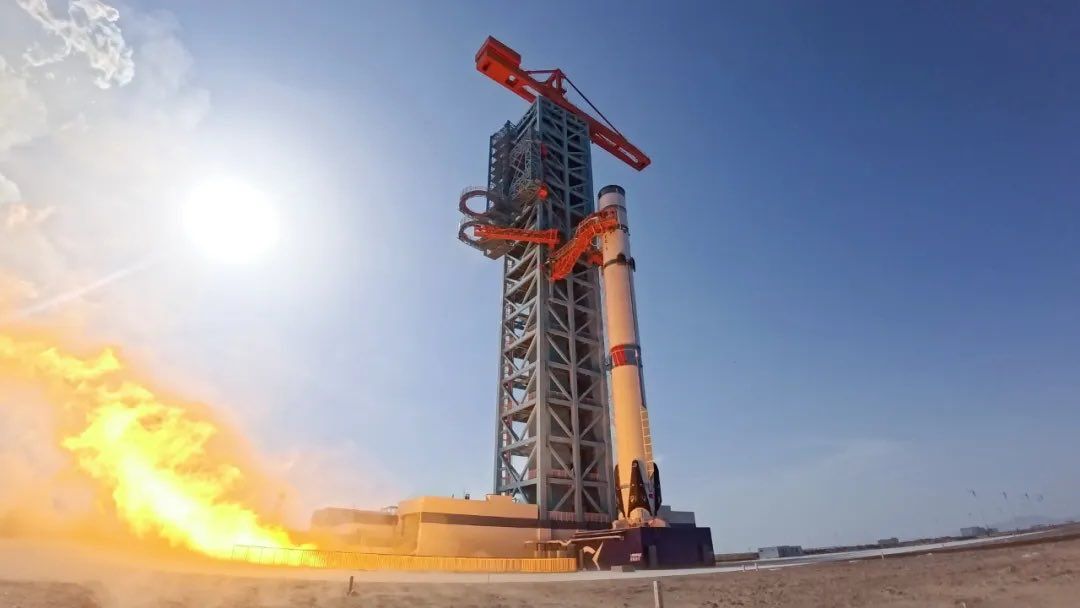
China’s first reusable rocket, the Zhuque-3, has made significant progress towards its inaugural flight. On October 20, 2025, the Chinese aerospace company LandSpace conducted a successful static-fire test of the rocket’s engines, marking an important milestone in its flight campaign. This test took place at the Dongfeng Commercial Space Innovation Pilot Zone in northwestern China.
During the static-fire test, the Zhuque-3 rocket remained anchored to the launch pad while its engines were ignited, a procedure commonly used to verify the functionality of a rocket’s propulsion system before a launch. This event concluded the first phase of Zhuque-3’s maiden flight preparations, which also included a fueling test. LandSpace has indicated that the rocket will undergo further rehearsals for vertical integration, followed by inspections and maintenance ahead of its orbital launch and first-stage recovery.
Design and Capabilities of Zhuque-3
The Zhuque-3 bears a striking resemblance to SpaceX’s Falcon 9, featuring a reusable first stage and an expendable upper stage. The rocket stands at an impressive 66 meters (approximately 217 feet) tall and has a payload capacity of around 18,300 kilograms (or 40,350 pounds) to low Earth orbit (LEO). Comparatively, the Falcon 9 can lift up to 22,800 kilograms (or 50,265 pounds) to LEO.
The Zhuque-3’s booster is powered by nine Tianque-12A engines, which have been developed by LandSpace. These engines utilize liquid methane and liquid oxygen (LOX) as propellants, distinguishing them from the Merlin engines used in Falcon 9, which combust rocket-grade kerosene in addition to LOX. Notably, SpaceX’s next-generation Raptor engine, used in the Starship program, also employs LOX and liquid methane.
Progress and Future Plans
The successful static-fire test is part of a series of crucial milestones for the Zhuque-3. LandSpace has previously conducted low-altitude launch and landing tests with the vehicle, including another static-fire test in June 2025. Founded in 2015 and based in Beijing, LandSpace is also known for its expendable Zhuque-2 rocket, which made history in July 2023 as the first LOX-methane vehicle to achieve Earth orbit. Despite recent setbacks, including a failure during its last launch in August, the Zhuque-2 has completed four consecutive successful missions.
As LandSpace prepares for the Zhuque-3’s debut flight, the company is poised to contribute significantly to the growing landscape of commercial spaceflight. With the advancements in reusable rocket technology, the potential for cost-effective access to space remains a focal point for the industry.

Hallmark’s ‘Christmas at the Catnip Café’ Premieres Tonight!

Millville Woman Arrested for Threatening U-Haul Worker with Baton

Japan’s PM Takaichi Confirms Continued Fiscal Management Strategy

Bitcoin Plummets Below $88K Amid Tether Concerns and Warnings

Designers Unveil 5 Urgent Tricks to Transform Outdoor Eyesores

Shark Teeth Research Reveals Urgent Need to Protect Species

Church Members Unite in Resilience After Thanksgiving Fire

Community Unites to Attempt World Record for Largest Cookie Exchange

Mayor Lurie Appoints Alan Wong to District 4 Seat Amid Controversy

University of Hawaiʻi Joins $25.6M AI Initiative to Monitor Disasters

Toledo City League Announces Hall of Fame Inductees for 2024

DOJ Seizes $15 Billion in Bitcoin from Major Crypto Fraud Network

Sharp Launches Five New Aquos QLED 4K Ultra HD Smart TVs

Celtics Coach Joe Mazzulla Dominates Local Media in Scrimmage

Mutual Advisors LLC Increases Stake in SPDR Portfolio ETF

Community Unites for 7th Annual Walk to Raise Mental Health Awareness

Western Executives Confront Harsh Realities of China’s Manufacturing Edge

INK Entertainment Launches Exclusive Sofia Pop-Up at Virgin Hotels
-
Science4 weeks ago
University of Hawaiʻi Joins $25.6M AI Initiative to Monitor Disasters
-
 Lifestyle2 months ago
Toledo City League Announces Hall of Fame Inductees for 2024
-
 Business2 months ago
DOJ Seizes $15 Billion in Bitcoin from Major Crypto Fraud Network
-
 Top Stories2 months ago
Sharp Launches Five New Aquos QLED 4K Ultra HD Smart TVs
-
 Sports2 months ago
Celtics Coach Joe Mazzulla Dominates Local Media in Scrimmage
-
 Politics2 months ago
Mutual Advisors LLC Increases Stake in SPDR Portfolio ETF
-
 Health2 months ago
Community Unites for 7th Annual Walk to Raise Mental Health Awareness
-
 Science2 months ago
Western Executives Confront Harsh Realities of China’s Manufacturing Edge
-
 World2 months ago
INK Entertainment Launches Exclusive Sofia Pop-Up at Virgin Hotels
-

 Politics2 months ago
Major Networks Reject Pentagon’s New Reporting Guidelines
-

 Science1 month ago
Astronomers Discover Twin Cosmic Rings Dwarfing Galaxies
-

 Top Stories1 month ago
Randi Mahomes Launches Game Day Clothing Line with Chiefs