
Lifestyle
Unraveling Spooky Superstitions: Origins and Beliefs Explored

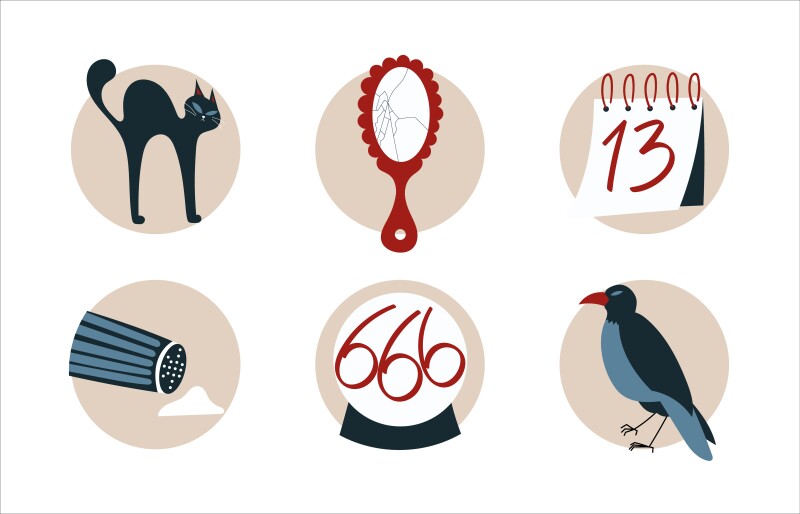
The fascination with superstitions such as black cats, Friday the 13th, and broken mirrors stems from deep-rooted historical and cultural narratives. These beliefs have evolved over centuries, often reflecting societal fears and values. Understanding their origins offers insight into human psychology and cultural practices across different regions.
The Legacy of Black Cats
The notion that black cats bring bad luck originated in Europe during the Middle Ages. During this period, cats were frequently linked to witchcraft, often seen as companions to witches. According to research from Mount St. Joseph University, a papal decree issued by Pope Gregory IX in 1233 intensified these fears by associating black cats with heretical rituals. This stigma was further fueled by the witch hunts of the era, leading to a lasting superstition that eventually crossed the Atlantic with early settlers.
Contrastingly, not all cultures view black cats negatively. In ancient Egypt, they were revered and associated with the goddess Bastet. In Japan, a black cat crossing a woman’s path is considered a sign of good fortune, particularly in the realm of romance. Moreover, sailors historically regarded black cats on their ships as harbingers of safe voyages.
Friday the 13th: A Day of Ill Fortune
The superstition surrounding Friday the 13th as an unlucky day has its roots in various religious and historical narratives. In Christian tradition, the Last Supper featured thirteen attendees, with Judas, the thirteenth guest, betraying Jesus. His crucifixion took place on a Friday, merging these two events into a potent symbol of misfortune, as noted by the Library of Congress Blogs.
Historical events such as the mass arrest and execution of the Knights Templar by King Philip IV of France on Friday, October 13, 1307, further cemented this superstition. Additionally, in Norse mythology, the god Loki was the uninvited thirteenth guest at a dinner party, leading to the death of the god Balder. The number 13 has long been viewed as unlucky, following the “perfect” number 12, which signifies completion in various contexts.
Breaking Mirrors: The Soul’s Reflection
The superstition surrounding broken mirrors dates back to ancient Roman beliefs. Romans held that mirrors reflected the soul, and damaging a mirror could harm that soul, trapping it in a distorted reflection. As detailed by the University of South Carolina, they believed it took seven years for the soul to regenerate, thus breaking a mirror would result in seven years of bad luck.
This belief was compounded by the notion that damaging a mirror was an affront to the gods, inviting their wrath. Over time, various remedies have emerged to counteract the perceived bad luck, including grinding the glass to dust, burying the pieces, or tossing them into a stream that flows south.
Two Mirrors: The Ghost Portal
One of the more eerie superstitions involves two mirrors facing each other, which some believe creates a “ghost portal.” This idea is rooted in the concept that mirrors can trap spirits or confuse energy, potentially acting as gateways for paranormal entities. The infinite reflections produced by two mirrors are thought to disturb the natural flow of energy, possibly creating a passage for negative forces.
Cultural variations even suggest that this setup can serve as a doorway for the devil, according to sources such as WikiHow. Some beliefs assert that spirits can become trapped in the space between the mirrors, leading to hauntings in the surrounding area.
These superstitions, while often dismissed by modern rationality, reflect a rich tapestry of history and belief. They illustrate how societies have sought to understand the unknown and navigate their fears through narratives that persist across generations. As such, they remain a captivating aspect of cultural identity, prompting reflection on the nature of luck and the human experience.

Fire Erupts at Indigo Apartments in OKC, Residents Fearful

Arlene Hartman, Beloved Community Member, Passes at 87

Urgent: Vehicle Fire Closes Two Lanes on I-215 in Salt Lake City

Knicks Dominate Raptors 116-94 at Home, Extend Winning Streak

Hallmark’s ‘Christmas at the Catnip Café’ Premieres Tonight!

Millville Woman Arrested for Threatening U-Haul Worker with Baton

Japan’s PM Takaichi Confirms Continued Fiscal Management Strategy

Bitcoin Plummets Below $88K Amid Tether Concerns and Warnings

Designers Unveil 5 Urgent Tricks to Transform Outdoor Eyesores

University of Hawaiʻi Joins $25.6M AI Initiative to Monitor Disasters

Toledo City League Announces Hall of Fame Inductees for 2024

DOJ Seizes $15 Billion in Bitcoin from Major Crypto Fraud Network

Sharp Launches Five New Aquos QLED 4K Ultra HD Smart TVs

Celtics Coach Joe Mazzulla Dominates Local Media in Scrimmage

Mutual Advisors LLC Increases Stake in SPDR Portfolio ETF

Community Unites for 7th Annual Walk to Raise Mental Health Awareness

Western Executives Confront Harsh Realities of China’s Manufacturing Edge

INK Entertainment Launches Exclusive Sofia Pop-Up at Virgin Hotels
-
Science4 weeks ago
University of Hawaiʻi Joins $25.6M AI Initiative to Monitor Disasters
-
 Lifestyle2 months ago
Toledo City League Announces Hall of Fame Inductees for 2024
-
 Business2 months ago
DOJ Seizes $15 Billion in Bitcoin from Major Crypto Fraud Network
-
 Top Stories2 months ago
Sharp Launches Five New Aquos QLED 4K Ultra HD Smart TVs
-
 Sports2 months ago
Celtics Coach Joe Mazzulla Dominates Local Media in Scrimmage
-
 Politics2 months ago
Mutual Advisors LLC Increases Stake in SPDR Portfolio ETF
-
 Health2 months ago
Community Unites for 7th Annual Walk to Raise Mental Health Awareness
-
 Science2 months ago
Western Executives Confront Harsh Realities of China’s Manufacturing Edge
-
 World2 months ago
INK Entertainment Launches Exclusive Sofia Pop-Up at Virgin Hotels
-

 Politics2 months ago
Major Networks Reject Pentagon’s New Reporting Guidelines
-

 Science1 month ago
Astronomers Discover Twin Cosmic Rings Dwarfing Galaxies
-

 Top Stories1 month ago
Randi Mahomes Launches Game Day Clothing Line with Chiefs