
Business
Tanzania’s Ngorongoro-Lengai Geopark Revived with Chinese Support

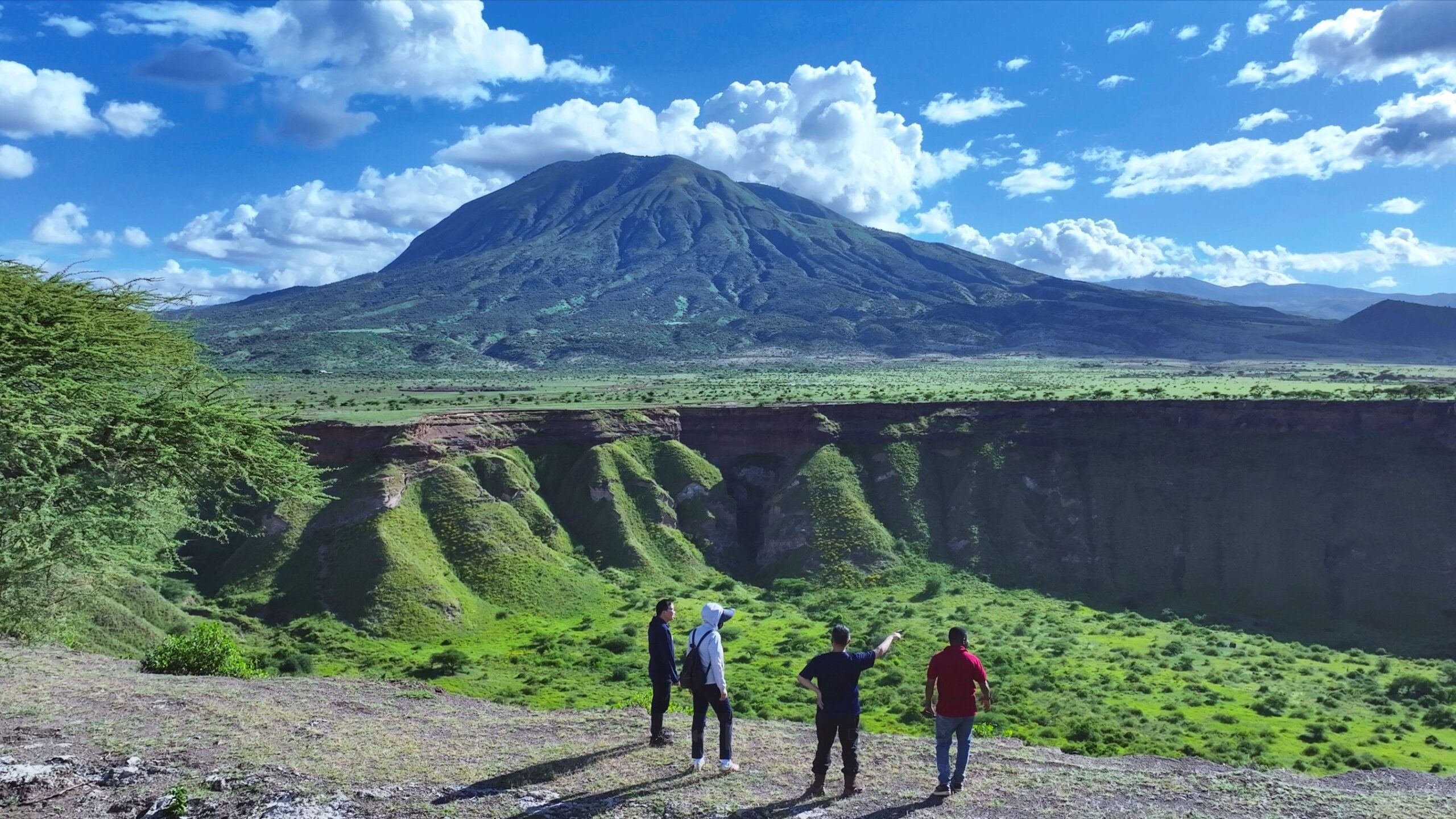
In September 2023, over 50 climbers gathered at the Ol Doinyo Lengai volcano in Tanzania’s Ngorongoro-Lengai Global Geopark to conduct a crucial geoheritage survey. These climbers, comprising both Chinese and Tanzanian nationals, spent more than seven hours ascending the volcano to observe molten lava flowing through the crater. Their expedition aimed to gather essential data as part of a reconstruction project funded by the Chinese government, aimed at revitalizing Tanzania’s first and only global geopark.
The Ngorongoro-Lengai Global Geopark, situated in northeastern Tanzania, is recognized for its significant geological features, including the iconic Ngorongoro Crater and the active Ol Doinyo Lengai volcano. It spans approximately 12,000 square kilometers across the districts of Ngorongoro, Karatu, and Monduli. In 2018, UNESCO designated it as a global geopark, but by 2022, the site received a yellow warning due to inadequate infrastructure and visitor information. To rectify these issues, China stepped in, offering technical and financial support.
During Tanzanian President Samia Suluhu Hassan‘s visit to China in November 2022, she and Chinese President Xi Jinping signed a project agreement to address the challenges facing the geopark. This initiative, backed by the Chinese Embassy in Tanzania and the China Geological Survey, includes both technical assistance and physical infrastructure improvements led by the China Railway 25th Bureau Group.
Ren Junping, director of the Southern Africa Geological Survey Cooperation Center of the Tianjin Center, highlighted the project’s complexity. “We are responsible for the entire workflow, from planning and implementation to construction,” he stated. The team faced challenges balancing local needs and environmental respect, as well as logistical difficulties due to frequent rainfall.
The investigation of geological heritage resources formed the project’s foundation, providing data essential for spatial planning, scientific expeditions, and developing a comprehensive database of geological and cultural resources. Over the past year, the team conducted extensive surveys, examining geological sites and groundwater sources, while also interpreting remote sensing data.
Project member Sun Kai emphasized the project’s unique demands. “This project requires more comprehensive capabilities than domestic geological heritage work,” he remarked. It not only encompasses geological surveys but also involves creating visitor information for public outreach.
To enhance the visitor experience, the team has developed a tourist-oriented service platform utilizing China’s information technology, which integrates resource data with interpretive and information systems. Nearly 300 signs, written in English, Swahili, and Chinese, have been installed throughout the geopark. A field interpretation system is also operational, offering information in seven languages, including French and Arabic.
The new geological museum, a vital component of the geopark, draws architectural inspiration from traditional Tanzanian thatched huts. It features solar panels to power interactive exhibits and is designed to educate visitors about volcanic activities and human evolution in the region. Wu Xingyuan, another project member, noted the museum’s significance and the unique experiences it offers to visitors.
The geopark serves as a vital habitat for over 300,000 wild animals, including elephants and lions. To protect these creatures, the project has established strict operational hours, ensuring the area is free of human activity by 17:00.
In a bid to honor the indigenous Maasai community, the project team organized tours that allow visitors to engage with the Maasai way of life, including traditional food and dance experiences. Additionally, a one-month talent training program has been implemented for local residents, equipping them with geological knowledge and skills in monitoring geological disasters.
Following extensive efforts, UNESCO revalidated the Ngorongoro-Lengai Global Geopark in December 2024, recognizing the progress made through the Chinese aid project. The project is on track for completion by November 2025.
Zhang Jianping, vice-president of the Global Geoparks Network, emphasized the importance of the project for enhancing local infrastructure and economic opportunities. “It has boosted cultural exchanges and ecological protection,” he stated, underscoring the geopark’s rich geological and biological resources.
Zhang Zhonghui, a senior engineer with the Geological Society of China, described the project as a model for international cooperation. He noted that it has not only helped Tanzania develop unique cultural and tourism products but also achieved long-term community empowerment through training and livelihood improvements.

Arlene Hartman, Beloved Community Member, Passes at 87

Urgent: Vehicle Fire Closes Two Lanes on I-215 in Salt Lake City

Knicks Dominate Raptors 116-94 at Home, Extend Winning Streak

Hallmark’s ‘Christmas at the Catnip Café’ Premieres Tonight!

Millville Woman Arrested for Threatening U-Haul Worker with Baton

Japan’s PM Takaichi Confirms Continued Fiscal Management Strategy

Bitcoin Plummets Below $88K Amid Tether Concerns and Warnings

Designers Unveil 5 Urgent Tricks to Transform Outdoor Eyesores

Shark Teeth Research Reveals Urgent Need to Protect Species

University of Hawaiʻi Joins $25.6M AI Initiative to Monitor Disasters

Toledo City League Announces Hall of Fame Inductees for 2024

DOJ Seizes $15 Billion in Bitcoin from Major Crypto Fraud Network

Sharp Launches Five New Aquos QLED 4K Ultra HD Smart TVs

Celtics Coach Joe Mazzulla Dominates Local Media in Scrimmage

Community Unites for 7th Annual Walk to Raise Mental Health Awareness

Mutual Advisors LLC Increases Stake in SPDR Portfolio ETF

Western Executives Confront Harsh Realities of China’s Manufacturing Edge

INK Entertainment Launches Exclusive Sofia Pop-Up at Virgin Hotels
-
Science4 weeks ago
University of Hawaiʻi Joins $25.6M AI Initiative to Monitor Disasters
-
 Lifestyle2 months ago
Toledo City League Announces Hall of Fame Inductees for 2024
-
 Business2 months ago
DOJ Seizes $15 Billion in Bitcoin from Major Crypto Fraud Network
-
 Top Stories2 months ago
Sharp Launches Five New Aquos QLED 4K Ultra HD Smart TVs
-
 Sports2 months ago
Celtics Coach Joe Mazzulla Dominates Local Media in Scrimmage
-
 Health2 months ago
Community Unites for 7th Annual Walk to Raise Mental Health Awareness
-
 Politics2 months ago
Mutual Advisors LLC Increases Stake in SPDR Portfolio ETF
-
 Science2 months ago
Western Executives Confront Harsh Realities of China’s Manufacturing Edge
-
 World2 months ago
INK Entertainment Launches Exclusive Sofia Pop-Up at Virgin Hotels
-

 Politics2 months ago
Major Networks Reject Pentagon’s New Reporting Guidelines
-

 Science1 month ago
Astronomers Discover Twin Cosmic Rings Dwarfing Galaxies
-

 Top Stories1 month ago
Randi Mahomes Launches Game Day Clothing Line with Chiefs