
Science
Scientists Uncover Stunning Details of Edmontosaurus ‘Mummies’

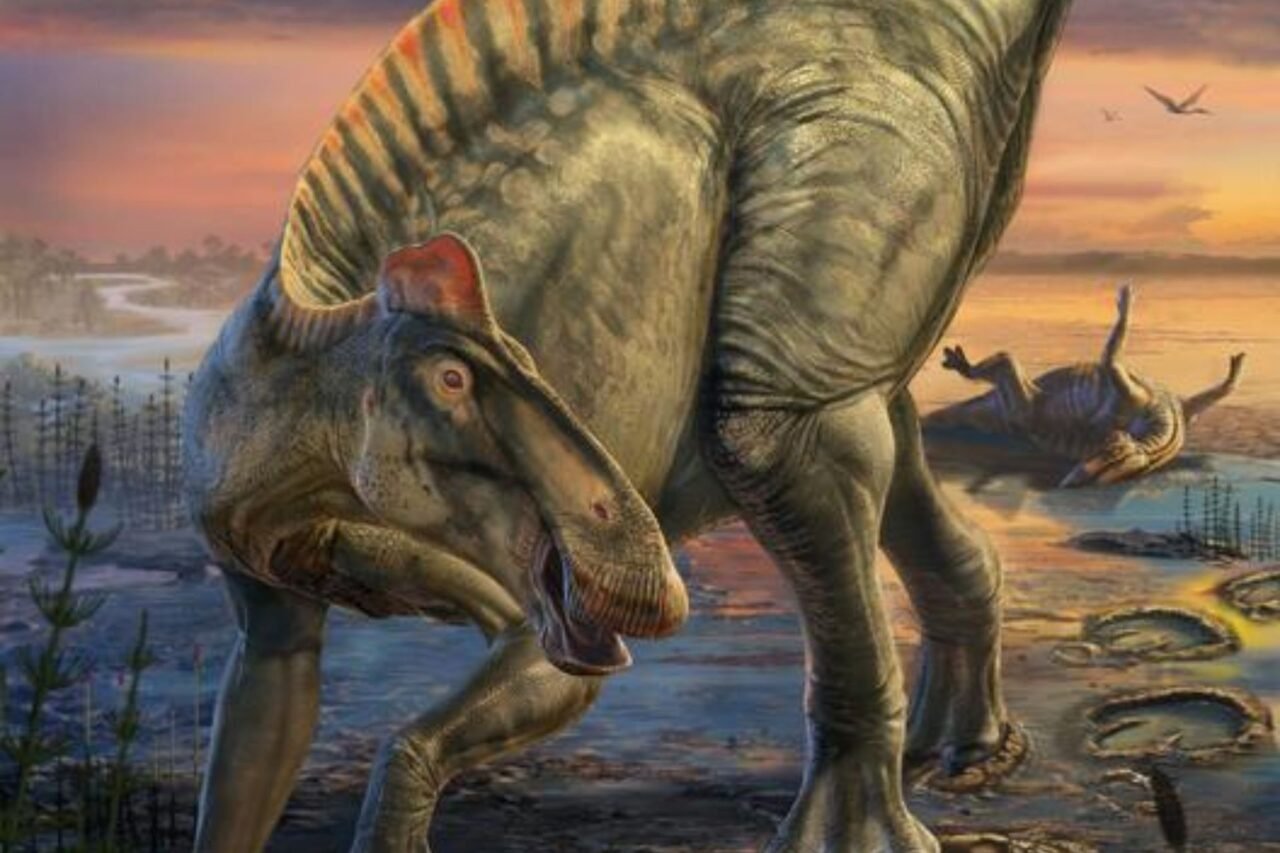
In a groundbreaking study published in the journal Science, researchers have unveiled remarkable details about the extinct dinosaur species Edmontosaurus annectens, based on two exceptionally well-preserved specimens discovered in Wyoming’s so-called “mummy zone.” This area, rich in fossils from the Cretaceous Period, has yielded significant insights into the physical characteristics of this large, duck-billed dinosaur, which roamed the Earth approximately 66 million years ago.
The two fossils, excavated in the early 2000s, comprise a late juvenile and an early adult, both of which retain intricate features such as scales and hooves. Co-author Paul Sereno, a professor of organismal biology and anatomy at the University of Chicago, highlighted the significance of this discovery, stating, “It’s the first time we’ve had a complete, fleshed-out view of a large dinosaur that we can really feel confident about.”
The Preservation Process: Clay Templating Explained
The journey of understanding these fossils began in the early 1900s when researchers first identified well-preserved specimens in the Lance Formation of east-central Wyoming. Over the years, Sereno and his team mapped out this area, coining it the “mummy zone.” Their excavations in 2000 and 2001 revealed the unique preservation process that allowed these fossils to maintain such fine details.
Unlike traditional mummies, which preserve soft tissue, the skin and spikes of the E. annectens specimens were preserved as a delicate clay film. This phenomenon, known as clay templating, occurred shortly after the dinosaurs died. A flash flood buried the carcasses in sediment, and decaying organic matter was coated in a thin layer of bacteria. This layer attracted clay from the surrounding sediment, forming a protective mask that eventually fossilized.
Sereno explained, “This is a mask, a template, a clay layer so thin you could blow it away. It was attracted to the outside of the carcass in a fluke event of preservation.” The resulting layer, measuring just 0.01 inches (approximately 0.02 centimeters) thick, created a three-dimensional cast of the dinosaurs’ true surfaces.
Reconstructing the Appearance of Edmontosaurus
Utilizing the preserved features of these mummies, researchers were able to reconstruct the living appearance of Edmontosaurus annectens. The analysis revealed that these dinosaurs had a fleshy crest along their neck and back, which transitioned into a single row of tail spikes. Notably, the hind feet of the adult specimen exhibited wedge-shaped hooves, a significant discovery in the study of land vertebrates.
“There are so many amazing ‘firsts’ preserved in these duck-billed mummies—the earliest hooves documented in a land vertebrate, the first confirmed hooved reptile, and the first hooved four-legged animal with different forelimb and hindlimb posture,” Sereno noted.
In light of these findings, digital artists have worked to recreate the appearance and movement of E. annectens as it walked on soft mud at the end of the Cretaceous Period. This artistic interpretation provides a coherent narrative about the fossils and their importance in understanding dinosaur biology.
As researchers continue to explore the “mummy zone,” further discoveries may shed light on other aspects of dinosaur life and evolution. The ongoing work in this unique region promises to enhance our understanding of prehistoric life and the conditions that led to such extraordinary fossil preservation.

Arlene Hartman, Beloved Community Member, Passes at 87

Urgent: Vehicle Fire Closes Two Lanes on I-215 in Salt Lake City

Knicks Dominate Raptors 116-94 at Home, Extend Winning Streak

Hallmark’s ‘Christmas at the Catnip Café’ Premieres Tonight!

Millville Woman Arrested for Threatening U-Haul Worker with Baton

Japan’s PM Takaichi Confirms Continued Fiscal Management Strategy

Bitcoin Plummets Below $88K Amid Tether Concerns and Warnings

Designers Unveil 5 Urgent Tricks to Transform Outdoor Eyesores

Shark Teeth Research Reveals Urgent Need to Protect Species

University of Hawaiʻi Joins $25.6M AI Initiative to Monitor Disasters

Toledo City League Announces Hall of Fame Inductees for 2024

DOJ Seizes $15 Billion in Bitcoin from Major Crypto Fraud Network

Sharp Launches Five New Aquos QLED 4K Ultra HD Smart TVs

Celtics Coach Joe Mazzulla Dominates Local Media in Scrimmage

Mutual Advisors LLC Increases Stake in SPDR Portfolio ETF

Community Unites for 7th Annual Walk to Raise Mental Health Awareness

Western Executives Confront Harsh Realities of China’s Manufacturing Edge

INK Entertainment Launches Exclusive Sofia Pop-Up at Virgin Hotels
-
Science4 weeks ago
University of Hawaiʻi Joins $25.6M AI Initiative to Monitor Disasters
-
 Lifestyle2 months ago
Toledo City League Announces Hall of Fame Inductees for 2024
-
 Business2 months ago
DOJ Seizes $15 Billion in Bitcoin from Major Crypto Fraud Network
-
 Top Stories2 months ago
Sharp Launches Five New Aquos QLED 4K Ultra HD Smart TVs
-
 Sports2 months ago
Celtics Coach Joe Mazzulla Dominates Local Media in Scrimmage
-
 Politics2 months ago
Mutual Advisors LLC Increases Stake in SPDR Portfolio ETF
-
 Health2 months ago
Community Unites for 7th Annual Walk to Raise Mental Health Awareness
-
 Science2 months ago
Western Executives Confront Harsh Realities of China’s Manufacturing Edge
-
 World2 months ago
INK Entertainment Launches Exclusive Sofia Pop-Up at Virgin Hotels
-

 Politics2 months ago
Major Networks Reject Pentagon’s New Reporting Guidelines
-

 Science1 month ago
Astronomers Discover Twin Cosmic Rings Dwarfing Galaxies
-

 Top Stories1 month ago
Randi Mahomes Launches Game Day Clothing Line with Chiefs