
Science
Texas Senators Challenge Smithsonian Over Space Shuttle Discovery

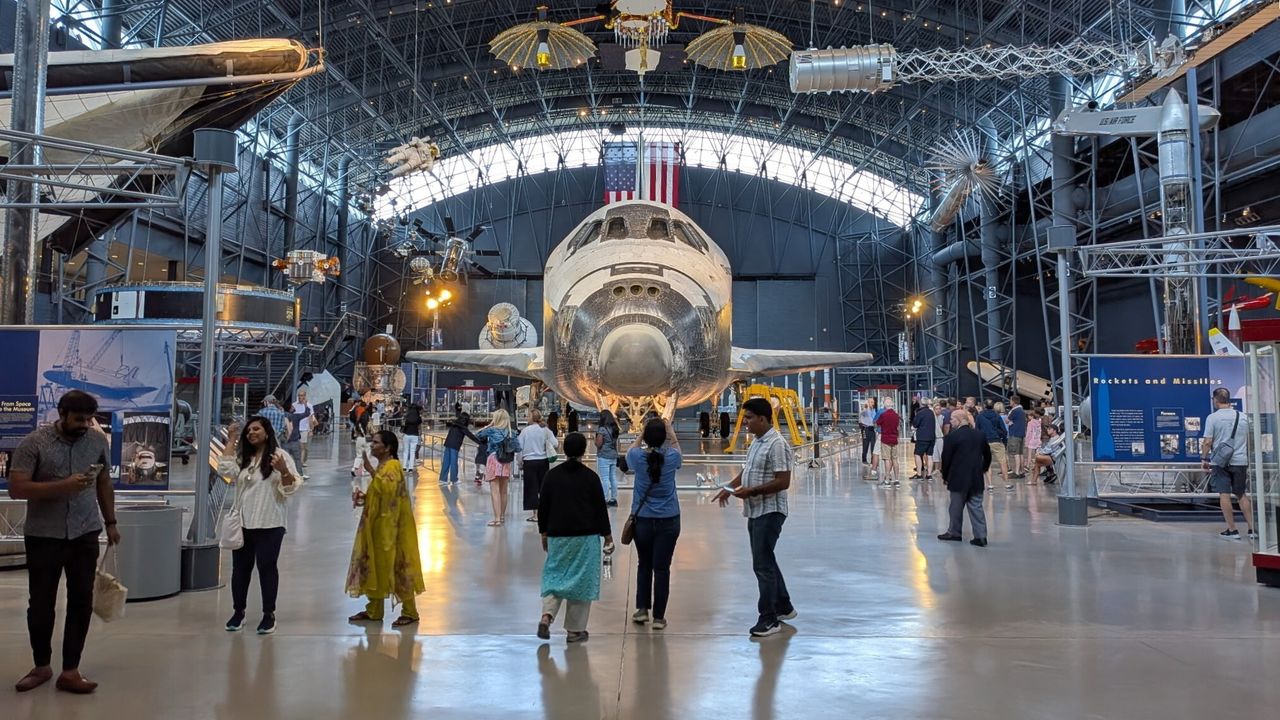
The ongoing dispute over the fate of the space shuttle Discovery has escalated, drawing the attention of the United States Department of Justice (DOJ). Texas Senators John Cornyn and Ted Cruz, along with Representative Randy Weber, are calling for an investigation into the Smithsonian Institution regarding alleged violations of the Anti-Lobbying Act. They argue that the Smithsonian has improperly utilized federal funds to oppose a legislative initiative that mandates the shuttle’s transfer to Houston, Texas.
In a letter sent to Attorney General Pam Bondi on October 22, 2023, the Texas lawmakers accuse the Smithsonian of engaging in lobbying efforts to prevent the relocation of Discovery from the Udvar-Hazy Center in Virginia. They claim the institution coordinated with journalists and inflated cost estimates associated with the move. This controversy stems from the “Bring the Space Shuttle Home Act,” which was introduced in April but failed in committee. Although the legislation was later integrated into President Donald Trump’s “One Big Beautiful Bill Act” (OBBBA), it did not explicitly mention Discovery but referenced the transfer of a human-flown space vehicle to a NASA center involved in the Commercial Crew Program.
When signed on July 4, 2023, the OBBBA set a deadline for NASA’s administrator to select a vehicle and offered an 18-month timeline for relocation. The Texas lawmakers describe Houston as “the cornerstone of America’s human space exploration program” and express eagerness for Discovery’s arrival.
The Smithsonian, however, maintains that it owns Discovery outright and has raised substantive concerns about the legality of removing an artifact from its national collection. In a letter to Congress earlier this month, the Smithsonian indicated that relocating Discovery could require partial disassembly, with estimated costs ranging from $120 million to $150 million. This figure significantly exceeds the $85 million allocated in the OBBBA, which has not yet been appropriated.
Discovery was designated to the Smithsonian more than a decade ago through a competitive selection process following the retirement of the space shuttle fleet in 2011. Various institutions, including the Kennedy Space Center and California Science Center, submitted bids for the remaining shuttles. Ultimately, Discovery was awarded to the Smithsonian, with NASA transferring full ownership rights in 2012. The Smithsonian asserts its legal responsibility for the shuttle’s conservation and long-term stewardship.
Texas lawmakers have challenged both the Smithsonian’s cost estimates for transporting Discovery and its legal claim to ownership. Their letter cites “industry experts” who suggest that the actual relocation costs could be significantly lower than the Smithsonian’s projections. Furthermore, they dispute the characterization of the Smithsonian as anything but a government entity.
Historically, the Smithsonian is recognized as a “trust instrumentality,” a unique entity created by Congress. While it receives two-thirds of its funding from the federal government, it operates independently in managing its national collection, which is held in trust for the American public.
In their communication with the DOJ, Cornyn, Cruz, and Weber argue that the Smithsonian’s actions may violate the Anti-Lobbying Act, which prohibits the use of federal funds to influence Congress regarding legislative matters. The lawmakers contend that Smithsonian personnel may have used appropriated funds to obstruct the implementation of the OBBBA.
“This is a silly attempt to silence the Smithsonian from publicly defending their full and permanent ‘right, title and interest’ of Discovery,” stated Joe Stief, founder of KeeptheShuttle.org, an independent group opposing the shuttle’s relocation.
The Smithsonian is governed by a Board of Regents, which includes significant figures such as the Chief Justice of the Supreme Court and members from both the House of Representatives and the Senate. Stief noted that the lawmakers’ complaint mirrors an earlier appeal to Chief Justice John Roberts, which did not receive a public response.
The lawmakers’ letter references multiple court rulings that recognize the Smithsonian as a federal institution. This classification raises questions about whether the Smithsonian’s communications with Congress would be considered lobbying under the Anti-Lobbying Act, as such communications are typically seen as intragovernmental coordination.
As the government shutdown impacts operations, the Smithsonian has not commented on the Texas lawmakers’ letter, leaving the outcome of this legal tug-of-war uncertain. The dispute underscores the complexities surrounding federal entities and their obligations in the stewardship of national artifacts.

Arlene Hartman, Beloved Community Member, Passes at 87

Urgent: Vehicle Fire Closes Two Lanes on I-215 in Salt Lake City

Knicks Dominate Raptors 116-94 at Home, Extend Winning Streak

Hallmark’s ‘Christmas at the Catnip Café’ Premieres Tonight!

Millville Woman Arrested for Threatening U-Haul Worker with Baton

Japan’s PM Takaichi Confirms Continued Fiscal Management Strategy

Bitcoin Plummets Below $88K Amid Tether Concerns and Warnings

Designers Unveil 5 Urgent Tricks to Transform Outdoor Eyesores

Shark Teeth Research Reveals Urgent Need to Protect Species

University of Hawaiʻi Joins $25.6M AI Initiative to Monitor Disasters

Toledo City League Announces Hall of Fame Inductees for 2024

DOJ Seizes $15 Billion in Bitcoin from Major Crypto Fraud Network

Sharp Launches Five New Aquos QLED 4K Ultra HD Smart TVs

Celtics Coach Joe Mazzulla Dominates Local Media in Scrimmage

Community Unites for 7th Annual Walk to Raise Mental Health Awareness

Mutual Advisors LLC Increases Stake in SPDR Portfolio ETF

Western Executives Confront Harsh Realities of China’s Manufacturing Edge

INK Entertainment Launches Exclusive Sofia Pop-Up at Virgin Hotels
-
Science4 weeks ago
University of Hawaiʻi Joins $25.6M AI Initiative to Monitor Disasters
-
 Lifestyle2 months ago
Toledo City League Announces Hall of Fame Inductees for 2024
-
 Business2 months ago
DOJ Seizes $15 Billion in Bitcoin from Major Crypto Fraud Network
-
 Top Stories2 months ago
Sharp Launches Five New Aquos QLED 4K Ultra HD Smart TVs
-
 Sports2 months ago
Celtics Coach Joe Mazzulla Dominates Local Media in Scrimmage
-
 Health2 months ago
Community Unites for 7th Annual Walk to Raise Mental Health Awareness
-
 Politics2 months ago
Mutual Advisors LLC Increases Stake in SPDR Portfolio ETF
-
 Science2 months ago
Western Executives Confront Harsh Realities of China’s Manufacturing Edge
-
 World2 months ago
INK Entertainment Launches Exclusive Sofia Pop-Up at Virgin Hotels
-

 Politics2 months ago
Major Networks Reject Pentagon’s New Reporting Guidelines
-

 Science1 month ago
Astronomers Discover Twin Cosmic Rings Dwarfing Galaxies
-

 Top Stories1 month ago
Randi Mahomes Launches Game Day Clothing Line with Chiefs