
Health
Cardamom Extract Emerges as Potential Natural Antiviral Treatment

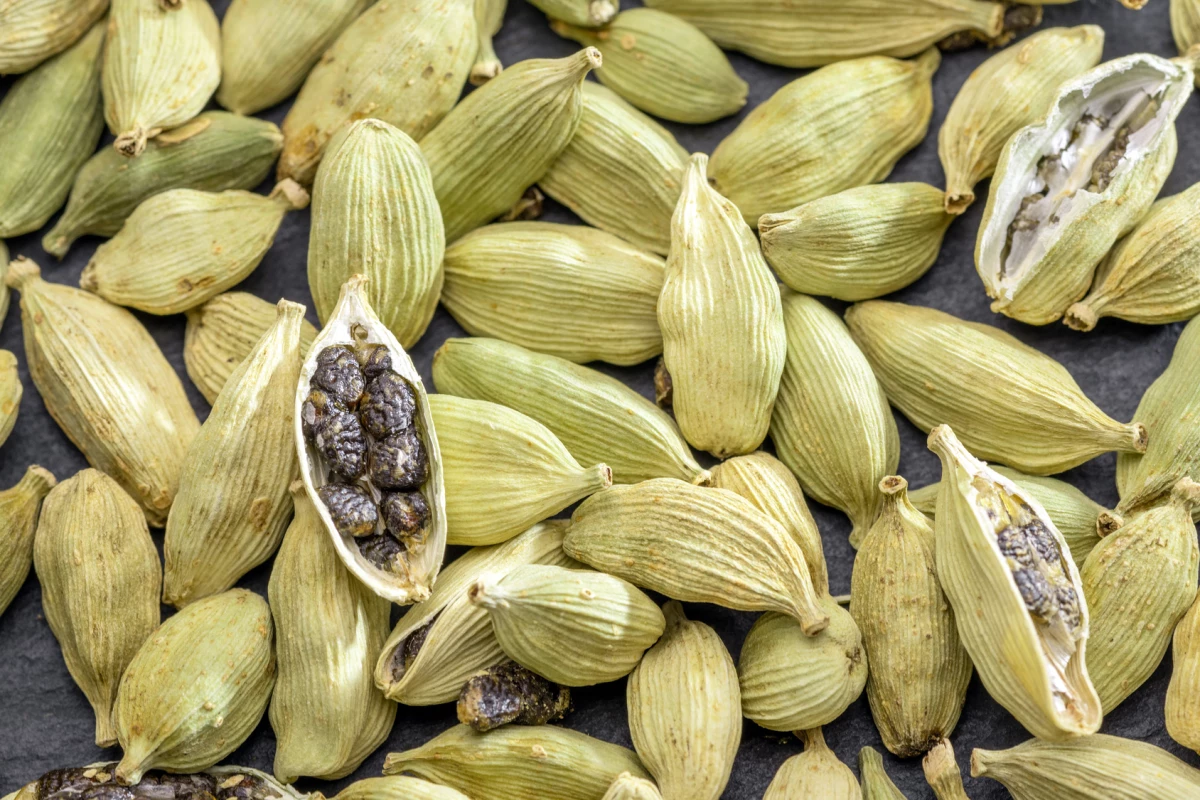
Recent research from Shinshu University in Japan highlights the potential of cardamom extract as a natural antiviral treatment. Compounds found in cardamom seeds may activate the body’s virus-detecting systems, paving the way for alternative approaches to combatting common respiratory viruses like colds and influenza.
The study, led by Takeshi Kawahara, an Associate Professor at the university’s School of Science and Technology, focuses on how cardamom seeds can enhance the production of type I interferons (IFNs). These proteins are crucial in the immune response, acting as early responders when a virus infiltrates the body. By binding to receptors on both infected and healthy cells, IFNs signal the production of numerous interferon-stimulated genes (ISGs) that instigate an antiviral state, limiting viral replication.
In the study, researchers prepared a hot-water extract of cardamom seeds (CSWE) and meticulously analyzed its chemical composition. They confirmed that 1,8-cineole, a compound known for its anti-inflammatory and antimicrobial properties, was a major component. This compound has been utilized in traditional medicine and is recognized for its potential health benefits.
The researchers treated human lung epithelial cells, which serve as a defense against respiratory pathogens, with CSWE and 1,8-cineole. They then exposed these cells to molecules that mimic viral DNA and RNA to simulate an infection. Findings revealed that CSWE significantly elevated levels of IFN-α and IFN-β, two vital antiviral molecules. Additionally, it enhanced the expression of ISGs, enabling cells to effectively block viral replication.
Remarkably, this enhancement was observed regardless of whether the viral mimic was DNA or RNA, indicating that CSWE activates multiple immune pathways. The study noted that 1,8-cineole also increased IFN and ISG levels in a dose-dependent manner, suggesting that it may help maintain a state of readiness in cells even without a viral threat.
The study goes further to explain the mechanisms behind these effects. The extract primarily utilizes the STING pathway, a built-in virus detection system that prompts the cells to produce IFNs upon detecting viral components. In contrast, 1,8-cineole enhances IFN production by inhibiting a gene known as TIPARP, which typically acts as a brake on the immune response, thus amplifying the body’s defense mechanisms.
Importantly, the extract does not activate pathways associated with inflammation or tissue damage, indicating that it can strengthen antiviral defenses without posing risks of harmful side effects.
Despite these promising results, the researchers acknowledge limitations. All experiments were conducted in laboratory-grown cells rather than in live animals or humans. Moreover, the concentrations used in the study may exceed what is typically achieved through dietary consumption of cardamom. The research was funded by S&B Foods Inc., which also provided the cardamom used in the study.
Looking ahead, if future studies confirm these effects in human subjects, cardamom extract or 1,8-cineole could be developed as a natural immune booster, potentially serving as a supportive therapy alongside vaccines or antiviral medications.
Kawahara expressed optimism about the findings, stating, “Cardamom has historically been widely used as a spice with medicinal properties, but based on these findings, it is expected that it can be utilized as an antiviral material to prevent a wide range of viral infections.” He hopes this research will shift focus toward exploring various food ingredients that may help prevent viral infections in everyday life.
While these findings are exciting, it is essential to remember that they represent preliminary research and should not be regarded as medical advice. Enjoying cardamom tea is not a substitute for vaccines or antiviral treatments. The complete study has been published in the journal Foods.

ECB Confirms Interest Rates Remain Steady Ahead of Year-End

Rolette Record Transitions to New Ownership in Cando Deal

Reverend Thomas Perry Resigns Amid Controversy Over Conduct

University of Arizona Researchers Discover Key to Preventing Scar Tissue

Missouri Sports Betting Launches Amid Ongoing Scandals

Four Arrested in Australia for Alleged International Child Abuse Ring

Rolette Record Sold to Cando Men: Major Change in Local Media

Marsh & McLennan Faces Challenges as Stock Underperforms Financial Sector

Fire Erupts at Indigo Apartments in OKC, Residents Fearful

University of Hawaiʻi Joins $25.6M AI Initiative to Monitor Disasters

Toledo City League Announces Hall of Fame Inductees for 2024

DOJ Seizes $15 Billion in Bitcoin from Major Crypto Fraud Network

Sharp Launches Five New Aquos QLED 4K Ultra HD Smart TVs

Celtics Coach Joe Mazzulla Dominates Local Media in Scrimmage

Mutual Advisors LLC Increases Stake in SPDR Portfolio ETF

Community Unites for 7th Annual Walk to Raise Mental Health Awareness

Western Executives Confront Harsh Realities of China’s Manufacturing Edge

INK Entertainment Launches Exclusive Sofia Pop-Up at Virgin Hotels
-
Science4 weeks ago
University of Hawaiʻi Joins $25.6M AI Initiative to Monitor Disasters
-
 Lifestyle2 months ago
Toledo City League Announces Hall of Fame Inductees for 2024
-
 Business2 months ago
DOJ Seizes $15 Billion in Bitcoin from Major Crypto Fraud Network
-
 Top Stories2 months ago
Sharp Launches Five New Aquos QLED 4K Ultra HD Smart TVs
-
 Sports2 months ago
Celtics Coach Joe Mazzulla Dominates Local Media in Scrimmage
-
 Politics2 months ago
Mutual Advisors LLC Increases Stake in SPDR Portfolio ETF
-
 Health2 months ago
Community Unites for 7th Annual Walk to Raise Mental Health Awareness
-
 Science2 months ago
Western Executives Confront Harsh Realities of China’s Manufacturing Edge
-
 World2 months ago
INK Entertainment Launches Exclusive Sofia Pop-Up at Virgin Hotels
-

 Politics2 months ago
Major Networks Reject Pentagon’s New Reporting Guidelines
-

 Science1 month ago
Astronomers Discover Twin Cosmic Rings Dwarfing Galaxies
-

 Top Stories1 month ago
Randi Mahomes Launches Game Day Clothing Line with Chiefs