
Lifestyle
Historic Raynham Hall Kitchen Blends Bold Colors with Tradition

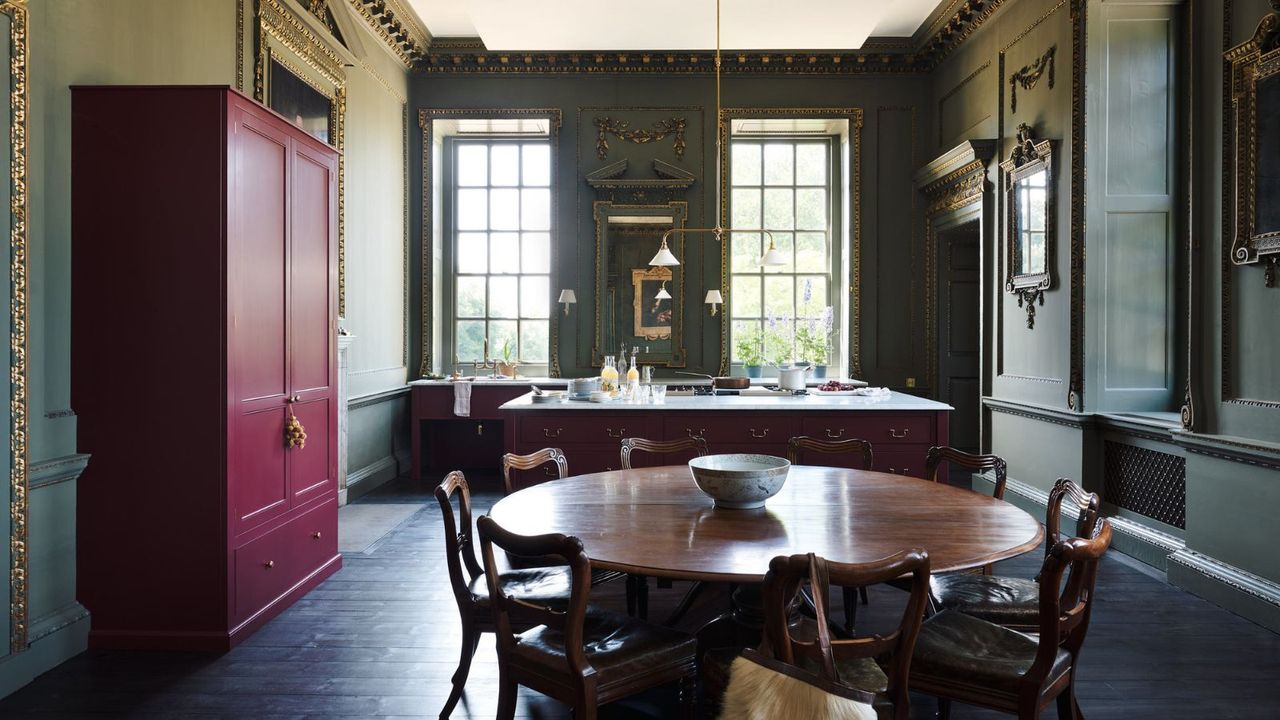
Transforming a kitchen in a historic home presents a unique challenge: balancing modern functionality with the property’s architectural integrity. This was the task undertaken at Raynham Hall, a Grade I listed house in England, known for its rich history and traditional design. The recent renovation has successfully introduced two of 2026’s prominent color trends, demonstrating how bold hues can coexist with classic elements.
The kitchen, which had previously served as an occasional function room, underwent significant changes to become a family-friendly space for owners Octavia and Tom. Francesca Froggatt, head kitchen designer at deVOL Kitchens, led the project, emphasizing the need to respect the home’s historical features. Many of the interiors have remained unaltered since the 1700s, and alterations were subject to strict preservation guidelines.
Froggatt explained that the kitchen’s decoration is part of the listing, meaning every surface, including intricate gilding and wall paintings, had to remain untouched. The walls were painted in a shade believed to be the original color, requiring meticulous restoration in collaboration with Edward Bulmer Paint. The design team focused on infusing warmth and purpose into a space that had long been more ceremonial than functional.
With the original green walls as a backdrop, the choice of cabinetry became crucial. Octavia and Tom selected deVOL’s Refectory Red for the kitchen furniture, a deep hue that complements the historical décor without overwhelming it. This combination creates a sense of intimacy, softening the formal ambiance of the large room.
The cabinetry design also had to accommodate the restrictions imposed by the listing. No fixtures could be attached to the original woodwork or stone, which meant that cabinets and appliances had to be freestanding and sit harmoniously within the existing space. This led to an intentional layout where large appliances were relocated to an adjoining pantry, keeping the main kitchen area unobtrusive and elegant.
Inside the kitchen, the layout was carefully planned. Much of the wall space was occupied by decorative features, leaving a limited area for cabinetry. A freestanding breakfast cupboard became the focal point, while the fridge and freezer were discreetly placed in the pantry. This approach allowed the historic detailing to remain visible, enhancing the overall aesthetic of the room.
Froggatt noted that the balance between the room’s grandeur and the simplicity of the furniture was essential. Instead of opting for ornate designs that could overshadow the historic elements, the aim was to create a timeless and functional kitchen. The chosen Shaker cabinet design, painted in rich tones, introduced a sense of calm and practicality, ensuring the space felt both modern and authentically linked to its past.
Lighting played a significant role in the kitchen’s transformation. The design team focused on creating a welcoming atmosphere in the expansive room. By incorporating warm tones and strategically placing furniture, they successfully made the space feel intimate and inviting, suitable for family gatherings and daily use.
The kitchen at Raynham Hall stands as a testament to the art of blending modern design with historical integrity. It showcases how thoughtful color choices and furniture design can create a space that feels both functional and respectful of its heritage. With the right approach, even the most unexpected color combinations can achieve a timeless elegance, proving that a kitchen can be both stylish and remarkably inviting.

ECB Confirms Interest Rates Remain Steady Ahead of Year-End

Rolette Record Transitions to New Ownership in Cando Deal

Reverend Thomas Perry Resigns Amid Controversy Over Conduct

University of Arizona Researchers Discover Key to Preventing Scar Tissue

Missouri Sports Betting Launches Amid Ongoing Scandals

Four Arrested in Australia for Alleged International Child Abuse Ring

Rolette Record Sold to Cando Men: Major Change in Local Media

Marsh & McLennan Faces Challenges as Stock Underperforms Financial Sector

Fire Erupts at Indigo Apartments in OKC, Residents Fearful

University of Hawaiʻi Joins $25.6M AI Initiative to Monitor Disasters

Toledo City League Announces Hall of Fame Inductees for 2024

DOJ Seizes $15 Billion in Bitcoin from Major Crypto Fraud Network

Sharp Launches Five New Aquos QLED 4K Ultra HD Smart TVs

Celtics Coach Joe Mazzulla Dominates Local Media in Scrimmage

Mutual Advisors LLC Increases Stake in SPDR Portfolio ETF

Community Unites for 7th Annual Walk to Raise Mental Health Awareness

Western Executives Confront Harsh Realities of China’s Manufacturing Edge

INK Entertainment Launches Exclusive Sofia Pop-Up at Virgin Hotels
-
Science4 weeks ago
University of Hawaiʻi Joins $25.6M AI Initiative to Monitor Disasters
-
 Lifestyle2 months ago
Toledo City League Announces Hall of Fame Inductees for 2024
-
 Business2 months ago
DOJ Seizes $15 Billion in Bitcoin from Major Crypto Fraud Network
-
 Top Stories2 months ago
Sharp Launches Five New Aquos QLED 4K Ultra HD Smart TVs
-
 Sports2 months ago
Celtics Coach Joe Mazzulla Dominates Local Media in Scrimmage
-
 Health2 months ago
Community Unites for 7th Annual Walk to Raise Mental Health Awareness
-
 Politics2 months ago
Mutual Advisors LLC Increases Stake in SPDR Portfolio ETF
-
 Science2 months ago
Western Executives Confront Harsh Realities of China’s Manufacturing Edge
-
 World2 months ago
INK Entertainment Launches Exclusive Sofia Pop-Up at Virgin Hotels
-

 Politics2 months ago
Major Networks Reject Pentagon’s New Reporting Guidelines
-

 Science1 month ago
Astronomers Discover Twin Cosmic Rings Dwarfing Galaxies
-

 Top Stories1 month ago
Randi Mahomes Launches Game Day Clothing Line with Chiefs