
World
Séances Flourish After World War I as Families Seek Closure

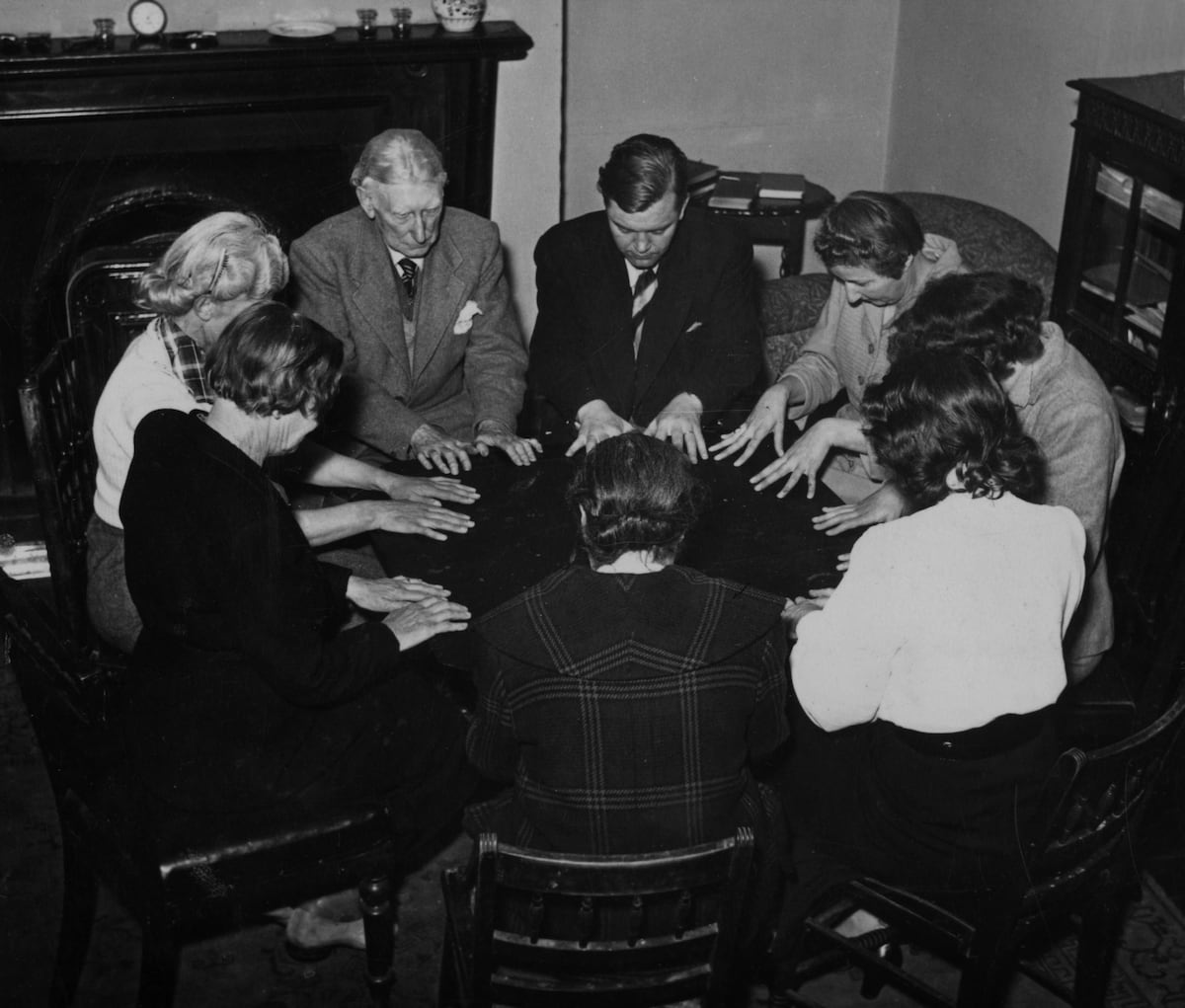
After the devastation of World War I, many families sought comfort through spiritualism, believing they could communicate with their deceased loved ones. One poignant example is the case of Raymond Lodge, a young British soldier who was killed in action at Ypres, France, in September 1915 at the age of just 26. Shortly after his death, Lodge purportedly contacted his father, Sir Oliver Lodge, a noted physicist and member of the Society for Psychical Research. This connection, facilitated by spiritualist medium Mrs. Osborne Leonard, sparked a surge in interest in séances during the post-war period.
Sir Oliver Lodge’s experience with Mrs. Leonard began with a message from his son stating, “TELL FATHER I HAVE MET SOME FRIENDS OF HIS.” This revelation included references to F.W.H. Myers, a deceased founding member of the Society. Initially skeptical, Lodge became increasingly engaged in lengthy séances, which led him to compile the messages into a book titled “Raymond, or Life and Death,” published in 1916. The book resonated deeply with grieving families, leading to multiple editions and copies being sent to soldiers at the front by their loved ones.
The roots of spiritualism trace back to the late 1840s, emerging as a practice that believed in the possibility of communicating with the dead. While interest waned at the turn of the century, the aftermath of World War I saw a remarkable revival. The profound loss experienced during the war—with nearly 9 million soldiers killed—created a fertile ground for séances, as families grappled with their grief.
The popularity of Lodge’s book prompted a wave of similar publications, where other families reported their own messages from deceased soldiers. One notable example is “Claude’s Book,” published in 1919 and “transcribed” from séances conducted by Claude’s mother, L. Kelway-Bamber. Inspired by the success of Lodge’s sittings, Kelway-Bamber enlisted Mrs. Leonard to connect with her son, further highlighting the rising demand for spiritualist mediums.
While modern audiences may view these séances with skepticism, dismissing them as the work of opportunists exploiting public grief, the cultural significance of spiritualism in this context is profound. The unprecedented scale of loss during the war left families devastated. The deaths of young men in their prime were not just personal tragedies; they were collective experiences, as entire communities mourned simultaneously.
Raymond Lodge’s story became emblematic of this grief, allowing families to feel a connection to their lost soldiers. Many wrote their own accounts not merely to capitalize on Raymond’s fame but to honor their own loved ones, making them feel special amid the collective mourning.
The emotional impact of being able to “speak” to deceased soldiers provided solace to many. The idea that these individuals found peace in the afterlife offered a sense of comfort, as families struggled with the harsh realities of war. As Raymond’s mother, Mary Lodge, poignantly noted, “We can face Christmas now,” encapsulating the profound relief that these communications provided.
Critics may argue that spiritualism exploits grief, yet it also served as a mechanism for healing in a time of overwhelming sorrow. The history of ghost-hunting and séances reveals not only fraudulent practices but also highlights a vital avenue for understanding human emotions surrounding death and loss.
By exploring the motivations behind the spiritualist movement from a compassionate perspective, we can gain valuable insights into the human experience, particularly during times of collective trauma. These encounters with the spirit world reflect a deep-seated need for connection and closure, illustrating how individuals sought to navigate their grief in the wake of profound loss.

Arlene Hartman, Beloved Community Member, Passes at 87

Urgent: Vehicle Fire Closes Two Lanes on I-215 in Salt Lake City

Knicks Dominate Raptors 116-94 at Home, Extend Winning Streak

Hallmark’s ‘Christmas at the Catnip Café’ Premieres Tonight!

Millville Woman Arrested for Threatening U-Haul Worker with Baton

Japan’s PM Takaichi Confirms Continued Fiscal Management Strategy

Bitcoin Plummets Below $88K Amid Tether Concerns and Warnings

Designers Unveil 5 Urgent Tricks to Transform Outdoor Eyesores

Shark Teeth Research Reveals Urgent Need to Protect Species

University of Hawaiʻi Joins $25.6M AI Initiative to Monitor Disasters

Toledo City League Announces Hall of Fame Inductees for 2024

DOJ Seizes $15 Billion in Bitcoin from Major Crypto Fraud Network

Sharp Launches Five New Aquos QLED 4K Ultra HD Smart TVs

Celtics Coach Joe Mazzulla Dominates Local Media in Scrimmage

Community Unites for 7th Annual Walk to Raise Mental Health Awareness

Mutual Advisors LLC Increases Stake in SPDR Portfolio ETF

Western Executives Confront Harsh Realities of China’s Manufacturing Edge

INK Entertainment Launches Exclusive Sofia Pop-Up at Virgin Hotels
-
Science4 weeks ago
University of Hawaiʻi Joins $25.6M AI Initiative to Monitor Disasters
-
 Lifestyle2 months ago
Toledo City League Announces Hall of Fame Inductees for 2024
-
 Business2 months ago
DOJ Seizes $15 Billion in Bitcoin from Major Crypto Fraud Network
-
 Top Stories2 months ago
Sharp Launches Five New Aquos QLED 4K Ultra HD Smart TVs
-
 Sports2 months ago
Celtics Coach Joe Mazzulla Dominates Local Media in Scrimmage
-
 Health2 months ago
Community Unites for 7th Annual Walk to Raise Mental Health Awareness
-
 Politics2 months ago
Mutual Advisors LLC Increases Stake in SPDR Portfolio ETF
-
 Science2 months ago
Western Executives Confront Harsh Realities of China’s Manufacturing Edge
-
 World2 months ago
INK Entertainment Launches Exclusive Sofia Pop-Up at Virgin Hotels
-

 Politics2 months ago
Major Networks Reject Pentagon’s New Reporting Guidelines
-

 Science1 month ago
Astronomers Discover Twin Cosmic Rings Dwarfing Galaxies
-

 Top Stories1 month ago
Randi Mahomes Launches Game Day Clothing Line with Chiefs