
World
Expert Questions Military Focus on Venezuela Amid Greater Threats

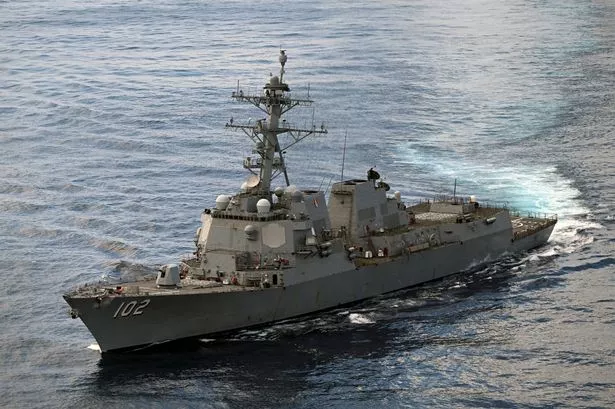
The ongoing debate over U.S. military strategies has intensified as experts weigh in on the current administration’s focus on Venezuela. Frank Rose, a former assistant secretary of state for arms control under President Barack Obama, argues that addressing drug trafficking from Venezuela should not take precedence over more pressing national security threats posed by countries such as China, North Korea, Russia, and Iran.
Recently, President Donald Trump ordered the deployment of Navy assets to the Caribbean to combat the influx of drugs from Venezuela and other Latin American nations. However, Rose contends that these resources would be better utilized in the Indo-Pacific and around Europe, where they can effectively deter significant threats to U.S. national security.
Reassessing Military Priorities
According to Rose, the global landscape of warfare is undergoing profound changes. He noted, “We are witnessing a revolution in warfare. From drone swarms in Ukraine to precision strikes in the Middle East, the world’s strategic situation is fundamentally changing.” He emphasized that while the flow of drugs is a serious issue, it should not distract from the need to focus on state-level threats.
Rose pointed out that the U.S. military’s current deployment strategy could compromise its ability to address critical national security challenges. “Every hour and dollar spent on operations in Latin America detracts from our preparation to deal with key national security challenges,” he stated. He underscored the importance of concentrating military efforts on deterring aggressive actions from countries like China, which is rapidly expanding its naval capabilities.
China’s shipbuilding capacity is reportedly around 200% larger than that of the United States, and Rose believes that the U.S. Navy should prioritize deployment to counter this expansion. “My priority would be to deploy the U.S. Navy’s available assets to the Indo-Pacific as a deterrent to China, which is rapidly expanding the size of its Navy,” he remarked.
Concerns Over Military Engagement in Venezuela
Trump has hinted at potential military strikes targeting installations in Venezuela linked to drug trafficking networks allegedly controlled by Nicolás Maduro and his regime. While there have been recent successful strikes against vessels transporting drugs, Rose argues that such military engagement lacks a clear strategic objective. “Honestly, I don’t know what the strategic objective of the deployment is,” he commented.
Rose also highlighted the financial implications of operating aircraft carrier battle groups in the Caribbean, noting that these resources are limited and costly. He expressed concern that the ongoing deployment of the USS Ford, the U.S. Navy’s latest aircraft carrier, could be better utilized in regions where it can address the more significant threats posed by adversaries.
As of now, approximately 14% of the U.S. Navy’s total assets are deployed in the Caribbean, a move that Rose questions given the pressing security risks in the Indo-Pacific and Europe. He advocates for a strategic reassessment that focuses military efforts on state-level threats while allowing law enforcement and intelligence agencies to handle issues like drug trafficking.
In conclusion, Rose asserts the necessity of prioritizing military focus on deterring major threats from nations like Russia and China. “If law enforcement and intelligence need more resources, let’s provide them the additional resources,” he suggested, emphasizing the importance of a balanced approach to national security.

Hallmark’s ‘Christmas at the Catnip Café’ Premieres Tonight!

Millville Woman Arrested for Threatening U-Haul Worker with Baton

Japan’s PM Takaichi Confirms Continued Fiscal Management Strategy

Bitcoin Plummets Below $88K Amid Tether Concerns and Warnings

Designers Unveil 5 Urgent Tricks to Transform Outdoor Eyesores

Shark Teeth Research Reveals Urgent Need to Protect Species

Church Members Unite in Resilience After Thanksgiving Fire

Community Unites to Attempt World Record for Largest Cookie Exchange

Mayor Lurie Appoints Alan Wong to District 4 Seat Amid Controversy

University of Hawaiʻi Joins $25.6M AI Initiative to Monitor Disasters

Toledo City League Announces Hall of Fame Inductees for 2024

DOJ Seizes $15 Billion in Bitcoin from Major Crypto Fraud Network

Sharp Launches Five New Aquos QLED 4K Ultra HD Smart TVs

Celtics Coach Joe Mazzulla Dominates Local Media in Scrimmage

Mutual Advisors LLC Increases Stake in SPDR Portfolio ETF

Community Unites for 7th Annual Walk to Raise Mental Health Awareness

Western Executives Confront Harsh Realities of China’s Manufacturing Edge

INK Entertainment Launches Exclusive Sofia Pop-Up at Virgin Hotels
-
Science4 weeks ago
University of Hawaiʻi Joins $25.6M AI Initiative to Monitor Disasters
-
 Lifestyle2 months ago
Toledo City League Announces Hall of Fame Inductees for 2024
-
 Business2 months ago
DOJ Seizes $15 Billion in Bitcoin from Major Crypto Fraud Network
-
 Top Stories2 months ago
Sharp Launches Five New Aquos QLED 4K Ultra HD Smart TVs
-
 Sports2 months ago
Celtics Coach Joe Mazzulla Dominates Local Media in Scrimmage
-
 Politics2 months ago
Mutual Advisors LLC Increases Stake in SPDR Portfolio ETF
-
 Health2 months ago
Community Unites for 7th Annual Walk to Raise Mental Health Awareness
-
 Science2 months ago
Western Executives Confront Harsh Realities of China’s Manufacturing Edge
-
 World2 months ago
INK Entertainment Launches Exclusive Sofia Pop-Up at Virgin Hotels
-

 Politics2 months ago
Major Networks Reject Pentagon’s New Reporting Guidelines
-

 Science1 month ago
Astronomers Discover Twin Cosmic Rings Dwarfing Galaxies
-

 Top Stories1 month ago
Randi Mahomes Launches Game Day Clothing Line with Chiefs