
World
F-22 Raptor vs. Su-57 Felon: A 2025 Fighter Jet Showdown

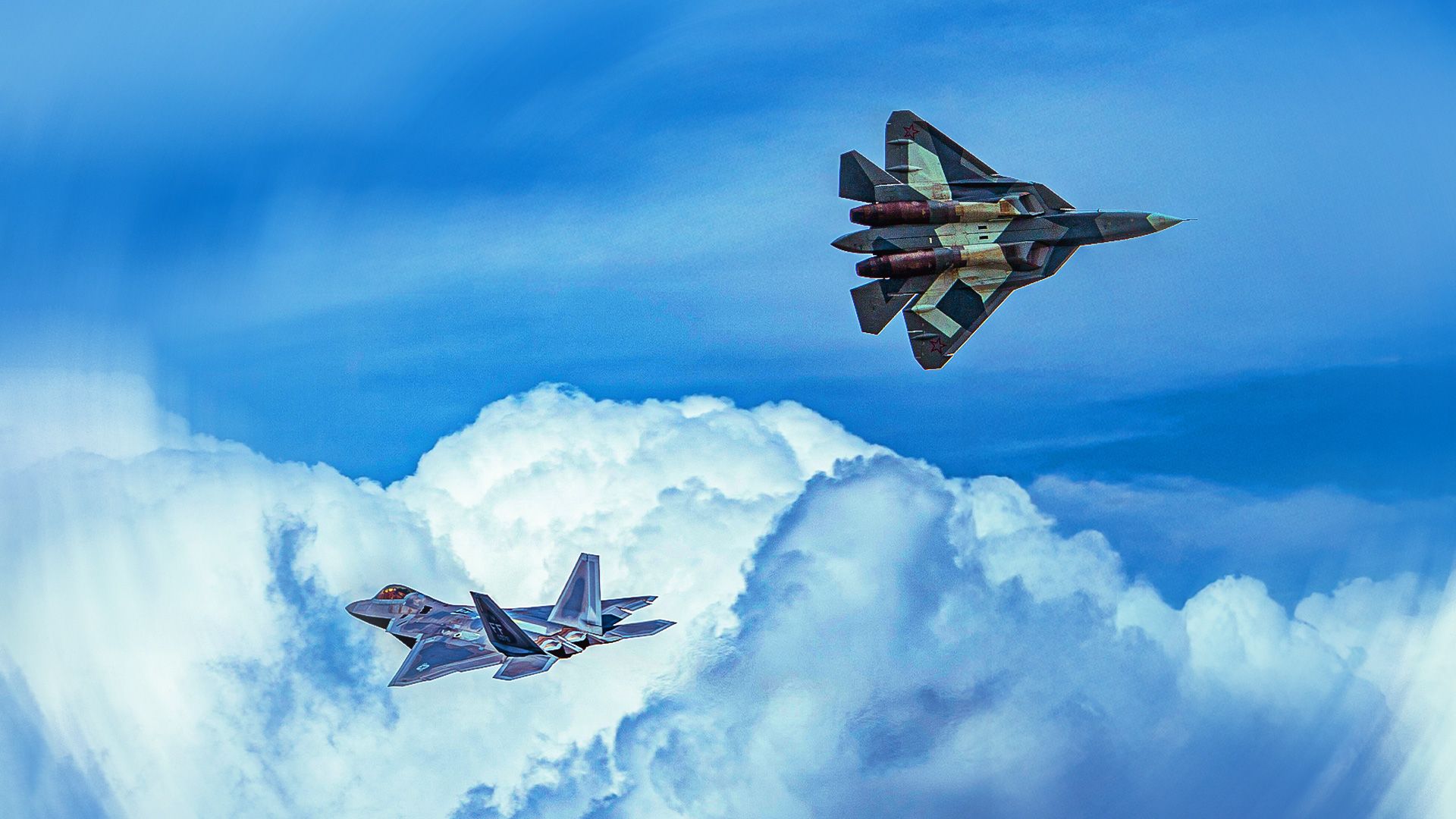
The F-22 Raptor and Sukhoi Su-57 Felon are at the forefront of military aviation, representing two of the most advanced fifth-generation fighter jets. The F-22, developed by Lockheed Martin, has been operational since December 15, 2005, while the Su-57 entered service in December 2020. Both jets are designed for stealthy, multirole operations, but they showcase distinct capabilities and philosophies that reflect the military priorities of their respective nations.
The F-22, exclusively operated by the United States Air Force, has earned a reputation as the stealthiest fighter jet in service. Its design features a remarkably low radar cross-section, making it exceptionally difficult for adversaries to detect. This capability is bolstered by advanced radar-absorbent materials and internal weapon bays that conceal armaments from enemy radar systems. Equipped with the AN/APG-77 active electronically scanned array (AESA) radar, the F-22 excels in its “first look, first shot, first kill” doctrine, allowing it to engage targets effectively without being spotted.
In contrast, the Su-57 Felon, which is exclusively utilized by the Russian Aerospace Forces, was developed to replace the aging Su-27 Flanker family. Although it is newer, the Su-57 combines advanced stealth with superior maneuverability and versatility. The fighter features the N036 Byelka AESA radar and can operate effectively in both air-to-air and air-to-ground roles, thanks to its capacity to carry a wide range of munitions.
Cost and Performance Analysis
While both aircraft are designed for air superiority, their operational costs highlight significant differences. The unit cost of the F-22 is approximately $140 million, with total lifecycle costs soaring to around $350 million when research and development expenses are factored in. In contrast, the Su-57 is available at a much lower unit cost of approximately $50 million. This economic advantage could enhance the Su-57’s appeal, particularly in light of the ongoing economic challenges faced by Russia.
The cost of operating these jets also varies significantly. The F-22 has an estimated cost per flight hour ranging from $60,000 to $80,000, while the Su-57 operates at an estimated cost of $24,000 per flight hour. This disparity in operational costs could influence strategic decisions, especially in prolonged conflict scenarios.
Technological Advancements and Future Prospects
The F-22 Raptor, with its combination of stealth and advanced avionics, was born from the Advanced Tactical Fighter (ATF) program initiated in the 1980s. Its development heavily emphasized first-strike capability, resulting in a highly capable air dominance platform. In contrast, the Su-57 Felon represents a more recent approach to fighter design, focusing on multirole versatility. While the Su-57’s radar cross-section is higher—measured at 0.5 m² compared to the F-22’s 0.0001 m²—its design allows for substantial armament flexibility, enabling it to carry a variety of air-to-air and ground munitions.
Despite its advanced capabilities, the Su-57 program has faced substantial production challenges. Technical setbacks and ongoing Western sanctions have hindered Russia’s ability to ramp up production, with only an estimated 40 Su-57 jets built as of November 2025. This limitation stands in stark contrast to the F-22, which, although it has ceased production, remains a formidable presence in the skies.
As military technologies evolve, both the F-22 and Su-57 will play crucial roles in their air forces, even as the world anticipates the arrival of sixth-generation fighters. Their respective operational philosophies may well set the stage for future developments in aerial combat. The F-22 may continue to excel in stealth and precision, while the Su-57 could leverage its multirole capabilities to adapt to diverse battlefield scenarios.
In summary, the competition between the F-22 Raptor and the Su-57 Felon encapsulates the complexities of modern aerial warfare. Each aircraft brings unique strengths to its military, and their ongoing development will undoubtedly influence global air power dynamics in the years to come.

Fire Erupts at Indigo Apartments in OKC, Residents Fearful

Arlene Hartman, Beloved Community Member, Passes at 87

Urgent: Vehicle Fire Closes Two Lanes on I-215 in Salt Lake City

Knicks Dominate Raptors 116-94 at Home, Extend Winning Streak

Hallmark’s ‘Christmas at the Catnip Café’ Premieres Tonight!

Millville Woman Arrested for Threatening U-Haul Worker with Baton

Japan’s PM Takaichi Confirms Continued Fiscal Management Strategy

Bitcoin Plummets Below $88K Amid Tether Concerns and Warnings

Designers Unveil 5 Urgent Tricks to Transform Outdoor Eyesores

University of Hawaiʻi Joins $25.6M AI Initiative to Monitor Disasters

Toledo City League Announces Hall of Fame Inductees for 2024

DOJ Seizes $15 Billion in Bitcoin from Major Crypto Fraud Network

Sharp Launches Five New Aquos QLED 4K Ultra HD Smart TVs

Celtics Coach Joe Mazzulla Dominates Local Media in Scrimmage

Community Unites for 7th Annual Walk to Raise Mental Health Awareness

Mutual Advisors LLC Increases Stake in SPDR Portfolio ETF

Western Executives Confront Harsh Realities of China’s Manufacturing Edge

INK Entertainment Launches Exclusive Sofia Pop-Up at Virgin Hotels
-
Science4 weeks ago
University of Hawaiʻi Joins $25.6M AI Initiative to Monitor Disasters
-
 Lifestyle2 months ago
Toledo City League Announces Hall of Fame Inductees for 2024
-
 Business2 months ago
DOJ Seizes $15 Billion in Bitcoin from Major Crypto Fraud Network
-
 Top Stories2 months ago
Sharp Launches Five New Aquos QLED 4K Ultra HD Smart TVs
-
 Sports2 months ago
Celtics Coach Joe Mazzulla Dominates Local Media in Scrimmage
-
 Health2 months ago
Community Unites for 7th Annual Walk to Raise Mental Health Awareness
-
 Politics2 months ago
Mutual Advisors LLC Increases Stake in SPDR Portfolio ETF
-
 Science2 months ago
Western Executives Confront Harsh Realities of China’s Manufacturing Edge
-
 World2 months ago
INK Entertainment Launches Exclusive Sofia Pop-Up at Virgin Hotels
-

 Politics2 months ago
Major Networks Reject Pentagon’s New Reporting Guidelines
-

 Science1 month ago
Astronomers Discover Twin Cosmic Rings Dwarfing Galaxies
-

 Top Stories1 month ago
Randi Mahomes Launches Game Day Clothing Line with Chiefs