
Politics
Washington Voters Decide on Constitutional Change for WA Cares Tax

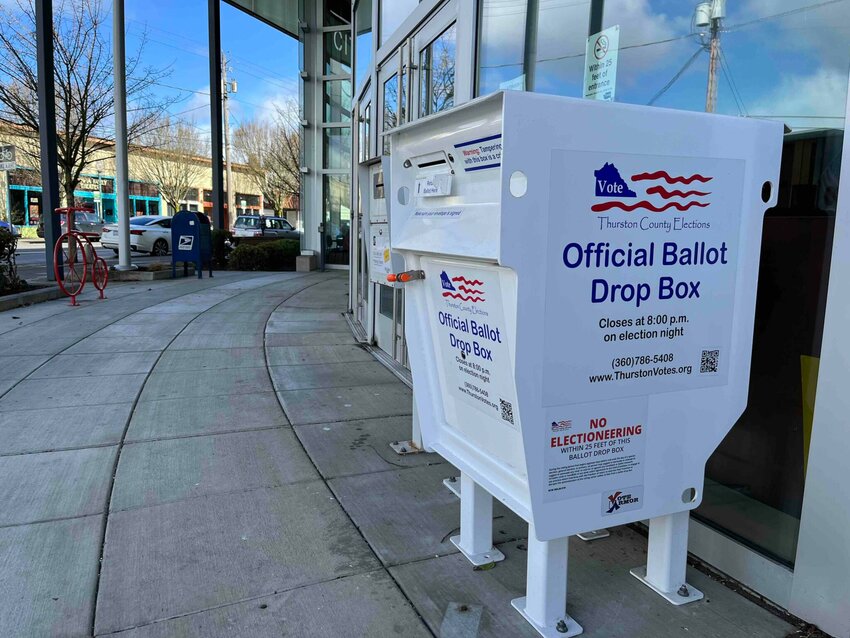
Washington voters are set to make a critical decision regarding the management of billions in taxpayer dollars. The first item on their ballots is Senate Joint Resolution 8201, a proposal that seeks to amend the state constitution to allow investments of payroll taxes collected for the long-term care program, known as WA Cares, in the stock market. If approved, this measure would enable the Washington State Investment Board to manage these assets similarly to public pension and retirement funds.
Potential Benefits and Concerns
Supporters of the proposal argue that investing in the stock market could yield higher returns for the WA Cares program. According to Heather Weiner of the Approve 8201 campaign, the average annual returns for Washington’s pension funds since 1992 have been around 8.9%. This figure suggests that a shift in investment strategy could significantly benefit the program’s beneficiaries. Weiner emphasized, “This doesn’t mean day trading, taking big risks on a stock market. This means smart long-term investing so that in 50 years when people in this audience today will need long-term care, that fund will be there for you.”
Opposing voices include State Sen. Bob Hasegawa, who raised concerns about the potential risks associated with stock market investments. “Our fiduciary responsibility is to the people,” he stated during a recent debate. Hasegawa cautioned that economic downturns are unpredictable, and the vote centers on maintaining prudent fiscal management of taxpayer dollars.
The Washington State Legislature approved the ballot measure earlier this year, passing it with significant margins: 86-9 in the House and 42-7 in the Senate. If more than 50% of voters endorse it on Tuesday, the amendment will become law.
Funding and Future Access
WA Cares was established by a law enacted in 2019 and is funded through a 0.58% payroll tax on most Washington workers. Starting in July 2026, eligible individuals can access a lifetime benefit of $36,500, with future adjustments for inflation. A pilot program is slated to begin in January in selected counties. As of summer 2023, over $2.5 billion had been accumulated in the Long-Term Services and Supports Trust Account.
Currently, the state constitution restricts public funds from being invested in the stock of private companies, forcing state and local governments to rely on safer but lower-yielding fixed-income securities. If the proposed amendment passes, the long-term service account would be added to a list of funds exempt from these restrictions, allowing for a broader range of investment options.
The 2020 ballot included a similar proposal but was defeated, gaining approval in only three counties: King, Jefferson, and Whatcom. Weiner noted that this year’s proposal includes a provision mandating that any earnings from investments must be reinvested into the WA Cares Fund, aiming to prevent lawmakers from reallocating those funds to other budgetary needs.
Support for the measure includes endorsements from Democratic Governor Bob Ferguson and Senate Minority Leader John Braun, alongside organizations like AARP, the Washington State Nurses Association, and the Washington State Council of Fire Fighters. The Service Employees International Union (SEIU) 775, which represents over 55,000 long-term care workers across Washington, Montana, and Alaska, has funded the campaign, reporting a budget of $2.5 million as of last week, significantly higher than their expenditure in the previous election cycle.
As the vote approaches, Hasegawa has pointed out the absence of a funded opposition campaign, echoing sentiments from the last ballot fight. He, along with three Republican state lawmakers, contributed to the voters’ pamphlet statement opposing the measure. Voter statements from both proponents and opponents, along with a detailed explanation prepared by the attorney general’s office, will be accessible on the secretary of state’s website.

Arlene Hartman, Beloved Community Member, Passes at 87

Urgent: Vehicle Fire Closes Two Lanes on I-215 in Salt Lake City

Knicks Dominate Raptors 116-94 at Home, Extend Winning Streak

Hallmark’s ‘Christmas at the Catnip Café’ Premieres Tonight!

Millville Woman Arrested for Threatening U-Haul Worker with Baton

Japan’s PM Takaichi Confirms Continued Fiscal Management Strategy

Bitcoin Plummets Below $88K Amid Tether Concerns and Warnings

Designers Unveil 5 Urgent Tricks to Transform Outdoor Eyesores

Shark Teeth Research Reveals Urgent Need to Protect Species

University of Hawaiʻi Joins $25.6M AI Initiative to Monitor Disasters

Toledo City League Announces Hall of Fame Inductees for 2024

DOJ Seizes $15 Billion in Bitcoin from Major Crypto Fraud Network

Sharp Launches Five New Aquos QLED 4K Ultra HD Smart TVs

Celtics Coach Joe Mazzulla Dominates Local Media in Scrimmage

Mutual Advisors LLC Increases Stake in SPDR Portfolio ETF

Community Unites for 7th Annual Walk to Raise Mental Health Awareness

Western Executives Confront Harsh Realities of China’s Manufacturing Edge

INK Entertainment Launches Exclusive Sofia Pop-Up at Virgin Hotels
-
Science4 weeks ago
University of Hawaiʻi Joins $25.6M AI Initiative to Monitor Disasters
-
 Lifestyle2 months ago
Toledo City League Announces Hall of Fame Inductees for 2024
-
 Business2 months ago
DOJ Seizes $15 Billion in Bitcoin from Major Crypto Fraud Network
-
 Top Stories2 months ago
Sharp Launches Five New Aquos QLED 4K Ultra HD Smart TVs
-
 Sports2 months ago
Celtics Coach Joe Mazzulla Dominates Local Media in Scrimmage
-
 Politics2 months ago
Mutual Advisors LLC Increases Stake in SPDR Portfolio ETF
-
 Health2 months ago
Community Unites for 7th Annual Walk to Raise Mental Health Awareness
-
 Science2 months ago
Western Executives Confront Harsh Realities of China’s Manufacturing Edge
-
 World2 months ago
INK Entertainment Launches Exclusive Sofia Pop-Up at Virgin Hotels
-

 Politics2 months ago
Major Networks Reject Pentagon’s New Reporting Guidelines
-

 Science1 month ago
Astronomers Discover Twin Cosmic Rings Dwarfing Galaxies
-

 Top Stories1 month ago
Randi Mahomes Launches Game Day Clothing Line with Chiefs