
Top Stories
CEOs Challenge Assumptions on Driverless Tech as Deployment Surges

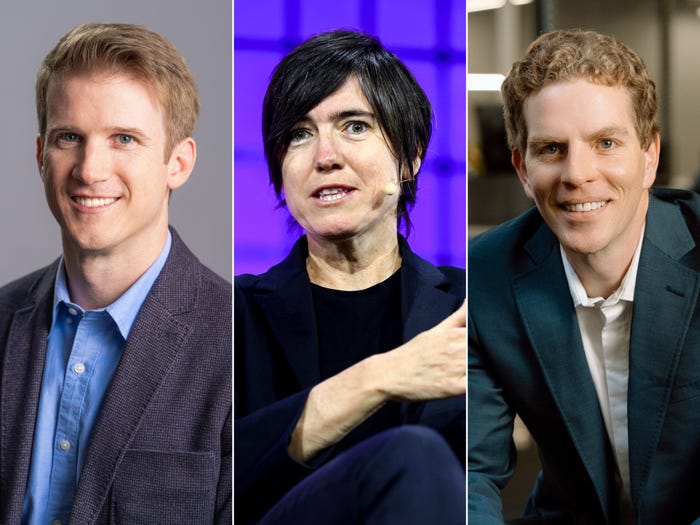
UPDATE: Three industry leaders—Don Burnette, Raquel Urtasun, and Dave Ferguson—are reshaping the narrative around driverless technology, challenging widely held beliefs as their companies prepare for mass deployment. In urgent interviews with Business Insider, these CEOs revealed critical insights that could redefine the future of autonomous vehicles.
The excitement surrounding autonomous driving has skyrocketed, fueled by advancements in artificial intelligence. As the market braces for a surge in driverless technology, leaders from Kodiak, Waabi, and Nuro are on the cusp of major breakthroughs. Burnette’s Kodiak recently deployed eight driverless trucks in the Permian Basin, transporting essential materials for hydraulic fracking. Urtasun’s Waabi is set to roll out fully autonomous trucks in partnership with Volvo by the end of this year, while Ferguson’s Nuro is gearing up to launch robotaxis with Uber in 2026.
These developments come as the industry grapples with the implications of scaling driverless technology. Burnette emphasizes that technology is no longer the bottleneck. “Everyone focuses on the technology,” he stated, adding that the pressing concerns now revolve around profitability and scaling operations. “We’re really past the point where the technology is the question mark.”
However, Ferguson acknowledges that some technical challenges persist, particularly in adapting driverless vehicles to various weather conditions, such as snow. “We have confidence that we will be able to do it,” he assured.
One of the most significant revelations from these discussions is that traditional metrics, like the number of autonomous miles driven, do not necessarily indicate a company’s readiness for full autonomy. “It has nothing to do with the advancements of the technology,” Urtasun explained, arguing that these figures merely reflect a company’s longevity in the industry. “The sample pool of autonomously driven miles for trucks is too small to make a safety case based on the number of miles driven.”
Ferguson added that the gap between supervised and fully autonomous driving is vast, stating, “Getting to the point where you’re comfortable having it drive around communities without a human is a monumental leap.” He shared insights from the early days of Google’s self-driving project, emphasizing that achieving true autonomy is a long-term endeavor.
Another hot topic is the debate over sensor technology. The choice between using lidar or a cameras-only approach has sparked considerable discussion, particularly following remarks from Elon Musk labeling lidar as an expensive crutch. Burnette calls this debate a “huge distraction,” urging the industry to focus on more pressing questions: “How do you make this economically viable? How do you build customer demand?”
Urtasun, a former proponent of the cameras-only approach, has now adopted lidar for its safety benefits. “When I founded Waabi, I abandoned that position,” she said, underscoring the importance of safety in autonomous vehicle deployment.
As the driverless tech landscape evolves, the insights from these CEOs are crucial. They highlight not only the potential of autonomy but also the challenges that lie ahead. The race is on to make driverless technology a reality on roads worldwide.
For those following the evolution of driverless technology, the coming months are set to be transformative. As these companies push forward, all eyes will be on their progress and the implications for the future of transportation.

Urgent: Sewer Improvements Underway in Buffalo’s Fruit Belt

Next-Gen Xbox Magnus Set to Rival Steam Machines with Premium Specs

Trump Issues Ultimatum to Maduro; Venezuela Closes Airspace Amid Tensions

Microsoft Faces Major Windows 11 Crisis as Core Features Fail

Kino Lorber Acquires North American Rights to ‘The Currents’

UGG Offers Historic Discounts on Tasman II Slippers for Cyber Monday

Organizing Committee for 2034 Olympics to Meet Monday Morning

Whitney Leavitt to Star as Roxie Hart in Chicago on Broadway

Berlin Patient Achieves HIV Remission After Cancer Treatment

University of Hawaiʻi Joins $25.6M AI Initiative to Monitor Disasters

Toledo City League Announces Hall of Fame Inductees for 2024

DOJ Seizes $15 Billion in Bitcoin from Major Crypto Fraud Network

Sharp Launches Five New Aquos QLED 4K Ultra HD Smart TVs

Celtics Coach Joe Mazzulla Dominates Local Media in Scrimmage

Mutual Advisors LLC Increases Stake in SPDR Portfolio ETF

Community Unites for 7th Annual Walk to Raise Mental Health Awareness

Western Executives Confront Harsh Realities of China’s Manufacturing Edge

INK Entertainment Launches Exclusive Sofia Pop-Up at Virgin Hotels
-
Science4 weeks ago
University of Hawaiʻi Joins $25.6M AI Initiative to Monitor Disasters
-
 Lifestyle2 months ago
Toledo City League Announces Hall of Fame Inductees for 2024
-
 Business2 months ago
DOJ Seizes $15 Billion in Bitcoin from Major Crypto Fraud Network
-
 Top Stories2 months ago
Sharp Launches Five New Aquos QLED 4K Ultra HD Smart TVs
-
 Sports2 months ago
Celtics Coach Joe Mazzulla Dominates Local Media in Scrimmage
-
 Politics2 months ago
Mutual Advisors LLC Increases Stake in SPDR Portfolio ETF
-
 Health2 months ago
Community Unites for 7th Annual Walk to Raise Mental Health Awareness
-
 Science2 months ago
Western Executives Confront Harsh Realities of China’s Manufacturing Edge
-
 World2 months ago
INK Entertainment Launches Exclusive Sofia Pop-Up at Virgin Hotels
-

 Politics2 months ago
Major Networks Reject Pentagon’s New Reporting Guidelines
-

 Science1 month ago
Astronomers Discover Twin Cosmic Rings Dwarfing Galaxies
-

 Top Stories1 month ago
Randi Mahomes Launches Game Day Clothing Line with Chiefs