
Politics
Coalition Seeks Teal Voters Amid Stance on Net Zero and Immigration

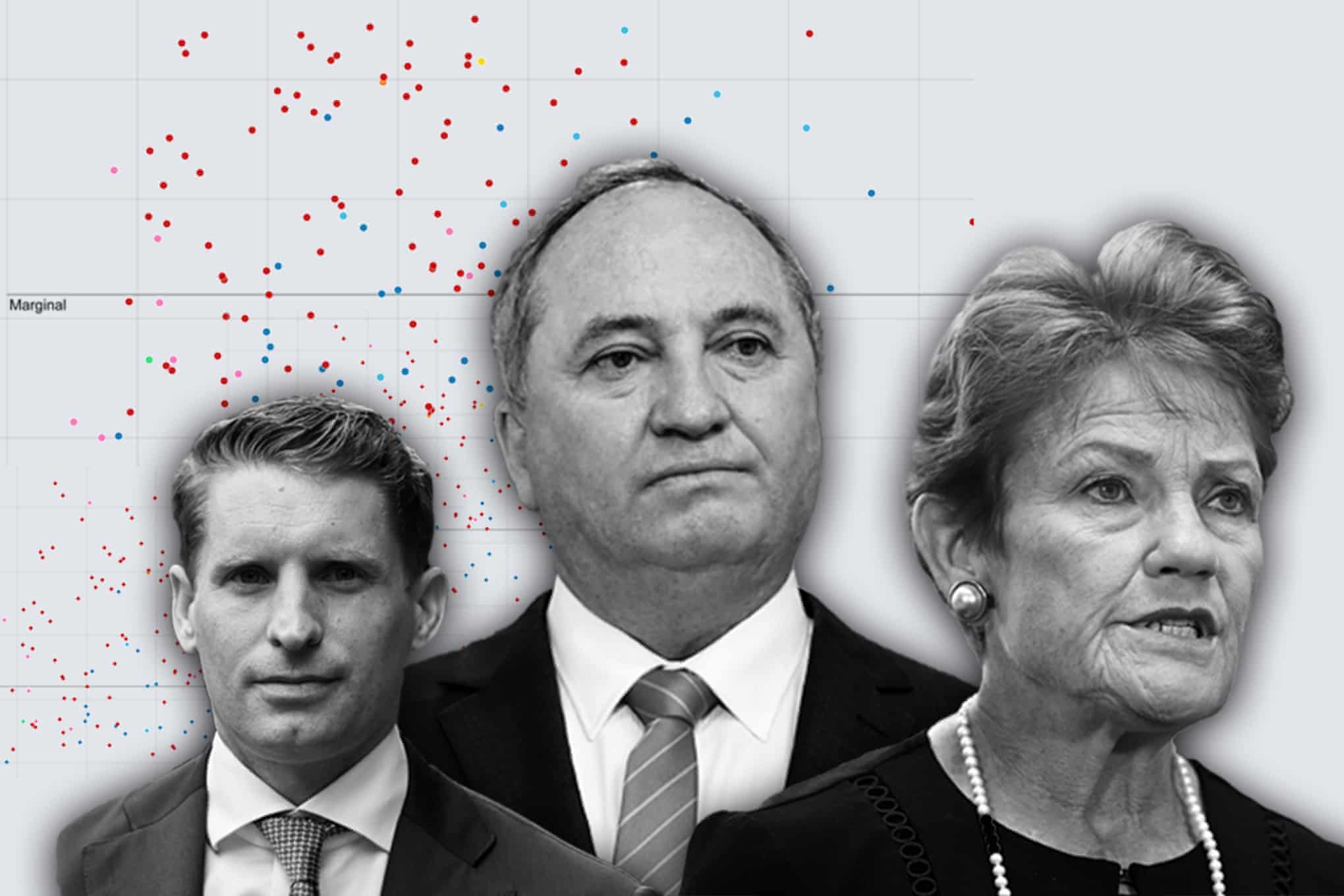
Recent developments within Australia’s Coalition have intensified discussions regarding voter strategy as key figures, including Andrew Hastie and Barnaby Joyce, advocate for a shift in focus towards securing support from teal voters. This comes in the wake of David Littleproud’s announcement that the National Party has officially abandoned its commitment to achieve net zero emissions by 2050. The divide within the Coalition highlights a clash between conservative members who favor stricter immigration policies and a departure from climate commitments and moderates who recognize the need to appeal to urban voters prioritizing climate action.
The question arises: is the Coalition more likely to regain government by courting voters who have shifted to One Nation on the right, or by appealing to the teals in the center? Data from the upcoming 2025 election indicates that targeting the center may prove to be a more viable strategy.
Analysis of recent electoral preferences reveals that the Coalition has little to fear from losing voters to One Nation. In fact, over 68% of One Nation voters in the 2025 election preferred the Coalition over Labor, with only 25% opting for Labor. While One Nation could potentially increase its primary vote, posing a challenge to major parties, historical trends suggest it is unlikely to win federal lower house seats.
Teal Voters Present Greater Opportunity
A hypothetical scenario suggests that if the Coalition could convince all One Nation voters to preference them instead of Labor, the electoral gains would still fall short compared to wooing teal voters. In electoral contests where the Coalition competes against either One Nation or teals, a modest swing of 5% from these voter bases could see the Coalition gain six seats by focusing on teal voters, compared to four from targeting One Nation supporters. This suggests that there may be more electoral value in reclaiming seats previously held by the Coalition, particularly as many of these areas once favored the party.
Despite a potential boost of six seats, this would still leave the Coalition with only 49 overall, insufficient for a majority. The Coalition may consider shifting its focus towards outer suburban areas where One Nation support is stronger. However, a previous attempt to capture outer-suburban Labor seats in the 2025 election failed, with the Coalition’s policies on immigration and climate not resonating with voters.
Understanding the One Nation Voter Base
Understanding the One Nation electorate is crucial. It is a mistake to categorize One Nation voters as a homogenous group. Many cast their votes as a protest against the major parties, showing a willingness to preference the Greens, a more left-leaning party, over the Coalition or Labor. In certain seats, such as Ryan, a notable 18% of One Nation voters preferred the Greens over the Liberals. In other scenarios where the race was between Labor and the Greens, this preference increased to as high as 45%.
As the Coalition navigates this complex political landscape, the focus on attracting teal voters may provide a more strategic pathway back to power. Engaging with issues that resonate with urban constituents, particularly those concerned about climate change, could be the key to reversing their fortunes in the next election cycle.

Bitcoin Plummets Below $88K Amid Tether Concerns and Warnings

Designers Unveil 5 Urgent Tricks to Transform Outdoor Eyesores

Shark Teeth Research Reveals Urgent Need to Protect Species

Church Members Unite in Resilience After Thanksgiving Fire

Community Unites to Attempt World Record for Largest Cookie Exchange

Mayor Lurie Appoints Alan Wong to District 4 Seat Amid Controversy

Mayor Appoints Alan Wong as New Supervisor for District 4

UK Report Reveals AI’s Role in Evaluating University Research Quality

Gabriela Jaquez Shines as No. 3 UCLA Dominates No. 14 Tennessee

University of Hawaiʻi Joins $25.6M AI Initiative to Monitor Disasters

Toledo City League Announces Hall of Fame Inductees for 2024

DOJ Seizes $15 Billion in Bitcoin from Major Crypto Fraud Network

Sharp Launches Five New Aquos QLED 4K Ultra HD Smart TVs

Celtics Coach Joe Mazzulla Dominates Local Media in Scrimmage

Mutual Advisors LLC Increases Stake in SPDR Portfolio ETF

Community Unites for 7th Annual Walk to Raise Mental Health Awareness

Western Executives Confront Harsh Realities of China’s Manufacturing Edge

Major Networks Reject Pentagon’s New Reporting Guidelines
-
Science4 weeks ago
University of Hawaiʻi Joins $25.6M AI Initiative to Monitor Disasters
-
 Lifestyle2 months ago
Toledo City League Announces Hall of Fame Inductees for 2024
-
 Business2 months ago
DOJ Seizes $15 Billion in Bitcoin from Major Crypto Fraud Network
-
 Top Stories2 months ago
Sharp Launches Five New Aquos QLED 4K Ultra HD Smart TVs
-
 Sports2 months ago
Celtics Coach Joe Mazzulla Dominates Local Media in Scrimmage
-
 Politics2 months ago
Mutual Advisors LLC Increases Stake in SPDR Portfolio ETF
-
 Health2 months ago
Community Unites for 7th Annual Walk to Raise Mental Health Awareness
-
 Science2 months ago
Western Executives Confront Harsh Realities of China’s Manufacturing Edge
-
 Politics2 months ago
Major Networks Reject Pentagon’s New Reporting Guidelines
-

 World2 months ago
INK Entertainment Launches Exclusive Sofia Pop-Up at Virgin Hotels
-

 Science1 month ago
Astronomers Discover Twin Cosmic Rings Dwarfing Galaxies
-

 Top Stories1 month ago
Randi Mahomes Launches Game Day Clothing Line with Chiefs