
Top Stories
Powell Confirms AI Firms Are Profitable, Dismisses Bubble Fears

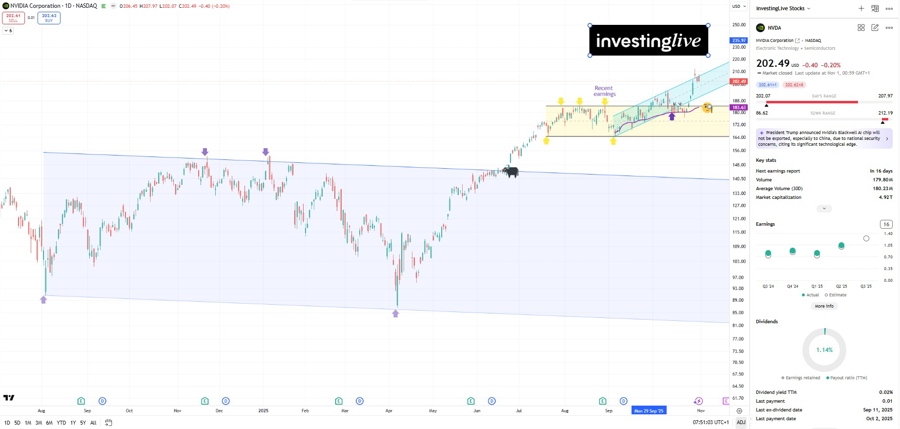
UPDATE: Federal Reserve Chair Jerome Powell has just clarified that the current surge in artificial intelligence investment is fundamentally different from the dot-com bubble of the 1990s. During a recent interview, Powell emphasized that today’s leading AI companies, including Microsoft, Alphabet, Amazon, Nvidia, and Meta, are generating real earnings and cash flow, contrasting sharply with the speculative ventures of the past.
Powell did not explicitly state that “AI spending isn’t a bubble,” but his remarks highlight a critical distinction: these major players are not just startups; they are established, high-margin businesses with measurable profitability. OpenAI, for example, is reportedly generating around $13 billion annually, supported by an estimated 30 to 40 million paying users. Additionally, Google’s Gemini app has quickly amassed hundreds of millions of users globally, further underscoring the financial strength of the sector.
This news is significant as it shifts perceptions around AI investments, which are poised to drive one of the largest productivity shifts in history. According to Itai Levitan, Head of Strategy at investingLive, AI tools are enabling businesses to achieve extraordinary productivity gains, with studies indicating over 10% productivity increases for call-center agents using AI. Consulting firm McKinsey estimates that generative AI could contribute several trillion dollars to the global economy each year.
However, while Powell’s comments are largely optimistic, critics are raising concerns about the sustainability of current AI spending. Many businesses adopting AI technologies are struggling to see consistent returns on their investments. Analysts caution that while leading AI firms are profitable, the broader ecosystem may still face challenges. Not all AI projects will deliver the anticipated ROI, and it remains crucial for investors to discern which segments of the market are truly creating immediate value.
Investors are reminded that timing is key. The major AI companies are reaping rewards now, but smaller application developers may need more time to prove their economic viability. As Powell pointed out, distinguishing between immediate-value spending and speculative investments is essential for navigating this rapidly evolving landscape.
Despite the promising outlook, investors should not rush into buying stocks like Nvidia at current levels without consideration of market dynamics. Round numbers, such as $200 per share for Nvidia, often attract special attention and can lead to liquidity hunts. Long-term investors may find these psychological levels significant for making decisions, as many will either take profits or wait for a pullback before making further investments.
As the conversation around AI spending and profitability continues to develop, it is crucial for investors to stay informed and engaged. Do you believe an AI bubble is forming, or are these investments justified by long-term productivity potential? Share your thoughts in the comments below. Your insights are valuable to this ongoing discussion.
This dialogue around AI’s financial implications is evolving rapidly, and with Powell’s insights, the landscape is clearer than ever for investors looking to navigate the future of technology investment.

Bitcoin Plummets Below $88K Amid Tether Concerns and Warnings

Designers Unveil 5 Urgent Tricks to Transform Outdoor Eyesores

Shark Teeth Research Reveals Urgent Need to Protect Species

Church Members Unite in Resilience After Thanksgiving Fire

Community Unites to Attempt World Record for Largest Cookie Exchange

Mayor Lurie Appoints Alan Wong to District 4 Seat Amid Controversy

Mayor Appoints Alan Wong as New Supervisor for District 4

UK Report Reveals AI’s Role in Evaluating University Research Quality

Gabriela Jaquez Shines as No. 3 UCLA Dominates No. 14 Tennessee

University of Hawaiʻi Joins $25.6M AI Initiative to Monitor Disasters

Toledo City League Announces Hall of Fame Inductees for 2024

DOJ Seizes $15 Billion in Bitcoin from Major Crypto Fraud Network

Sharp Launches Five New Aquos QLED 4K Ultra HD Smart TVs

Celtics Coach Joe Mazzulla Dominates Local Media in Scrimmage

Mutual Advisors LLC Increases Stake in SPDR Portfolio ETF

Community Unites for 7th Annual Walk to Raise Mental Health Awareness

Western Executives Confront Harsh Realities of China’s Manufacturing Edge

INK Entertainment Launches Exclusive Sofia Pop-Up at Virgin Hotels
-
Science4 weeks ago
University of Hawaiʻi Joins $25.6M AI Initiative to Monitor Disasters
-
 Lifestyle2 months ago
Toledo City League Announces Hall of Fame Inductees for 2024
-
 Business2 months ago
DOJ Seizes $15 Billion in Bitcoin from Major Crypto Fraud Network
-
 Top Stories2 months ago
Sharp Launches Five New Aquos QLED 4K Ultra HD Smart TVs
-
 Sports2 months ago
Celtics Coach Joe Mazzulla Dominates Local Media in Scrimmage
-
 Politics2 months ago
Mutual Advisors LLC Increases Stake in SPDR Portfolio ETF
-
 Health2 months ago
Community Unites for 7th Annual Walk to Raise Mental Health Awareness
-
 Science2 months ago
Western Executives Confront Harsh Realities of China’s Manufacturing Edge
-
 World2 months ago
INK Entertainment Launches Exclusive Sofia Pop-Up at Virgin Hotels
-
 Politics2 months ago
Major Networks Reject Pentagon’s New Reporting Guidelines
-

 Science1 month ago
Astronomers Discover Twin Cosmic Rings Dwarfing Galaxies
-

 Top Stories1 month ago
Randi Mahomes Launches Game Day Clothing Line with Chiefs