
Science
Physicists Explore Higgs Boson’s Mysteries at Annual Conference

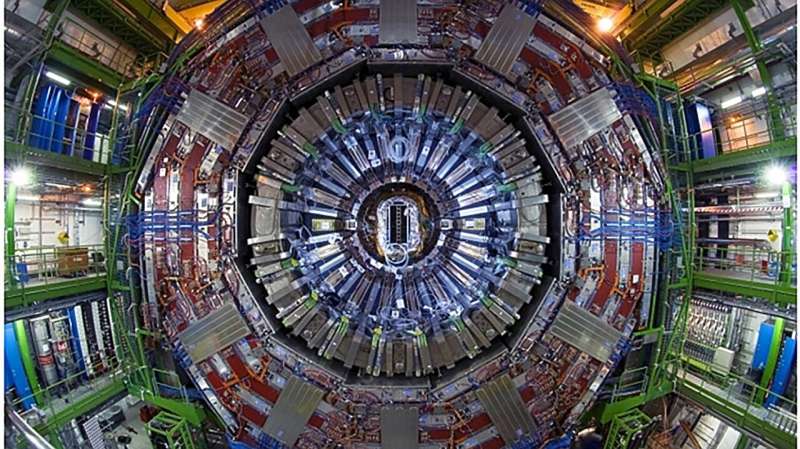
On November 3, 2025, Brown University hosted the annual Higgs Conference, bringing together physicists from around the globe to delve into the complexities surrounding the Higgs boson. This particle, discovered on July 4, 2012, at the Large Hadron Collider (LHC) in Switzerland, has become a focal point for understanding the fundamental mechanisms that govern the universe.
The detection of the Higgs boson marked a significant achievement in both experimental and theoretical physics. It confirmed the existence of the Higgs field, which is essential for explaining how particles acquire mass. The discovery earned the 2013 Nobel Prize in Physics, recognizing the efforts of researchers like David Cutts, Ulrich Heintz, Greg Landsberg, and the late Meenakshi Narain, who contributed to the Compact Muon Solenoid (CMS) experiment at the LHC. The theoretical work of the late Gerald Guralnik also laid the groundwork for understanding the Higgs mechanism.
Despite the landmark discovery, many questions remain. Gaetano Barone and Loukas Gouskos, both assistant professors at Brown and organizers of the conference, highlighted the need for further exploration of the Higgs boson’s properties and interactions. Gouskos explained that the particle’s discovery opened a new chapter in physics, raising inquiries about its interactions with other particles and itself. He noted that any deviations from Standard Model predictions could indicate new forces or particles, suggesting that the journey of discovery is far from over.
Understanding the Higgs boson is vital for addressing some of the universe’s profound mysteries. For instance, precise measurements of the Higgs’s couplings could help explain why matter is more prevalent than antimatter in the universe and could provide insights into the elusive nature of dark matter. Researchers are also interested in the Higgs potential—the energy landscape from which the particle arises. Current knowledge indicates a minimum energy state, but it remains uncertain whether this state is stable or could transition to a lower energy state, an event that would dramatically alter the universe’s fate.
During the conference, approximately 130 attendees engaged in discussions about the current status of Higgs research and future directions. The event kicked off with plenary sessions that reviewed recent findings from the LHC and focused on upcoming research initiatives. A key theme was the development of “tools for precision,” which encompasses advanced detectors and algorithms to enhance data analysis. The conference also addressed future plans for the LHC and the prospect of a new multi-billion-dollar collider project aimed at deepening our understanding of the Higgs boson.
Hosting such a prestigious event positions Brown University as a significant player in the field of particle physics. Gouskos expressed hope that the conference would inspire interest across different disciplines at Brown, particularly in engineering and computer science, where connections to particle physics techniques exist. This gathering also offers students a unique opportunity to engage with leading scientists and gain insights into the scientific process.
As the Higgs Conference concluded, the discussions illuminated the ongoing quest to unravel the mysteries of the Higgs boson, affirming its critical role in our understanding of the universe. With many questions left to explore, the future of particle physics promises to be as exciting as its past.

Millville Woman Arrested for Threatening U-Haul Worker with Baton

Japan’s PM Takaichi Confirms Continued Fiscal Management Strategy

Bitcoin Plummets Below $88K Amid Tether Concerns and Warnings

Designers Unveil 5 Urgent Tricks to Transform Outdoor Eyesores

Shark Teeth Research Reveals Urgent Need to Protect Species

Church Members Unite in Resilience After Thanksgiving Fire

Community Unites to Attempt World Record for Largest Cookie Exchange

Mayor Lurie Appoints Alan Wong to District 4 Seat Amid Controversy

Mayor Appoints Alan Wong as New Supervisor for District 4

University of Hawaiʻi Joins $25.6M AI Initiative to Monitor Disasters

Toledo City League Announces Hall of Fame Inductees for 2024

DOJ Seizes $15 Billion in Bitcoin from Major Crypto Fraud Network

Sharp Launches Five New Aquos QLED 4K Ultra HD Smart TVs

Celtics Coach Joe Mazzulla Dominates Local Media in Scrimmage

Mutual Advisors LLC Increases Stake in SPDR Portfolio ETF

Community Unites for 7th Annual Walk to Raise Mental Health Awareness

Western Executives Confront Harsh Realities of China’s Manufacturing Edge

INK Entertainment Launches Exclusive Sofia Pop-Up at Virgin Hotels
-
Science4 weeks ago
University of Hawaiʻi Joins $25.6M AI Initiative to Monitor Disasters
-
 Lifestyle2 months ago
Toledo City League Announces Hall of Fame Inductees for 2024
-
 Business2 months ago
DOJ Seizes $15 Billion in Bitcoin from Major Crypto Fraud Network
-
 Top Stories2 months ago
Sharp Launches Five New Aquos QLED 4K Ultra HD Smart TVs
-
 Sports2 months ago
Celtics Coach Joe Mazzulla Dominates Local Media in Scrimmage
-
 Politics2 months ago
Mutual Advisors LLC Increases Stake in SPDR Portfolio ETF
-
 Health2 months ago
Community Unites for 7th Annual Walk to Raise Mental Health Awareness
-
 Science2 months ago
Western Executives Confront Harsh Realities of China’s Manufacturing Edge
-
 World2 months ago
INK Entertainment Launches Exclusive Sofia Pop-Up at Virgin Hotels
-

 Politics2 months ago
Major Networks Reject Pentagon’s New Reporting Guidelines
-

 Science1 month ago
Astronomers Discover Twin Cosmic Rings Dwarfing Galaxies
-

 Top Stories1 month ago
Randi Mahomes Launches Game Day Clothing Line with Chiefs