
Top Stories
Syria Faces Uncertain Future as Parliamentary Elections Held

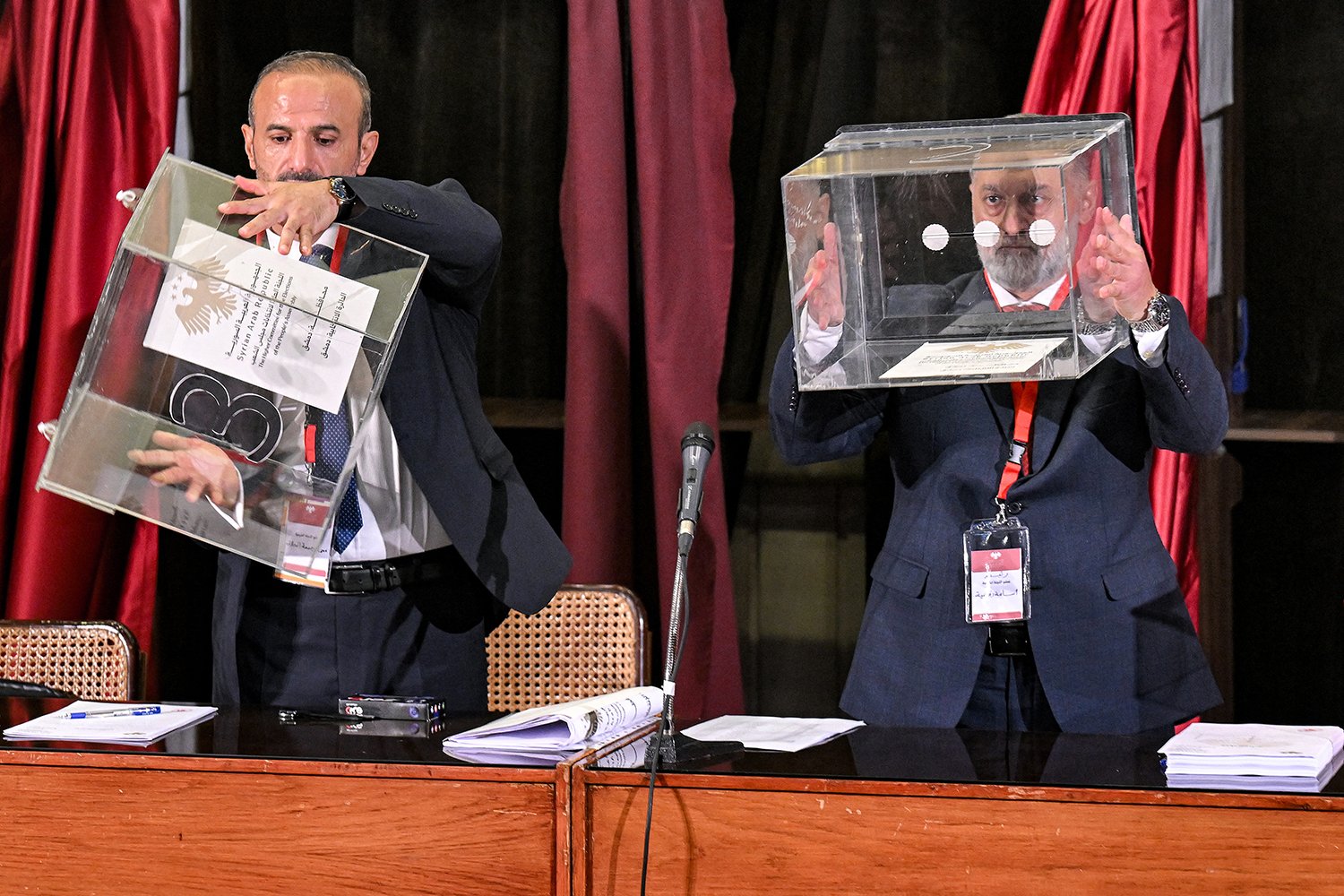
UPDATE: Syria conducted its first parliamentary elections in decades on October 5, 2024, amid widespread skepticism regarding their legitimacy and impact. The elections, held under President Ahmed al-Sharaa‘s transitional government, saw only a few thousand citizens participate through a convoluted electoral college system, raising concerns about true democratic representation.
With the backdrop of a country still grappling with the aftermath of Hafez al-Assad’s authoritarian regime, many observers are questioning whether this election signifies genuine progress or merely perpetuates old patterns of governance. Adham Masoud al-Qaq, a notable figure in Syria’s reform movement, returned from exile to participate, marking a pivotal moment for political engagement in the war-torn nation.
Amidst a backdrop of uncertainty, only about 6,000 delegates were selected to fill 119 of the 210 parliamentary seats, with many constituencies delaying elections indefinitely due to ongoing security issues. The lack of public awareness about the elections has been alarming, with many citizens reportedly unaware that the process was even happening.
The government justified the limited electoral participation, citing the “presence of millions of internally and externally displaced persons” and the “fragility of the legal structure.” In a June statement, officials argued that traditional elections were impossible under current conditions. However, critics like Radwan Ziadeh from the Arab Center Washington DC argue that these elections cannot be deemed legitimate, calling it a mere “formation of Syrian legislative power.”
The elections revealed stark trends in representation. Only 6 seats were won by women, and 10 were captured by minority candidates, while the majority of elected officials were Sunni men from the elite. The elections, although framed as a step towards democratization, are viewed by many as a mechanism to consolidate Sharaa’s power.
Despite the oppressive atmosphere, there were signs of civic engagement. In a series of candidate meetings, delegates expressed enthusiasm for participating in a process that many viewed as a faint glimmer of hope for change. Qaq mentioned that while direct threats were absent, the outcome appeared predetermined, highlighting the flawed nature of the electoral process.
On October 15, Sharaa met with Vladimir Putin in Moscow, and he is scheduled to meet with Donald Trump in November, marking significant diplomatic efforts as he navigates the complexities of leadership in a transitioning Syria.
While some candidates like Mouyad Zaidan faced personal safety issues, including kidnapping attempts linked to remnants of the Assad regime, they remain committed to the political process, underscoring the resilience of those seeking change. Zaidan, reflecting on the elections, remarked, “I had a chance to succeed… we ask Allah for everyone’s success and prosperity,” encapsulating the hope that persists despite daunting challenges.
The coming weeks will be critical as the assembly convenes under Sharaa’s oversight. With a transitional period set to last five years, the world watches to see if Syria can break from its authoritarian past or if old habits will dominate the new political landscape.
Stay tuned for further updates on Syria’s evolving political situation.

Hedge Funds Surge: Citadel, Balyasny, ExodusPoint Report Gains

Broomfield Police Urgently Seek Toy Donations by Dec. 11

Urgent: Sewer Improvements Underway in Buffalo’s Fruit Belt

Next-Gen Xbox Magnus Set to Rival Steam Machines with Premium Specs

Trump Issues Ultimatum to Maduro; Venezuela Closes Airspace Amid Tensions

Microsoft Faces Major Windows 11 Crisis as Core Features Fail

Kino Lorber Acquires North American Rights to ‘The Currents’

UGG Offers Historic Discounts on Tasman II Slippers for Cyber Monday

Organizing Committee for 2034 Olympics to Meet Monday Morning

University of Hawaiʻi Joins $25.6M AI Initiative to Monitor Disasters

Toledo City League Announces Hall of Fame Inductees for 2024

DOJ Seizes $15 Billion in Bitcoin from Major Crypto Fraud Network

Sharp Launches Five New Aquos QLED 4K Ultra HD Smart TVs

Celtics Coach Joe Mazzulla Dominates Local Media in Scrimmage

Mutual Advisors LLC Increases Stake in SPDR Portfolio ETF

Community Unites for 7th Annual Walk to Raise Mental Health Awareness

Western Executives Confront Harsh Realities of China’s Manufacturing Edge

INK Entertainment Launches Exclusive Sofia Pop-Up at Virgin Hotels
-
Science4 weeks ago
University of Hawaiʻi Joins $25.6M AI Initiative to Monitor Disasters
-
 Lifestyle2 months ago
Toledo City League Announces Hall of Fame Inductees for 2024
-
 Business2 months ago
DOJ Seizes $15 Billion in Bitcoin from Major Crypto Fraud Network
-
 Top Stories2 months ago
Sharp Launches Five New Aquos QLED 4K Ultra HD Smart TVs
-
 Sports2 months ago
Celtics Coach Joe Mazzulla Dominates Local Media in Scrimmage
-
 Politics2 months ago
Mutual Advisors LLC Increases Stake in SPDR Portfolio ETF
-
 Health2 months ago
Community Unites for 7th Annual Walk to Raise Mental Health Awareness
-
 Science2 months ago
Western Executives Confront Harsh Realities of China’s Manufacturing Edge
-
 World2 months ago
INK Entertainment Launches Exclusive Sofia Pop-Up at Virgin Hotels
-

 Politics2 months ago
Major Networks Reject Pentagon’s New Reporting Guidelines
-

 Science1 month ago
Astronomers Discover Twin Cosmic Rings Dwarfing Galaxies
-

 Top Stories1 month ago
Randi Mahomes Launches Game Day Clothing Line with Chiefs