
Science
New ‘Lucifer’ Bee Discovered in Australia with Unique Features

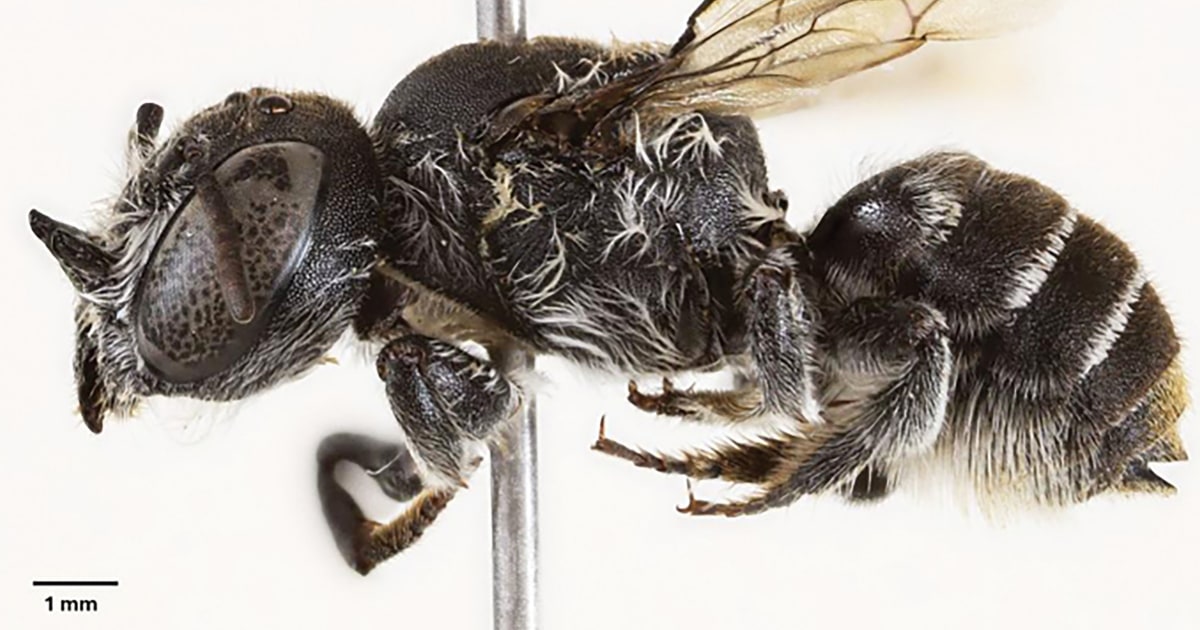
Scientists in Australia have identified a new species of native bee, named Megachile lucifer, featuring distinctive, devil-like horns. Discovered during a survey of a critically endangered wildflower in Western Australia’s Goldfields in 2019, this species is noteworthy for its unique physical traits, as detailed in a study published on October 23, 2023, in the Journal of Hymenoptera Research.
The female bee’s tiny horns, measuring approximately 0.9 millimeters long and pointing upward, inspired its playful name. Lead author of the study, Kit Prendergast, an adjunct research fellow at Curtin University, noted that the name was fitting, as she was influenced by the Netflix show “Lucifer” while writing the species description.
A subsequent DNA analysis revealed that Megachile lucifer did not match any known species in existing databases, marking it as the first new member of this group to be identified in over 20 years. The exact functions of the horns remain uncertain, but researchers suggest they may assist in accessing flowers, competing for resources, and defending nests. Interestingly, male bees of this species do not possess horns.
Significance of the Discovery
This discovery underscores the urgent need for further research into Australia’s native bee populations. Prendergast emphasized that the new species could face threats from habitat disturbance, climate change, and other environmental pressures. She stated, “Without knowing which native bees exist and what plants they depend on, we risk losing both before we even realize they’re there.”
Australia is home to around 2,000 native bee species, with over 300 yet to be scientifically described, according to the CSIRO, Australia’s national science agency. The lack of comprehensive data on these species has resulted in a poor understanding of their conservation status.
Tobias Smith, a bee researcher at the University of Queensland, highlighted the need for stronger policies to protect native bees from habitat loss and increasing risks from megafires. He noted, “Australian authorities need to take action to ensure the preservation of these vital species.”
Smith encourages the public to engage with their environment, stating, “Get outside and look for some native bees and appreciate them.” This call to action reflects a growing recognition of the importance of biodiversity and the role native bees play in ecosystems.
As research continues, the discovery of Megachile lucifer serves not only as a reminder of the richness of Australia’s biodiversity but also as a call to action for the conservation of its native species.

Knicks Dominate Raptors 116-94 at Home, Extend Winning Streak

Hallmark’s ‘Christmas at the Catnip Café’ Premieres Tonight!

Millville Woman Arrested for Threatening U-Haul Worker with Baton

Japan’s PM Takaichi Confirms Continued Fiscal Management Strategy

Bitcoin Plummets Below $88K Amid Tether Concerns and Warnings

Designers Unveil 5 Urgent Tricks to Transform Outdoor Eyesores

Shark Teeth Research Reveals Urgent Need to Protect Species

Church Members Unite in Resilience After Thanksgiving Fire

Community Unites to Attempt World Record for Largest Cookie Exchange

University of Hawaiʻi Joins $25.6M AI Initiative to Monitor Disasters

Toledo City League Announces Hall of Fame Inductees for 2024

DOJ Seizes $15 Billion in Bitcoin from Major Crypto Fraud Network

Sharp Launches Five New Aquos QLED 4K Ultra HD Smart TVs

Celtics Coach Joe Mazzulla Dominates Local Media in Scrimmage

Mutual Advisors LLC Increases Stake in SPDR Portfolio ETF

Community Unites for 7th Annual Walk to Raise Mental Health Awareness

Western Executives Confront Harsh Realities of China’s Manufacturing Edge

INK Entertainment Launches Exclusive Sofia Pop-Up at Virgin Hotels
-
Science4 weeks ago
University of Hawaiʻi Joins $25.6M AI Initiative to Monitor Disasters
-
 Lifestyle2 months ago
Toledo City League Announces Hall of Fame Inductees for 2024
-
 Business2 months ago
DOJ Seizes $15 Billion in Bitcoin from Major Crypto Fraud Network
-
 Top Stories2 months ago
Sharp Launches Five New Aquos QLED 4K Ultra HD Smart TVs
-
 Sports2 months ago
Celtics Coach Joe Mazzulla Dominates Local Media in Scrimmage
-
 Politics2 months ago
Mutual Advisors LLC Increases Stake in SPDR Portfolio ETF
-
 Health2 months ago
Community Unites for 7th Annual Walk to Raise Mental Health Awareness
-
 Science2 months ago
Western Executives Confront Harsh Realities of China’s Manufacturing Edge
-
 World2 months ago
INK Entertainment Launches Exclusive Sofia Pop-Up at Virgin Hotels
-

 Politics2 months ago
Major Networks Reject Pentagon’s New Reporting Guidelines
-

 Science1 month ago
Astronomers Discover Twin Cosmic Rings Dwarfing Galaxies
-

 Top Stories1 month ago
Randi Mahomes Launches Game Day Clothing Line with Chiefs