
Business
Supreme Court Extends Order on SNAP Payments as Shutdown Nears End

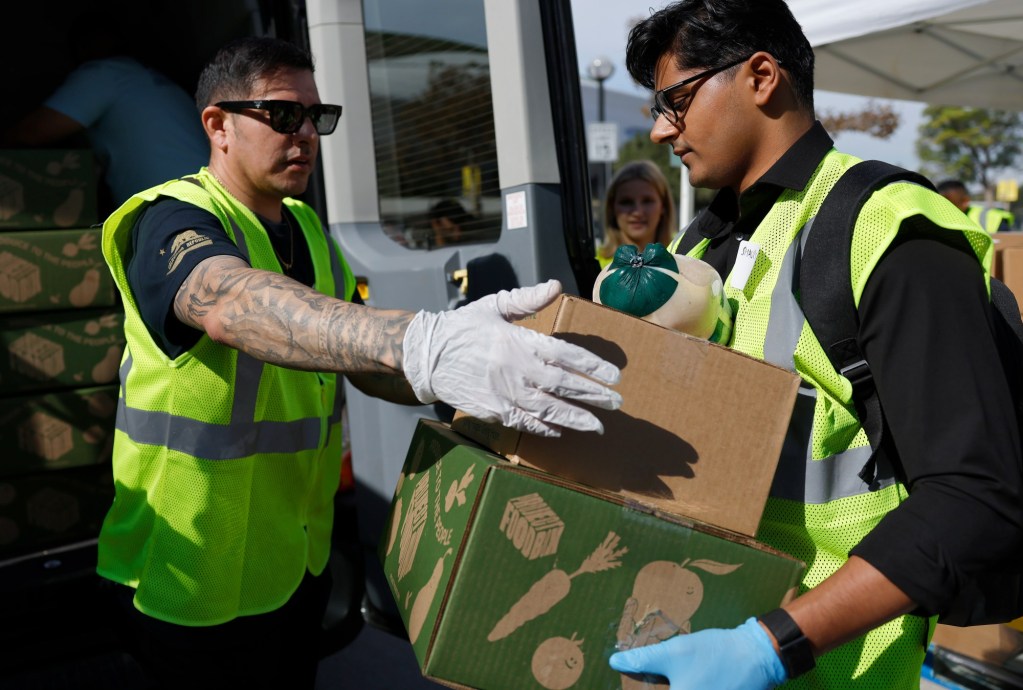
The U.S. Supreme Court has extended an order that temporarily blocks full payments for the Supplemental Nutrition Assistance Program (SNAP), as discussions around ending the federal government shutdown intensify. This decision leaves millions of Americans in a state of uncertainty regarding their food assistance as the order is set to expire just before midnight on Thursday.
The current order has resulted in inconsistent SNAP distributions across the country. Some beneficiaries have received their complete monthly allocations, while others have seen no funds at all. The situation is particularly dire for individuals like Jim Malliard, a full-time caretaker from Pennsylvania, who reported receiving no SNAP benefits by Monday, leaving him with only $10 in his account.
The Senate has already passed a bill to reopen the government, with the House of Representatives expected to vote on it as early as Wednesday. If the government reopens, it could allow for the resumption of benefits that support approximately 42 million Americans in purchasing groceries. However, the timeline for reinitiating full SNAP payments remains unclear.
Legal and Political Context
The Supreme Court’s decision reflects a cautious approach, likely anticipating that the government shutdown will soon conclude. The justices have refrained from making any definitive ruling on whether lower court orders mandating full SNAP payments during the shutdown were legally justified. Justice Ketanji Brown Jackson was the only justice who expressed a desire to immediately restore the lower court orders without further deliberation.
The shutdown has led to significant legal disputes regarding SNAP funding. The Trump administration initially halted SNAP funding after October, which triggered a series of lawsuits and conflicting judicial rulings impacting food access for about one in eight Americans. Earlier this month, a federal appeals court mandated that full funding resume, a requirement that was set to take effect before the Supreme Court intervened.
Legal representatives from the administration argued that the resolution to the funding crisis lies not within the courts but with Congress. Solicitor General D. John Sauer stated, “The answer to this crisis is not for federal courts to reallocate resources without lawful authority. The only way to end this crisis…is for Congress to reopen the government.”
Impact on Families and Communities
As the political negotiations unfold, the urgency for beneficiaries grows. Advocacy groups and policymakers stress that restoring SNAP benefits swiftly is imperative for families relying on this support. According to Carolyn Vega, a policy analyst at the advocacy group Share Our Strength, while states may face technical challenges in processing partial payments, they can typically resume full payments more efficiently.
The emotional toll on families is palpable. Jim Malliard shared the strain he experiences as a caretaker for his wife and daughter, both of whom have significant health challenges. With the absence of SNAP payments, he has resorted to rationing food in his pantry, relying on minimal supplies. “It’s kind of been a lot of late nights, making sure I had everything down to the penny,” he remarked, highlighting the anxiety that many families are facing during this uncertain period.
In communities across the country, individuals are stepping up to help those in need. In Carthage, New York, teacher Ashley Oxenford created a small food pantry in her yard, responding to the urgent needs of vulnerable neighbors. “I figure that I’ve spent money on dumber stuff than trying to feed other people during a manufactured famine,” she said, reflecting the growing sense of solidarity among those affected by the shutdown.
As political leaders negotiate a way forward, the fate of SNAP and the millions who rely on it hangs in the balance. With the potential reopening of the government on the horizon, many are left to wonder how long it will take for full benefits to become available again, and whether the chaos surrounding the program will finally subside.

Cyber Monday Countdown: Grab Top Deals Under $25 NOW!

Federal Appeals Court Blocks Alina Habba as US Attorney for NJ

Trump Administration Mandates SNAP Recipients to Reapply for Benefits

CD Projekt Red Confirms The Witcher 4 Won’t Release in 2026

Air Pollution Linked to Increased Risk of Dementia, Study Finds

U.S. Negotiators Head to Russia After Productive Ukraine Talks

All-SSD NAS Revolutionizes Home Labs: Speed and Efficiency Surge

Urgent Warning: Jim Chanos Sounds Alarm on Nvidia’s Debt Risks

Sister Offers to Buy Brother’s Home Amid Financial Crisis

University of Hawaiʻi Joins $25.6M AI Initiative to Monitor Disasters

Toledo City League Announces Hall of Fame Inductees for 2024

DOJ Seizes $15 Billion in Bitcoin from Major Crypto Fraud Network

Sharp Launches Five New Aquos QLED 4K Ultra HD Smart TVs

Celtics Coach Joe Mazzulla Dominates Local Media in Scrimmage

Community Unites for 7th Annual Walk to Raise Mental Health Awareness

Mutual Advisors LLC Increases Stake in SPDR Portfolio ETF

Western Executives Confront Harsh Realities of China’s Manufacturing Edge

INK Entertainment Launches Exclusive Sofia Pop-Up at Virgin Hotels
-
Science4 weeks ago
University of Hawaiʻi Joins $25.6M AI Initiative to Monitor Disasters
-
 Lifestyle2 months ago
Toledo City League Announces Hall of Fame Inductees for 2024
-
 Business2 months ago
DOJ Seizes $15 Billion in Bitcoin from Major Crypto Fraud Network
-
 Top Stories2 months ago
Sharp Launches Five New Aquos QLED 4K Ultra HD Smart TVs
-
 Sports2 months ago
Celtics Coach Joe Mazzulla Dominates Local Media in Scrimmage
-
 Health2 months ago
Community Unites for 7th Annual Walk to Raise Mental Health Awareness
-
 Politics2 months ago
Mutual Advisors LLC Increases Stake in SPDR Portfolio ETF
-
 Science2 months ago
Western Executives Confront Harsh Realities of China’s Manufacturing Edge
-
 World2 months ago
INK Entertainment Launches Exclusive Sofia Pop-Up at Virgin Hotels
-

 Politics2 months ago
Major Networks Reject Pentagon’s New Reporting Guidelines
-

 Science1 month ago
Astronomers Discover Twin Cosmic Rings Dwarfing Galaxies
-

 Top Stories1 month ago
Randi Mahomes Launches Game Day Clothing Line with Chiefs