
Politics
Trump’s Defamation Lawsuit Against The New York Times Opens New Doors

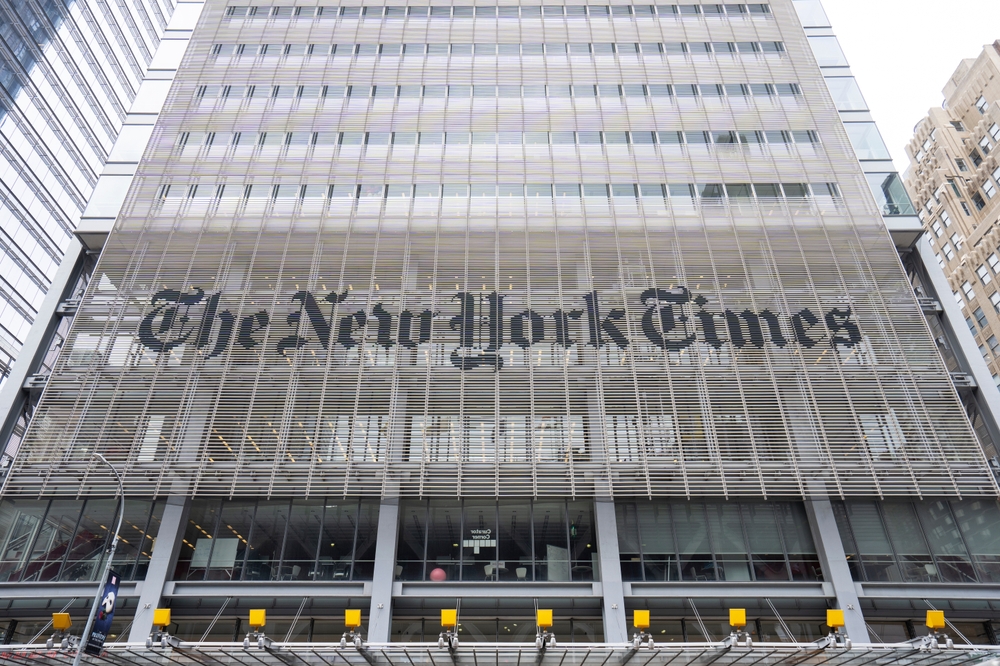
Former President Donald Trump has revived his defamation lawsuit against the New York Times, initially seeking $15 billion in damages. The lawsuit was dismissed in part because the court viewed it as a platform for Trump to express grievances against the publication. In his amended filing in a Florida federal court, Trump claims that two articles and a book produced by the Times contain false and defamatory statements about him.
The legal battle could provide a significant opportunity for the Times to explore Trump’s past. Traditionally, the burden of proof in defamation cases lies with the plaintiff. To succeed, Trump must demonstrate that the statements he finds defamatory are untrue. This principle can lead to extensive discovery processes, allowing the Times to gather evidence that may reveal uncomfortable truths about Trump’s history.
In defending against the lawsuit, the Times has the right to obtain documents and testimonies from Trump and third parties. Notably, one of the statements Trump claims is defamatory suggests that producers of the television show “The Apprentice” had to create a version of him that did not accurately reflect his real persona—”measured, thoughtful and endlessly wealthy.” This statement could lead to requests for outtakes from the show, which reportedly capture Trump making inappropriate comments. While the production company MGM is contractually bound to keep these tapes confidential, a subpoena aimed at obtaining them could be a viable avenue for the Times.
Trump’s allegations extend to the title of a 2024 article—“For Trump, a Lifetime of Scandal Heads Toward a Moment of Judgment”—which he argues is defamatory. This claim opens the door for the Times to investigate a range of scandals linked to Trump. For instance, in 2004, Trump purchased the former Maison de L’Amitié in Palm Beach for $41.35 million and later sold it in 2008 to Russian oligarch Dmitry Rybolovlev for $95 million. Questions arise about whether this transaction could be connected to money laundering or to his known association with Jeffrey Epstein.
Additionally, Trump’s complaint challenges various financial transactions reported by the Times as potential tax frauds. Among these is an allegation of a scheme to evade gift and estate taxes by funneling cash from his father through a sham company. Such transactions are pertinent for discovery, potentially leading to the examination of Trump’s financial records and tax returns.
In many defamation cases, media organizations often seek to have complaints dismissed based on the Supreme Court’s ruling in New York Times vs. Sullivan, which protects the press when reporting on public figures unless malice is proven. While this legal precedent provides a robust defense, the Times may choose to conduct a thorough investigation into Trump’s dealings, leveraging the lawsuit as an opportunity to uphold the principles of free press.
As media entities like ABC, CBS, and the Washington Post have faced criticism for settling with Trump in the past, the current landscape presents an imperative for a news organization to stand firm against his challenges. The American public is increasingly seeking accountability from powerful figures, and this lawsuit could serve as a test of the media’s resolve.
Former Watergate prosecutor and legal expert, Akerman, emphasizes the significance of taking a bold stance in defense of the First Amendment. As the case unfolds, it remains to be seen how the Times will navigate the complexities of Trump’s claims while diligently pursuing the truth. This legal confrontation not only shapes the future of Trump’s public persona but also impacts the broader discourse on press freedom and accountability.

ECB Confirms Interest Rates Remain Steady Ahead of Year-End

Rolette Record Transitions to New Ownership in Cando Deal

Reverend Thomas Perry Resigns Amid Controversy Over Conduct

University of Arizona Researchers Discover Key to Preventing Scar Tissue

Missouri Sports Betting Launches Amid Ongoing Scandals

Four Arrested in Australia for Alleged International Child Abuse Ring

Rolette Record Sold to Cando Men: Major Change in Local Media

Marsh & McLennan Faces Challenges as Stock Underperforms Financial Sector

Fire Erupts at Indigo Apartments in OKC, Residents Fearful

University of Hawaiʻi Joins $25.6M AI Initiative to Monitor Disasters

Toledo City League Announces Hall of Fame Inductees for 2024

DOJ Seizes $15 Billion in Bitcoin from Major Crypto Fraud Network

Sharp Launches Five New Aquos QLED 4K Ultra HD Smart TVs

Celtics Coach Joe Mazzulla Dominates Local Media in Scrimmage

Mutual Advisors LLC Increases Stake in SPDR Portfolio ETF

Community Unites for 7th Annual Walk to Raise Mental Health Awareness

Western Executives Confront Harsh Realities of China’s Manufacturing Edge

INK Entertainment Launches Exclusive Sofia Pop-Up at Virgin Hotels
-
Science4 weeks ago
University of Hawaiʻi Joins $25.6M AI Initiative to Monitor Disasters
-
 Lifestyle2 months ago
Toledo City League Announces Hall of Fame Inductees for 2024
-
 Business2 months ago
DOJ Seizes $15 Billion in Bitcoin from Major Crypto Fraud Network
-
 Top Stories2 months ago
Sharp Launches Five New Aquos QLED 4K Ultra HD Smart TVs
-
 Sports2 months ago
Celtics Coach Joe Mazzulla Dominates Local Media in Scrimmage
-
 Politics2 months ago
Mutual Advisors LLC Increases Stake in SPDR Portfolio ETF
-
 Health2 months ago
Community Unites for 7th Annual Walk to Raise Mental Health Awareness
-
 Science2 months ago
Western Executives Confront Harsh Realities of China’s Manufacturing Edge
-
 World2 months ago
INK Entertainment Launches Exclusive Sofia Pop-Up at Virgin Hotels
-

 Politics2 months ago
Major Networks Reject Pentagon’s New Reporting Guidelines
-

 Science1 month ago
Astronomers Discover Twin Cosmic Rings Dwarfing Galaxies
-

 Top Stories1 month ago
Randi Mahomes Launches Game Day Clothing Line with Chiefs