
Science
NAU and SRP Collaborate to Safeguard Arizona’s Natural Resources

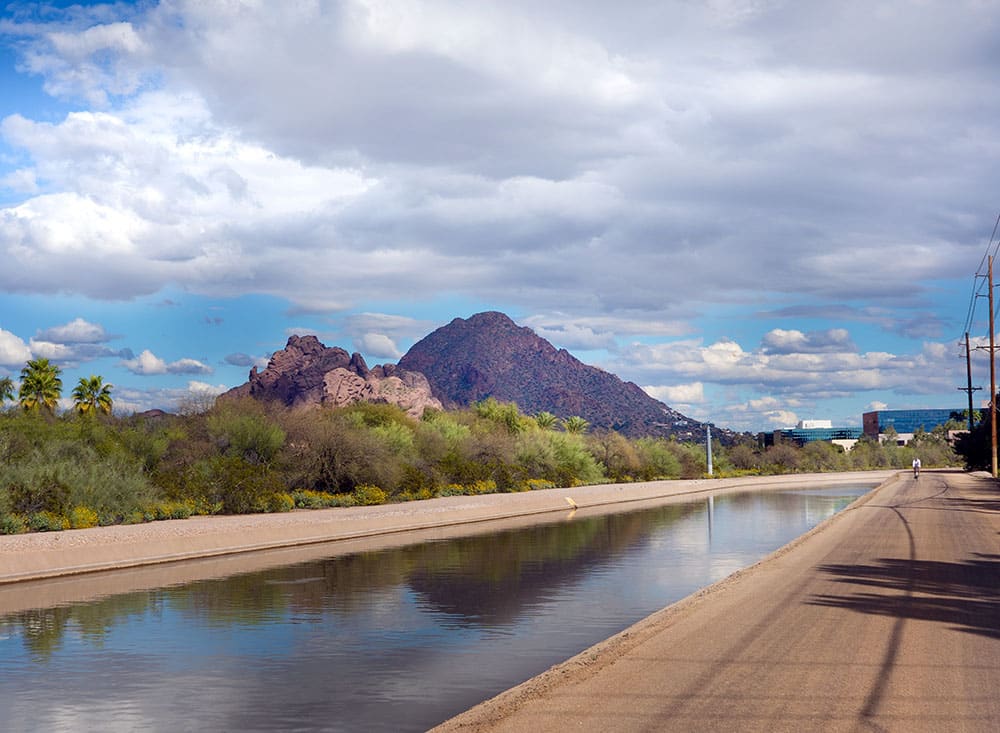
As Arizona grapples with the impacts of climate change, a crucial partnership has emerged between Northern Arizona University (NAU) and the Salt River Project (SRP). This collaboration, now in its eighth year, aims to address pressing environmental challenges, including increased wildfire risks, habitat protection for endangered species, and sustainability in water management.
The ongoing projects highlight the need for innovative solutions to protect Arizona’s natural resources, particularly as the region faces warmer and drier conditions.
Researching the Northern Mexican Gartersnake
One significant initiative under this partnership involves studying the northern Mexican gartersnake, a federally threatened species. Led by Erika Nowak, an associate research professor in the School of Earth and Sustainability, this project focuses on the declining food sources for the snake. The species inhabits river areas across central and southern Arizona.
As drought conditions persist and invasive species proliferate, the snake’s native fish and frog prey are dwindling, making it increasingly elusive. Nowak and her colleague, Faith Walker, conducted surveys along Tonto Creek but found no gartersnakes present. They also observed a lower diversity of prey species compared to other locations. In response, SRP is enhancing the habitat by removing invasive plants and reintroducing native fish and frogs to restore the ecosystem.
Restoring Soil Health After Wildfires
In efforts to protect the watershed surrounding the Salt River, NAU researchers are also focusing on soil recovery post-wildfires. Under the guidance of Matthew Bowker, a professor at NAU, the team has developed biocrust sods to help heal soil affected by fire.
The project, which commenced two years ago, has shown promising results. The biocrusts are effectively suppressing the growth of invasive weeds and fostering the growth of native plants. Bowker emphasizes the importance of adapting to new challenges, stating, “New problems, such as bigger fires in the Sonoran Desert, require new solutions.”
Mitigating Wildfire Risks to Power Infrastructure
Wildfires pose a significant threat to power infrastructure, which is vital for essential services such as healthcare. To combat this risk, Peter Fulé, Regents’ Professor at NAU, leads a team utilizing drones and lidar technology to monitor fuel levels near SRP power line sites. This initiative aims to establish a fuel hazard warning system, providing critical information to manage wildfire risks effectively.
This project marks the fourth year of a multi-year collaboration with SRP, highlighting the commitment to safeguard power infrastructure against the increasing threat of wildfires.
Innovating Leak Detection in Water Pipelines
Addressing water loss is another critical focus for the NAU-SRP partnership. Coordinated by Michael Shafer, a professor of mechanical engineering, the Pipe Leakage Team has developed a non-invasive method to detect leaks in SRP’s irrigation systems.
In the third phase of this project, the team expanded its efforts to map a significant portion of SRP’s pipelines and conducted soil moisture testing to validate leak locations. This innovative approach has led to a notable reduction in processing time, enabling quicker identification of leaks.
Assessing Forest Thinning Effects on Ecosystem Resilience
As wildfires become more prevalent, forest thinning is increasingly recognized as a preventive measure. Research led by Temuulen “Teki” Sankey, a professor in NAU’s School of Informatics, Computing, and Cyber Systems, examines the effects of thinning in areas affected by the 1990 Dude Fire.
The findings reveal that thinned areas retain more moisture compared to untreated, denser forests. This research underscores the importance of tailored restoration techniques to enhance soil moisture and bolster forests’ resilience to drought.
Mapping Wildfire Risks Across Arizona
In collaboration with SRP and Vibrant Planet, NAU’s Ecological Restoration Institute has undertaken a comprehensive wildfire risk assessment covering over 14 million acres in northern and central Arizona. This project, led by former Ph.D. student Tristan O’Mara, aims to identify regions at the highest risk for wildfires.
By integrating stakeholder feedback, the assessment captures community values and ecological concerns, emphasizing that effective wildfire planning must protect both infrastructure and natural ecosystems.
Developing Innovative Inspection Methods for Canals
SRP provides water to approximately half of the Valley’s residents, delivering over 244 billion gallons annually. To ensure the integrity of its canal systems, Reza Sharif Razavian, an assistant professor of mechanical engineering, is leading a project to develop an inspection method using sonar imaging on autonomous boats.
Successful field tests have already identified sediment buildup and canal lining deformations, addressing potential maintenance and operational challenges.
The partnership between NAU and SRP demonstrates a proactive approach to safeguarding Arizona’s natural resources, underscoring the importance of collaboration in tackling environmental challenges. Through innovative research and community engagement, both organizations aim to ensure a sustainable future for the region.

Knicks Dominate Raptors 116-94 at Home, Extend Winning Streak

Hallmark’s ‘Christmas at the Catnip Café’ Premieres Tonight!

Millville Woman Arrested for Threatening U-Haul Worker with Baton

Japan’s PM Takaichi Confirms Continued Fiscal Management Strategy

Bitcoin Plummets Below $88K Amid Tether Concerns and Warnings

Designers Unveil 5 Urgent Tricks to Transform Outdoor Eyesores

Shark Teeth Research Reveals Urgent Need to Protect Species

Church Members Unite in Resilience After Thanksgiving Fire

Community Unites to Attempt World Record for Largest Cookie Exchange

University of Hawaiʻi Joins $25.6M AI Initiative to Monitor Disasters

Toledo City League Announces Hall of Fame Inductees for 2024

DOJ Seizes $15 Billion in Bitcoin from Major Crypto Fraud Network

Sharp Launches Five New Aquos QLED 4K Ultra HD Smart TVs

Celtics Coach Joe Mazzulla Dominates Local Media in Scrimmage

Mutual Advisors LLC Increases Stake in SPDR Portfolio ETF

Community Unites for 7th Annual Walk to Raise Mental Health Awareness

Western Executives Confront Harsh Realities of China’s Manufacturing Edge

INK Entertainment Launches Exclusive Sofia Pop-Up at Virgin Hotels
-
Science4 weeks ago
University of Hawaiʻi Joins $25.6M AI Initiative to Monitor Disasters
-
 Lifestyle2 months ago
Toledo City League Announces Hall of Fame Inductees for 2024
-
 Business2 months ago
DOJ Seizes $15 Billion in Bitcoin from Major Crypto Fraud Network
-
 Top Stories2 months ago
Sharp Launches Five New Aquos QLED 4K Ultra HD Smart TVs
-
 Sports2 months ago
Celtics Coach Joe Mazzulla Dominates Local Media in Scrimmage
-
 Politics2 months ago
Mutual Advisors LLC Increases Stake in SPDR Portfolio ETF
-
 Health2 months ago
Community Unites for 7th Annual Walk to Raise Mental Health Awareness
-
 Science2 months ago
Western Executives Confront Harsh Realities of China’s Manufacturing Edge
-
 World2 months ago
INK Entertainment Launches Exclusive Sofia Pop-Up at Virgin Hotels
-

 Politics2 months ago
Major Networks Reject Pentagon’s New Reporting Guidelines
-

 Science1 month ago
Astronomers Discover Twin Cosmic Rings Dwarfing Galaxies
-

 Top Stories1 month ago
Randi Mahomes Launches Game Day Clothing Line with Chiefs