
Politics
Trump Faces Challenges in Venezuela as Military Options Loom

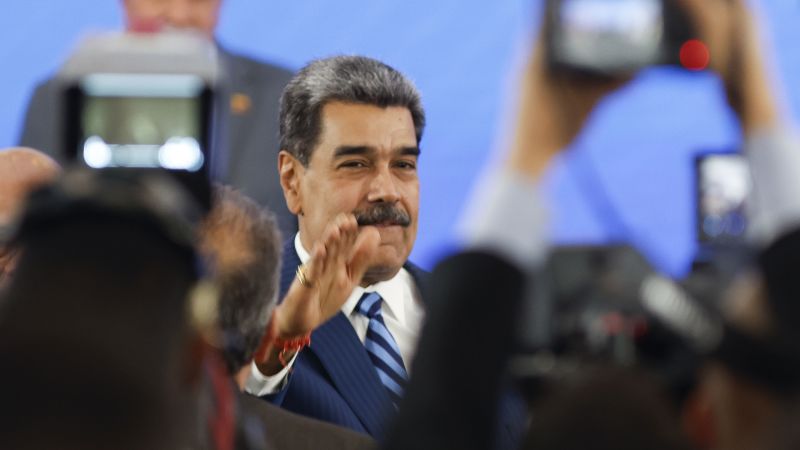
President Donald Trump is contemplating military action against Venezuelan President Nicolas Maduro, as he asserts that Maduro’s hold on power is weakening. Despite Trump’s recent remarks, experts caution that the United States lacks the military resources necessary for a large-scale operation to remove Maduro from office. While covert actions have been approved, challenges abound, including a fragmented opposition and a military prepared for potential insurgency.
Reports indicate that Trump received a briefing earlier this week, exploring updated options for military engagement in Venezuela. The White House is weighing the implications of such actions, though no final decision has been announced. As part of this strategic posture, the Pentagon has deployed over a dozen warships and approximately 15,000 troops to the region under the operation named Southern Spear. This military buildup aims to exert pressure on Maduro, who is linked to significant drug trafficking operations and criminal gangs, including the Tren de Aragua.
However, experts warn that the removal of Maduro could lead to chaos. Should he flee or face a targeted strike, the resulting power vacuum might not be filled by the opposition. Instead, factions within the military could vie for control, potentially leading to a military dictatorship or the rise of another authoritarian leader. Juan Gonzalez, a former Biden administration official and current fellow at the Georgetown Americas Institute, noted that Maduro represents a more moderate faction within the leftist political ideology known as Chavismo. “Maduro has indicated that removing him may not bring about improvements,” Gonzalez stated, highlighting concerns that a more radical successor could emerge.
John Bolton, who served as Trump’s national security adviser, echoed these sentiments, asserting that the military remains cohesive and likely to suppress any opposition. Maduro’s administration is characterized by a blend of civilian and military leadership, often in competition, which has contributed to his ability to maintain control. The complexity of the situation is further exacerbated by external influences, including Colombian insurgent groups and criminal organizations operating within Venezuela.
Should Maduro be ousted, the prospect of civil strife looms large. A diplomat with extensive experience in Venezuela remarked, “Maduro is the guarantor of the equilibrium.” Although Maduro’s political standing has been in decline since the controversial elections of 2023, his removal could destabilize the country further, igniting conflicts among various factions.
The Trump administration has previously expressed support for Venezuelan opposition figures, notably Juan Guaido, whom they recognized as the legitimate leader of Venezuela following disputed elections. However, Guaido’s failed coup attempt in 2019 underscored the challenges of effecting change without adequate backing. Edmundo Gonzalez, another opposition leader currently in Spain, claims to have a plan to transition power, yet experts argue that sustainable U.S. support would be crucial for any success. Gonzalez emphasized, “The idea that a member of the opposition would be able to rule almost immediately is impossible.”
U.S. officials have acknowledged limited support for other opposition leaders, including María Corina Machado, who remains in hiding. The necessary support from the U.S. would extend beyond secure communication tools; it would also require reconstructing the military, unfreezing Venezuelan assets, and training police forces to ensure stability against the backdrop of a tumultuous transition.
The challenges facing the opposition extend beyond Maduro’s regime. They would likely encounter resistance from the Venezuelan military, pro-government paramilitary groups known as colectivos, and the National Liberation Army (ELN), a Colombian guerrilla group operating within Venezuela. The extent of support Trump would be willing to provide remains uncertain, yet experts stress that sustained assistance would be necessary to prevent a failed state.
Opponents of prolonged U.S. military involvement caution that such commitments could alienate the political base that supported Trump’s initial campaign promises to avoid overseas conflicts. A GOP congressional staffer remarked, “The American people did not vote for Trump to draw the U.S. into a sustained conflict in Latin America.”
The administration’s military buildup is officially framed as a counter-drug operation, not a direct attempt to unseat Maduro. Nevertheless, Trump’s response to inquiries about potential military engagement in Venezuela remains ambiguous. “I doubt it. I don’t think so,” he stated earlier this month.
As the situation in Venezuela continues to unfold, the implications of U.S. action—or inaction—could shape not only the future of the country but also the dynamics of international relations in the region. The path forward remains fraught with uncertainty, and the consequences of any military decisions will reverberate far beyond Venezuela’s borders.

Arlene Hartman, Beloved Community Member, Passes at 87

Urgent: Vehicle Fire Closes Two Lanes on I-215 in Salt Lake City

Knicks Dominate Raptors 116-94 at Home, Extend Winning Streak

Hallmark’s ‘Christmas at the Catnip Café’ Premieres Tonight!

Millville Woman Arrested for Threatening U-Haul Worker with Baton

Japan’s PM Takaichi Confirms Continued Fiscal Management Strategy

Bitcoin Plummets Below $88K Amid Tether Concerns and Warnings

Designers Unveil 5 Urgent Tricks to Transform Outdoor Eyesores

Shark Teeth Research Reveals Urgent Need to Protect Species

University of Hawaiʻi Joins $25.6M AI Initiative to Monitor Disasters

Toledo City League Announces Hall of Fame Inductees for 2024

DOJ Seizes $15 Billion in Bitcoin from Major Crypto Fraud Network

Sharp Launches Five New Aquos QLED 4K Ultra HD Smart TVs

Celtics Coach Joe Mazzulla Dominates Local Media in Scrimmage

Mutual Advisors LLC Increases Stake in SPDR Portfolio ETF

Community Unites for 7th Annual Walk to Raise Mental Health Awareness

Western Executives Confront Harsh Realities of China’s Manufacturing Edge

INK Entertainment Launches Exclusive Sofia Pop-Up at Virgin Hotels
-
Science4 weeks ago
University of Hawaiʻi Joins $25.6M AI Initiative to Monitor Disasters
-
 Lifestyle2 months ago
Toledo City League Announces Hall of Fame Inductees for 2024
-
 Business2 months ago
DOJ Seizes $15 Billion in Bitcoin from Major Crypto Fraud Network
-
 Top Stories2 months ago
Sharp Launches Five New Aquos QLED 4K Ultra HD Smart TVs
-
 Sports2 months ago
Celtics Coach Joe Mazzulla Dominates Local Media in Scrimmage
-
 Politics2 months ago
Mutual Advisors LLC Increases Stake in SPDR Portfolio ETF
-
 Health2 months ago
Community Unites for 7th Annual Walk to Raise Mental Health Awareness
-
 Science2 months ago
Western Executives Confront Harsh Realities of China’s Manufacturing Edge
-
 World2 months ago
INK Entertainment Launches Exclusive Sofia Pop-Up at Virgin Hotels
-

 Politics2 months ago
Major Networks Reject Pentagon’s New Reporting Guidelines
-

 Science1 month ago
Astronomers Discover Twin Cosmic Rings Dwarfing Galaxies
-

 Top Stories1 month ago
Randi Mahomes Launches Game Day Clothing Line with Chiefs