
Lifestyle
Archaeologists Uncover Ancient Egyptian ‘Door to the Afterlife’

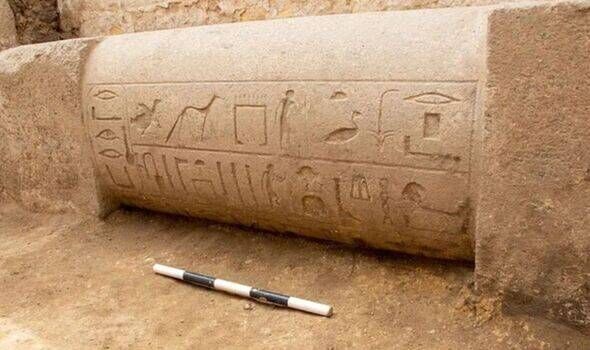
A team of archaeologists has made a remarkable discovery in Egypt, unearthing a sealed door in an ancient tomb that dates back approximately 4,400 years. Standing at an impressive 15 feet high and four feet wide, this door represents the largest of its kind found in the country. Its permanent sealing distinguishes it from typical false doors of the era, which were often made from limestone.
The tomb is believed to belong to a prince named Userefre, with the materials used in the door reflecting his elevated status in ancient society. Unlike most doors from this period, which were carved from limestone, this door is crafted from pink granite, a material sourced from quarries located about 400 miles away. Alongside the door, archaeologists discovered 13 high-backed chairs and statues, further emphasizing the significance of this find.
Insights from Experts on Ancient Egyptian Beliefs
The door features intricate hieroglyphic carvings that depict Userefre’s life and numerous titles, including Hereditary Prince, Governor of the Buto and Nekhbet Regions, Royal Scribe, Minister, Judge, and Chanting Priest. Expressing astonishment at the discovery, Ronald Leprohon, Professor Emeritus of Egyptology at the University of Toronto, stated: “Before this discovery, we didn’t even know he existed.”
Dr. Melanie Pitkin from Cambridge University explained the cultural significance of such doors in ancient Egypt. She stated, “False doors were intended to serve as portals that allowed the life force—or ‘ka’—of the deceased to move back and forth between the tomb and the afterlife.” Family members and priests would gather at the tomb to recite the deceased’s name and achievements, leaving offerings intended to support the ka in the afterlife.
Accompanying this door, archaeologists found an offering table made from red granite, which bore inscriptions related to ritual sacrifices. This supports the idea that the door served a crucial role in the rituals associated with death and the afterlife.
Further Findings and Ongoing Research
Evidence suggests that Prince Userefre was not the only occupant of the tomb. Researchers unearthed a granite statue with inscriptions from a later period, indicating a complex burial history. As of now, the actual burial chamber of Prince Userefre has yet to be located by the excavation team.
The discovery of this monumental door not only sheds light on the life and status of Userefre but also highlights the elaborate beliefs and practices of ancient Egyptian society regarding death and the afterlife. This find promises to enhance our understanding of the cultural and historical context of the time, as archaeologists continue their work at the site.

Hallmark’s ‘Christmas at the Catnip Café’ Premieres Tonight!

Millville Woman Arrested for Threatening U-Haul Worker with Baton

Japan’s PM Takaichi Confirms Continued Fiscal Management Strategy

Bitcoin Plummets Below $88K Amid Tether Concerns and Warnings

Designers Unveil 5 Urgent Tricks to Transform Outdoor Eyesores

Shark Teeth Research Reveals Urgent Need to Protect Species

Church Members Unite in Resilience After Thanksgiving Fire

Community Unites to Attempt World Record for Largest Cookie Exchange

Mayor Lurie Appoints Alan Wong to District 4 Seat Amid Controversy

University of Hawaiʻi Joins $25.6M AI Initiative to Monitor Disasters

Toledo City League Announces Hall of Fame Inductees for 2024

DOJ Seizes $15 Billion in Bitcoin from Major Crypto Fraud Network

Sharp Launches Five New Aquos QLED 4K Ultra HD Smart TVs

Celtics Coach Joe Mazzulla Dominates Local Media in Scrimmage

Mutual Advisors LLC Increases Stake in SPDR Portfolio ETF

Community Unites for 7th Annual Walk to Raise Mental Health Awareness

Western Executives Confront Harsh Realities of China’s Manufacturing Edge

INK Entertainment Launches Exclusive Sofia Pop-Up at Virgin Hotels
-
Science4 weeks ago
University of Hawaiʻi Joins $25.6M AI Initiative to Monitor Disasters
-
 Lifestyle2 months ago
Toledo City League Announces Hall of Fame Inductees for 2024
-
 Business2 months ago
DOJ Seizes $15 Billion in Bitcoin from Major Crypto Fraud Network
-
 Top Stories2 months ago
Sharp Launches Five New Aquos QLED 4K Ultra HD Smart TVs
-
 Sports2 months ago
Celtics Coach Joe Mazzulla Dominates Local Media in Scrimmage
-
 Politics2 months ago
Mutual Advisors LLC Increases Stake in SPDR Portfolio ETF
-
 Health2 months ago
Community Unites for 7th Annual Walk to Raise Mental Health Awareness
-
 Science2 months ago
Western Executives Confront Harsh Realities of China’s Manufacturing Edge
-
 World2 months ago
INK Entertainment Launches Exclusive Sofia Pop-Up at Virgin Hotels
-

 Politics2 months ago
Major Networks Reject Pentagon’s New Reporting Guidelines
-
 Science1 month ago
Astronomers Discover Twin Cosmic Rings Dwarfing Galaxies
-

 Top Stories1 month ago
Randi Mahomes Launches Game Day Clothing Line with Chiefs