
Business
Federal Reserve Faces Divisions Over Interest Rate Decisions

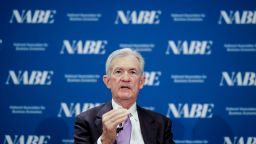
Policymakers at the Federal Reserve are currently divided over the future of interest rate adjustments, marking the end of a consensus that has characterized Chair Jerome Powell’s leadership. In late October, the Fed decided to lower interest rates by a quarter point, but this decision faced opposition from two members: one who preferred to maintain current rates and another who advocated for a more substantial cut. This level of dissent among officials has not been seen since 2019, illustrating a significant shift within the central bank.
The growing rift among Federal Reserve officials has surfaced in recent public speeches, posing a challenge for Powell as he seeks to maintain unity among his colleagues. The divergence stems from an uncertain U.S. economic landscape and concerns regarding the effects of former President Donald Trump’s trade policies. The economic outlook has divided the rate-setting committee, which is responsible for sustaining the labor market and controlling inflation.
Some officials argue that the focus should remain on curbing inflation, particularly as tariffs may drive prices higher. Conversely, others insist on prioritizing the weakening labor market. Economists suggest that this division could have mixed implications for the Fed’s effectiveness, with some warning that unresolved disagreements could undermine the institution’s credibility.
“If these intellectual disagreements aren’t able to be reconciled, then that could affect the Fed’s effectiveness and credibility,”
said Derek Tang, an economist at LHMeyer, a monetary policy analytics firm.
The Role of Powell in a Shifting Landscape
As the leader of the U.S. central bank and chair of its influential rate-setting committee, Powell faces a challenging task. The role of the Fed chair has evolved over the decades, with a focus on building consensus among the board members and regional presidents. This approach began under former Fed Chair Ben Bernanke and was further developed by Janet Yellen, emphasizing the importance of unanimous agreement in policy decisions.
Powell has acknowledged the “strongly differing views” among Fed officials regarding the path forward, previously describing this division as a “healthy debate.” However, the current climate of dissent is expected to persist through the remaining meetings of Powell’s term, which concludes in May 2024. This uncertainty complicates Wall Street’s ability to anticipate the Fed’s next moves, with the likelihood of a rate cut in December now appearing uncertain.
The Fed’s decision-making process has become increasingly complex. During the pandemic-driven recession of 2020, it was clear that aggressive rate cuts were necessary to support the struggling economy. In 2022, swift rate hikes were essential to combat the highest inflation rates seen in four decades. A more divided Federal Reserve could paradoxically enhance its credibility, as it signals a reluctance to make extreme choices without careful consideration.
According to Hilsenrath, “The market might also come to a conclusion that they’re not going to make extreme choices or lock themselves into decisions that could lead the economy and the financial system in the wrong direction.”
Challenges in Economic Assessment
The task of evaluating the economy has grown more challenging, particularly during the recent government shutdown, which halted the release of crucial economic data. At the October meeting, Fed officials lacked essential information on inflation and employment, both of which are vital for shaping their decisions. With the government now reopened, a forthcoming influx of data could significantly influence future policy directions.
Among those advocating for steady interest rates are three of the four regional presidents with voting power this year. Jeffrey Schmid, President of the Kansas City Fed, who dissented in October, emphasized that constituents in his district are expressing growing concerns about ongoing cost increases and inflation. Alberto Musalem, President of the St. Louis Fed, also indicated the need for caution, stating, “I think there’s limited room for further easing without monetary policy becoming overly accommodative.”
In contrast, officials who support continued rate reductions argue that tariffs are unlikely to have a lasting impact on inflation. They caution that the labor market may face significant challenges if rates are not lowered promptly. Stephen Miran, a Fed Governor who temporarily stepped down from his role as head of Trump’s Council of Economic Advisers to serve on the Board, favored a more aggressive rate cut in October, advocating for a half-point reduction. In a recent interview, he expressed concern that high borrowing costs are exerting more pressure on the economy than many realize.
Miran is joined by fellow governors Michelle Bowman and Christopher Waller, both appointees of Trump, who have been advocating for rate cuts since July. They contend that with inflation close to the Fed’s target of 2%, the primary focus should shift to the softening labor market. Miran stated, “If you keep policy this tight for a long period of time, then you run the risk that monetary policy itself is inducing a recession.”
As the debate within the Federal Reserve continues, the implications for the U.S. economy and financial markets remain significant. The outcomes of these discussions will shape the direction of monetary policy in the coming months and years, making it an essential topic for both policymakers and the public alike.

Bitcoin Plummets Below $88K Amid Tether Concerns and Warnings

Designers Unveil 5 Urgent Tricks to Transform Outdoor Eyesores

Shark Teeth Research Reveals Urgent Need to Protect Species

Church Members Unite in Resilience After Thanksgiving Fire

Community Unites to Attempt World Record for Largest Cookie Exchange

Mayor Lurie Appoints Alan Wong to District 4 Seat Amid Controversy

Mayor Appoints Alan Wong as New Supervisor for District 4

UK Report Reveals AI’s Role in Evaluating University Research Quality

Gabriela Jaquez Shines as No. 3 UCLA Dominates No. 14 Tennessee

University of Hawaiʻi Joins $25.6M AI Initiative to Monitor Disasters

Toledo City League Announces Hall of Fame Inductees for 2024

DOJ Seizes $15 Billion in Bitcoin from Major Crypto Fraud Network

Sharp Launches Five New Aquos QLED 4K Ultra HD Smart TVs

Celtics Coach Joe Mazzulla Dominates Local Media in Scrimmage

Community Unites for 7th Annual Walk to Raise Mental Health Awareness

Mutual Advisors LLC Increases Stake in SPDR Portfolio ETF

Western Executives Confront Harsh Realities of China’s Manufacturing Edge

INK Entertainment Launches Exclusive Sofia Pop-Up at Virgin Hotels
-
Science4 weeks ago
University of Hawaiʻi Joins $25.6M AI Initiative to Monitor Disasters
-
 Lifestyle2 months ago
Toledo City League Announces Hall of Fame Inductees for 2024
-
 Business2 months ago
DOJ Seizes $15 Billion in Bitcoin from Major Crypto Fraud Network
-
 Top Stories2 months ago
Sharp Launches Five New Aquos QLED 4K Ultra HD Smart TVs
-
 Sports2 months ago
Celtics Coach Joe Mazzulla Dominates Local Media in Scrimmage
-
 Health2 months ago
Community Unites for 7th Annual Walk to Raise Mental Health Awareness
-
 Politics2 months ago
Mutual Advisors LLC Increases Stake in SPDR Portfolio ETF
-
 Science2 months ago
Western Executives Confront Harsh Realities of China’s Manufacturing Edge
-
 World2 months ago
INK Entertainment Launches Exclusive Sofia Pop-Up at Virgin Hotels
-
 Politics2 months ago
Major Networks Reject Pentagon’s New Reporting Guidelines
-

 Science1 month ago
Astronomers Discover Twin Cosmic Rings Dwarfing Galaxies
-

 Top Stories1 month ago
Randi Mahomes Launches Game Day Clothing Line with Chiefs