
Top Stories
Maine Court Weighs Mother’s Rights in Church Attendance Ban

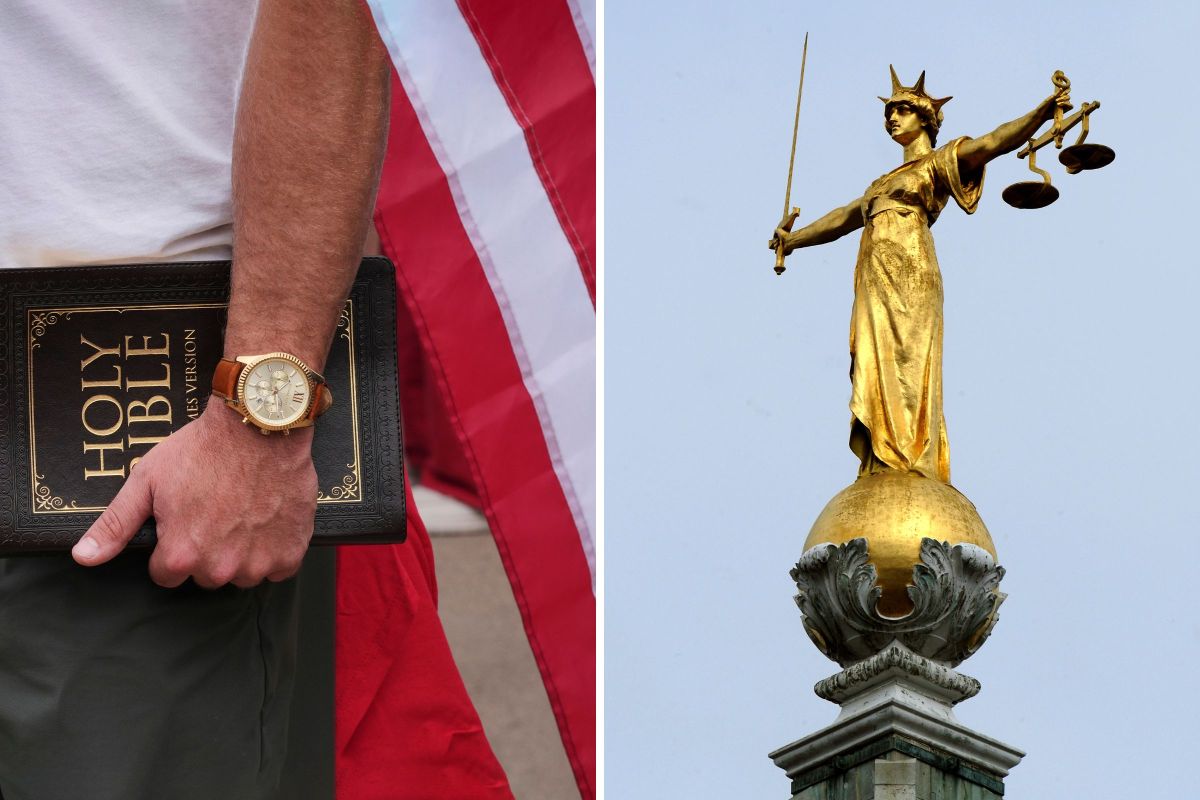
UPDATE: The Maine Supreme Judicial Court is urgently deliberating a controversial custody case that could redefine parental rights and religious freedom. A lower court’s ruling has barred mother Emily Bickford from taking her 12-year-old daughter to church or exposing her to Bible teachings, raising critical constitutional questions about judicial authority over religious practices.
The case, Bickford v. Bradeen, has garnered national attention as it touches on significant issues regarding parental rights and the state’s role in family law. Justices are examining whether the lower court’s order, issued on December 13, 2024, overstepped constitutional boundaries by restricting Bickford’s religious freedoms based on claims of potential psychological harm to the child.
At the heart of the dispute is the ruling that granted the child’s father, Matthew Bradeen, sole control over all religious decisions. The Portland District Court’s order followed extensive testimony about the teachings at Calvary Chapel, the church attended by Bickford. The court concluded that the church’s materials, which included depictions of “fallen angels” and messages about “eternal suffering,” posed a risk of “psychological harm” to the child.
During oral arguments on November 13, 2025, Bickford’s attorney, Mathew Staver, argued that the ruling represents an unprecedented “total veto” over the mother’s religious expression. “There is no finding of abuse or neglect,” Staver emphasized, highlighting that the child had only experienced anxiety and panic attacks without any evidence of harm. He insisted that such minor observations cannot justify the extensive restrictions imposed by the court.
In defense, Bradeen’s attorney, Michelle King, maintained that the trial court acted within its rights, citing compelling state interests in protecting the child from substantial emotional distress. She argued that the court’s restrictions were appropriately tailored to address the identified risks, supported by expert testimony regarding the church’s potential coercive influence.
As justices questioned the extent of judicial authority in religious matters, one justice raised concerns about whether the “best interest of the child” standard conflicts with religious freedoms. Staver responded by asserting that constitutional protections necessitate a higher threshold for the state to intervene in religious practices.
The court’s eventual ruling is expected in the coming months and could have sweeping implications not only for Maine but potentially across the nation. The decision will clarify how courts balance claims of psychological harm against the rights of fit parents to engage in religious practices.
This case not only highlights the tensions between parental rights and judicial oversight but also raises critical First Amendment questions. The implications of this decision could set a precedent for how similar cases are approached nationwide.
As deliberations continue, the community and legal experts are watching closely, anticipating how this ruling will shape the future landscape of parental rights and religious freedoms in custody disputes.
Stay tuned for updates as the Maine Supreme Judicial Court prepares to deliver its decision on this pivotal case.

Microsoft Faces Major Windows 11 Crisis as Core Features Fail

Kino Lorber Acquires North American Rights to ‘The Currents’

UGG Offers Historic Discounts on Tasman II Slippers for Cyber Monday

Organizing Committee for 2034 Olympics to Meet Monday Morning

Whitney Leavitt to Star as Roxie Hart in Chicago on Broadway

Berlin Patient Achieves HIV Remission After Cancer Treatment

BTS Duo Jimin and Jung Kook Return with Season Two of ‘Are You Sure?!’

Cory Booker Ties the Knot Amid 2028 Presidential Ambitions

Thieves Steal from Firefighters Battling Deadly Blaze in Philly

University of Hawaiʻi Joins $25.6M AI Initiative to Monitor Disasters

Toledo City League Announces Hall of Fame Inductees for 2024

DOJ Seizes $15 Billion in Bitcoin from Major Crypto Fraud Network

Sharp Launches Five New Aquos QLED 4K Ultra HD Smart TVs

Celtics Coach Joe Mazzulla Dominates Local Media in Scrimmage

Community Unites for 7th Annual Walk to Raise Mental Health Awareness

Mutual Advisors LLC Increases Stake in SPDR Portfolio ETF

Western Executives Confront Harsh Realities of China’s Manufacturing Edge

INK Entertainment Launches Exclusive Sofia Pop-Up at Virgin Hotels
-
Science4 weeks ago
University of Hawaiʻi Joins $25.6M AI Initiative to Monitor Disasters
-
 Lifestyle2 months ago
Toledo City League Announces Hall of Fame Inductees for 2024
-
 Business2 months ago
DOJ Seizes $15 Billion in Bitcoin from Major Crypto Fraud Network
-
 Top Stories2 months ago
Sharp Launches Five New Aquos QLED 4K Ultra HD Smart TVs
-
 Sports2 months ago
Celtics Coach Joe Mazzulla Dominates Local Media in Scrimmage
-
 Health2 months ago
Community Unites for 7th Annual Walk to Raise Mental Health Awareness
-
 Politics2 months ago
Mutual Advisors LLC Increases Stake in SPDR Portfolio ETF
-
 Science2 months ago
Western Executives Confront Harsh Realities of China’s Manufacturing Edge
-
 World2 months ago
INK Entertainment Launches Exclusive Sofia Pop-Up at Virgin Hotels
-

 Politics2 months ago
Major Networks Reject Pentagon’s New Reporting Guidelines
-

 Science1 month ago
Astronomers Discover Twin Cosmic Rings Dwarfing Galaxies
-

 Top Stories1 month ago
Randi Mahomes Launches Game Day Clothing Line with Chiefs