
Top Stories
Archaeologists Unearth Massive Bronze Age City in Kazakhstan

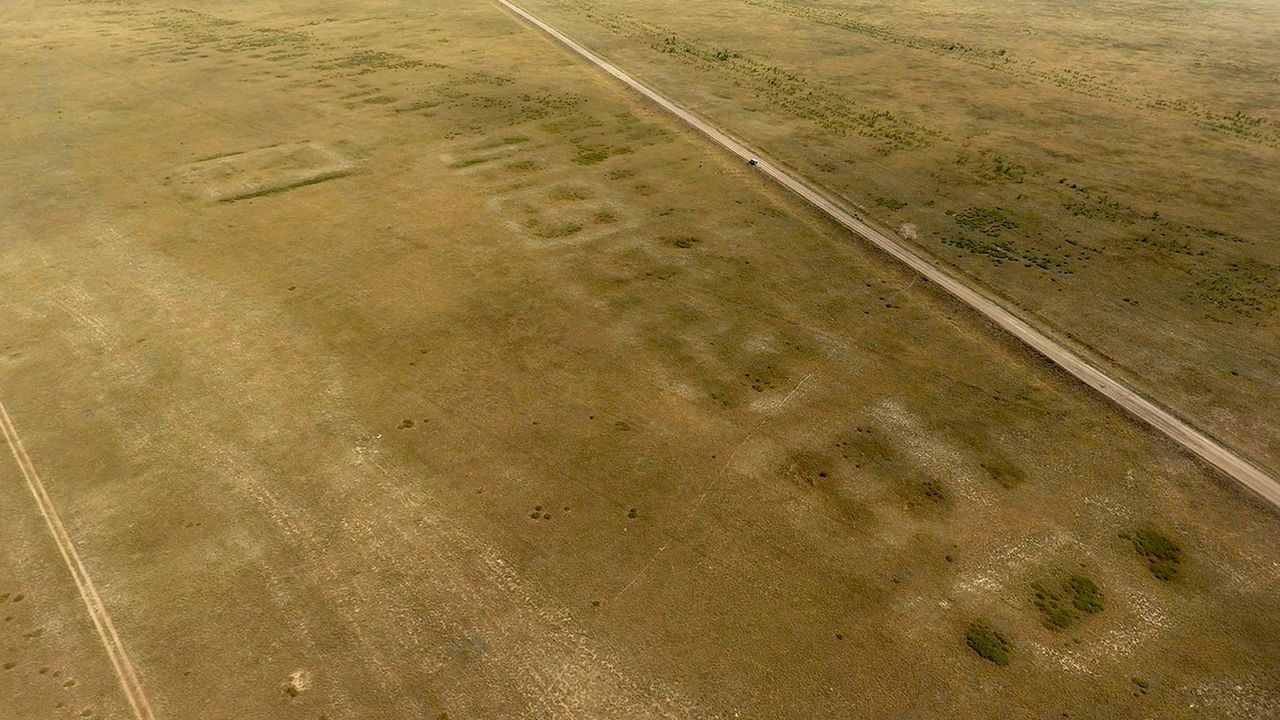
BREAKING: Archaeologists have just unveiled a groundbreaking discovery in Kazakhstan—a sprawling Bronze Age city named Semiyarka, dating back approximately 3,600 years. This remarkable settlement covers an area of 346 acres (140 hectares), making it over four times larger than nearby villages. The findings, published on November 18 in the journal Antiquity, revolutionize our understanding of ancient steppe societies.
Researchers assert that Semiyarka represents a sophisticated urban center with specialized space for metallurgy and tin-bronze production, a major economic driver of the era. “Semiyarka transforms our understanding of steppe societies,” stated study lead author Miljana Radivojević from the University College London. “It demonstrates that mobile communities were capable of building and sustaining permanent, well-organized settlements.”
Located on a bluff overlooking the Irtysh River in northeastern Kazakhstan, Semiyarka has earned the nickname “City of Seven Ravines” due to its strategic position, which may have controlled trade routes along the river. This discovery highlights the importance of the site in the broader context of Eurasian trade networks.
The archaeological team employed advanced drone surveys and excavations to reveal two distinct rows of earthworks, suggesting a complex urban layout with individual households delineated by mud brick walls. At the convergence of these rows lies a central structure, about twice the size of others, likely serving as a ceremonial or administrative hub.
Metalworking artifacts and slag discovered in a designated area indicate that Semiyarka was an early center for industrial production of metals, including copper and tin bronze. Radivojević noted that this was “a cornerstone of Eurasia’s Bronze Age economy that has long remained absent from the archaeological record.”
The ores used in these artifacts likely originated from the nearby Altai Mountains, which straddle the borders of Kazakhstan, Russia, Mongolia, and China. This geographical advantage positioned Semiyarka as a vital center for trade and resource distribution in ancient times.
The city’s unprecedented scale and organization challenge previous notions of steppe communities, traditionally viewed as nomadic and less developed. Co-author Dan Lawrence, a landscape archaeologist at Durham University in the U.K., emphasized that Semiyarka’s structure is unlike anything previously documented in the steppe zone, suggesting a rich cultural and economic life that parallels other ancient urban centers.
“This discovery shows that Bronze Age communities here were developing sophisticated, planned settlements similar to those of their contemporaries in more traditionally ‘urban’ parts of the ancient world,” Lawrence remarked.
As excavations continue, the researchers anticipate further insights into Semiyarka’s role within ancient Eurasian networks. The implications of these findings could redefine historical narratives about the capabilities of Bronze Age societies in the region.
Stay tuned for more updates on this extraordinary discovery that not only reshapes our understanding of ancient civilizations but also highlights the enduring legacy of human innovation and adaptability.

Bitcoin Plummets Below $88K Amid Tether Concerns and Warnings

Designers Unveil 5 Urgent Tricks to Transform Outdoor Eyesores

Shark Teeth Research Reveals Urgent Need to Protect Species

Church Members Unite in Resilience After Thanksgiving Fire

Community Unites to Attempt World Record for Largest Cookie Exchange

Mayor Lurie Appoints Alan Wong to District 4 Seat Amid Controversy

Mayor Appoints Alan Wong as New Supervisor for District 4

UK Report Reveals AI’s Role in Evaluating University Research Quality

Gabriela Jaquez Shines as No. 3 UCLA Dominates No. 14 Tennessee

University of Hawaiʻi Joins $25.6M AI Initiative to Monitor Disasters

Toledo City League Announces Hall of Fame Inductees for 2024

DOJ Seizes $15 Billion in Bitcoin from Major Crypto Fraud Network

Sharp Launches Five New Aquos QLED 4K Ultra HD Smart TVs

Celtics Coach Joe Mazzulla Dominates Local Media in Scrimmage

Mutual Advisors LLC Increases Stake in SPDR Portfolio ETF

Community Unites for 7th Annual Walk to Raise Mental Health Awareness

Western Executives Confront Harsh Realities of China’s Manufacturing Edge

INK Entertainment Launches Exclusive Sofia Pop-Up at Virgin Hotels
-
Science4 weeks ago
University of Hawaiʻi Joins $25.6M AI Initiative to Monitor Disasters
-
 Lifestyle2 months ago
Toledo City League Announces Hall of Fame Inductees for 2024
-
 Business2 months ago
DOJ Seizes $15 Billion in Bitcoin from Major Crypto Fraud Network
-
 Top Stories2 months ago
Sharp Launches Five New Aquos QLED 4K Ultra HD Smart TVs
-
 Sports2 months ago
Celtics Coach Joe Mazzulla Dominates Local Media in Scrimmage
-
 Politics2 months ago
Mutual Advisors LLC Increases Stake in SPDR Portfolio ETF
-
 Health2 months ago
Community Unites for 7th Annual Walk to Raise Mental Health Awareness
-
 Science2 months ago
Western Executives Confront Harsh Realities of China’s Manufacturing Edge
-
 World2 months ago
INK Entertainment Launches Exclusive Sofia Pop-Up at Virgin Hotels
-

 Politics2 months ago
Major Networks Reject Pentagon’s New Reporting Guidelines
-

 Science1 month ago
Astronomers Discover Twin Cosmic Rings Dwarfing Galaxies
-

 Top Stories1 month ago
Randi Mahomes Launches Game Day Clothing Line with Chiefs