
World
Federal Court Blocks Texas Congressional Map, Politics Shift Ahead of 2024

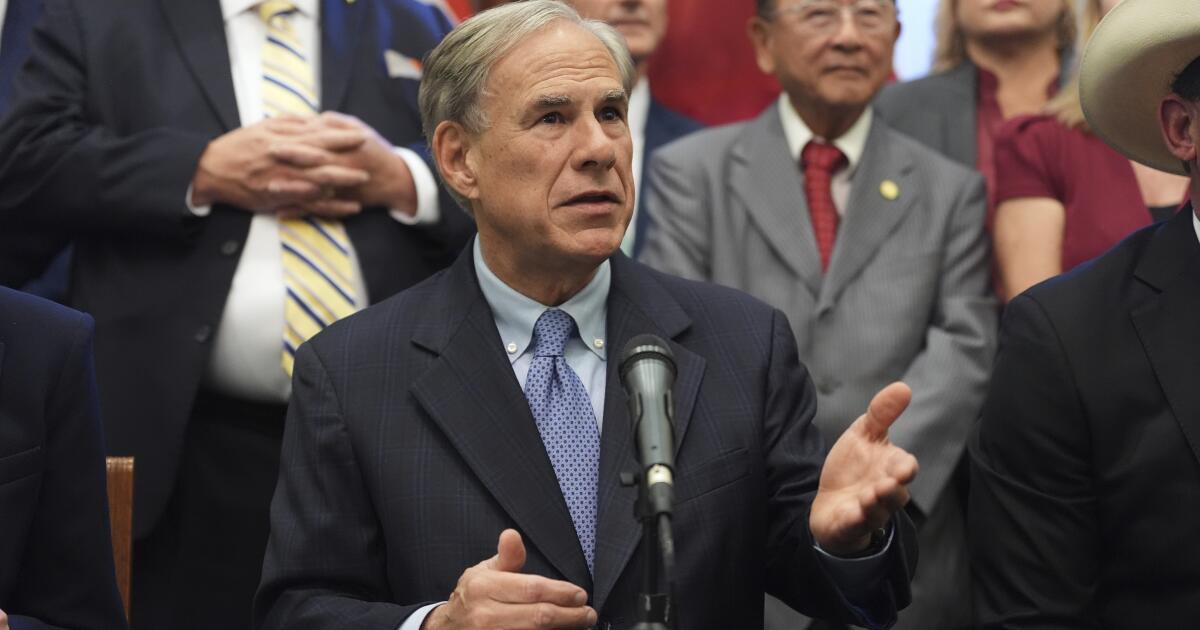
A federal court has halted Texas’ effort to implement a controversial new congressional map intended to secure up to five additional seats for Republicans in the U.S. House of Representatives. The decision, issued on October 24, 2023, represents a significant setback for the Trump administration, which had encouraged state lawmakers to redraw district boundaries in a mid-decade maneuver, departing from traditional practices.
The ruling came from a three-judge panel in El Paso, which determined by a 2-1 vote that Texas engaged in racial gerrymandering with its proposed 2025 map. The court ordered the state to revert to the congressional districts established in 2021. Texas Governor Greg Abbott, who had directed Republican lawmakers to pursue the new map at the behest of Donald Trump, announced plans to appeal this ruling to the Supreme Court.
This development in Texas coincided with a significant move in California, where voters approved a new temporary congressional map on November 4, giving Democrats an opportunity to gain five additional seats. The proposal, known as Prop. 50, initially included trigger language that would have made California’s new maps contingent on Texas’ redistricting outcomes. However, this provision was removed since Texas had already adopted its plan, potentially granting California Democrats a strategic advantage heading into the 2026 midterm elections.
Gavin Newsom, Governor of California, expressed satisfaction with the Texas ruling, stating, “Donald Trump and Greg Abbott played with fire, got burned — and democracy won.” He emphasized that the decision represents a victory for Texas and for Americans advocating for free and fair elections.
The controversy surrounding Texas’ redistricting efforts was exacerbated by a letter from Harmeet Dhillon, the Assistant Attorney General for Civil Rights, threatening legal action against the state over its treatment of “coalition districts.” These districts encompass multiple minority communities without a single group holding a majority, and legal experts argue that Texas’ new configuration could dilute their representation while maintaining white-majority districts.
Historical precedent shows that while the U.S. Supreme Court has generally permitted political gerrymandering, it has consistently ruled against racial gerrymandering. In 2023, the court ruled in Allen vs. Milligan that discriminating against minority voters in the redistricting process is unconstitutional, mandating Alabama to create an additional minority-majority district.
In a further twist, the Justice Department has initiated a lawsuit against California, seeking to block the implementation of its new congressional maps in the upcoming elections. This legal battle highlights the ongoing tensions surrounding redistricting practices and their implications for political representation across the United States.
As the political landscape evolves, the outcomes of these legal challenges could have lasting impacts on both state and national elections, setting the stage for a contentious 2024 electoral cycle.

Japan’s PM Takaichi Confirms Continued Fiscal Management Strategy

Bitcoin Plummets Below $88K Amid Tether Concerns and Warnings

Designers Unveil 5 Urgent Tricks to Transform Outdoor Eyesores

Shark Teeth Research Reveals Urgent Need to Protect Species

Church Members Unite in Resilience After Thanksgiving Fire

Community Unites to Attempt World Record for Largest Cookie Exchange

Mayor Lurie Appoints Alan Wong to District 4 Seat Amid Controversy

Mayor Appoints Alan Wong as New Supervisor for District 4

UK Report Reveals AI’s Role in Evaluating University Research Quality

University of Hawaiʻi Joins $25.6M AI Initiative to Monitor Disasters

Toledo City League Announces Hall of Fame Inductees for 2024

DOJ Seizes $15 Billion in Bitcoin from Major Crypto Fraud Network

Sharp Launches Five New Aquos QLED 4K Ultra HD Smart TVs

Celtics Coach Joe Mazzulla Dominates Local Media in Scrimmage

Mutual Advisors LLC Increases Stake in SPDR Portfolio ETF

Community Unites for 7th Annual Walk to Raise Mental Health Awareness

Western Executives Confront Harsh Realities of China’s Manufacturing Edge

Major Networks Reject Pentagon’s New Reporting Guidelines
-
Science4 weeks ago
University of Hawaiʻi Joins $25.6M AI Initiative to Monitor Disasters
-
 Lifestyle2 months ago
Toledo City League Announces Hall of Fame Inductees for 2024
-
 Business2 months ago
DOJ Seizes $15 Billion in Bitcoin from Major Crypto Fraud Network
-
 Top Stories2 months ago
Sharp Launches Five New Aquos QLED 4K Ultra HD Smart TVs
-
 Sports2 months ago
Celtics Coach Joe Mazzulla Dominates Local Media in Scrimmage
-
 Politics2 months ago
Mutual Advisors LLC Increases Stake in SPDR Portfolio ETF
-
 Health2 months ago
Community Unites for 7th Annual Walk to Raise Mental Health Awareness
-
 Science2 months ago
Western Executives Confront Harsh Realities of China’s Manufacturing Edge
-
 Politics2 months ago
Major Networks Reject Pentagon’s New Reporting Guidelines
-

 World2 months ago
INK Entertainment Launches Exclusive Sofia Pop-Up at Virgin Hotels
-

 Science1 month ago
Astronomers Discover Twin Cosmic Rings Dwarfing Galaxies
-

 Top Stories1 month ago
Randi Mahomes Launches Game Day Clothing Line with Chiefs