
Top Stories
Bhutan Stands Alone: Last Nation Without Traffic Lights Remains

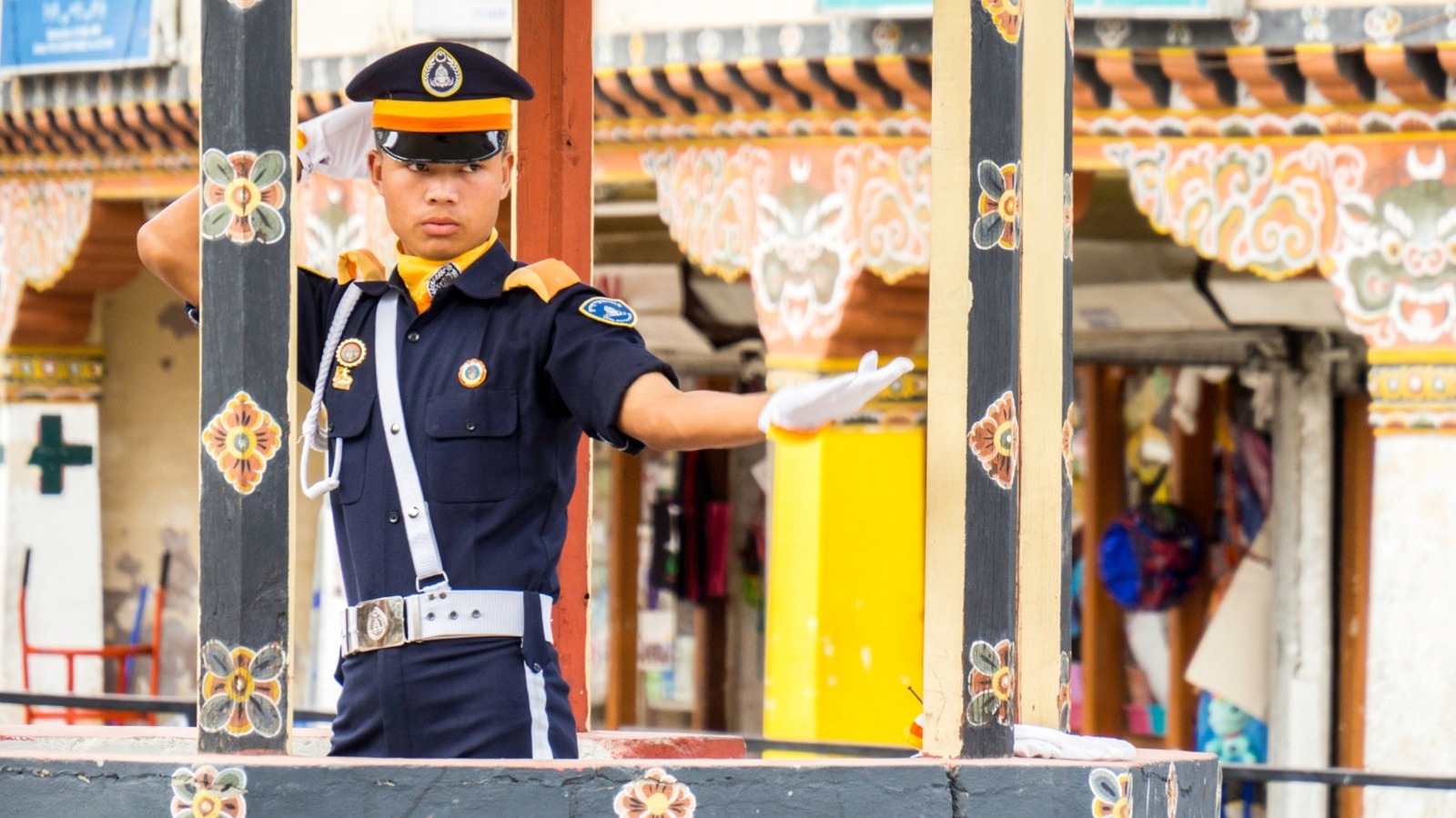
URGENT UPDATE: The Kingdom of Bhutan continues to make headlines as the last country in the world without traffic lights, a status that has persisted since its **first and only traffic light** was briefly installed in **1995**. This bold choice reflects the nation’s unique cultural values and its commitment to prioritizing human interaction over mechanization.
In a surprising turn of events, the **Bhutanese government** has reaffirmed its decision to forgo traffic lights, emphasizing the importance of personal connection in managing traffic. Residents of the capital city, **Thimphu**, have expressed a strong preference for police officers directing traffic, favoring the human touch over automated signals.
As reported by the **BBC**, the traffic officers in Thimphu are not only a colorful sight but also skilled at their craft, receiving extensive training in hand signals and traffic management. Each officer works in **30-minute shifts**, ensuring smooth traffic flow while fostering a community atmosphere. This unique system has been effective, but the growing number of vehicles on the roads has led to the introduction of roundabouts at busier intersections.
Despite having a population of just **777,000**, Bhutan maintains a low-speed limit of approximately **30 km/h (18.6 mph)** in urban areas and **50 km/h (31 mph)** on rural roads. The absence of traffic lights is not merely a logistical choice but a reflection of the Bhutanese value system, which measures national success through **Gross National Happiness** rather than economic output.
WHY THIS MATTERS NOW: The ongoing absence of traffic lights in Bhutan serves as a striking contrast to global urbanization trends, where technology and automation dominate. The Bhutanese people have shown that patience and courtesy can govern road behavior, a sentiment that resonates deeply in today’s fast-paced world. With **91%** of the population reporting happiness in a **2015** government survey, Bhutan’s approach challenges conventional wisdom about traffic management and urban planning.
Authorities have employed creative strategies to promote road safety, with roadside signs featuring clever slogans like “Be Mr. Late, not late Mr.” and “For safe arriving, no liquor in driving.” These initiatives, combined with high taxes on car purchases and restrictions limiting imports to new vehicles, aim to control traffic and reduce emissions, contributing to Bhutan’s unique status as a **carbon-negative** nation.
As global attention turns to sustainable living, Bhutan’s steadfast refusal to install traffic lights highlights a cultural commitment to human interaction and community well-being. The question remains: will this tiny Himalayan kingdom continue to thrive on its unique traffic management system, or will modern pressures eventually compel a shift towards technology?
WHAT’S NEXT: The world will be watching Bhutan as it navigates the challenges of increased traffic and urbanization. Will the country maintain its distinctive identity, or will it find a way to incorporate technology while preserving its cultural values? As global discussions around sustainability and happiness evolve, Bhutan’s approach could inspire other nations to rethink their own traffic management systems.
Stay tuned for further developments from this remarkable nation, where traffic lights might just be the last thing on their minds.

Easton Launches Free Business Consulting Program with Lehigh U

Fed Chair Powell to Speak Tonight; No Monetary Policy Insights Expected

NSW Government Orders 6-Hour Shutdown of Gambling Machines

Research Sheds Light on ‘Covert Consciousness’ in Patients

Chicago Remembers Tragic Our Lady of the Angels Fire, 92 Lives Lost

Michael Jordan’s Racing Team Takes NASCAR to Court Over Antitrust Claims

Star-Studded British Independent Film Awards Celebrate Top Talent

Cyber Monday 2023: Top Deals and Discounts to Grab Now

TikTok Shop Transforms Shopping with $19 Billion in Sales

University of Hawaiʻi Joins $25.6M AI Initiative to Monitor Disasters

Toledo City League Announces Hall of Fame Inductees for 2024

DOJ Seizes $15 Billion in Bitcoin from Major Crypto Fraud Network

Sharp Launches Five New Aquos QLED 4K Ultra HD Smart TVs

Celtics Coach Joe Mazzulla Dominates Local Media in Scrimmage

Community Unites for 7th Annual Walk to Raise Mental Health Awareness

Mutual Advisors LLC Increases Stake in SPDR Portfolio ETF

Western Executives Confront Harsh Realities of China’s Manufacturing Edge

INK Entertainment Launches Exclusive Sofia Pop-Up at Virgin Hotels
-
Science4 weeks ago
University of Hawaiʻi Joins $25.6M AI Initiative to Monitor Disasters
-
 Lifestyle2 months ago
Toledo City League Announces Hall of Fame Inductees for 2024
-
 Business2 months ago
DOJ Seizes $15 Billion in Bitcoin from Major Crypto Fraud Network
-
 Top Stories2 months ago
Sharp Launches Five New Aquos QLED 4K Ultra HD Smart TVs
-
 Sports2 months ago
Celtics Coach Joe Mazzulla Dominates Local Media in Scrimmage
-
 Health2 months ago
Community Unites for 7th Annual Walk to Raise Mental Health Awareness
-
 Politics2 months ago
Mutual Advisors LLC Increases Stake in SPDR Portfolio ETF
-
 Science2 months ago
Western Executives Confront Harsh Realities of China’s Manufacturing Edge
-
 World2 months ago
INK Entertainment Launches Exclusive Sofia Pop-Up at Virgin Hotels
-

 Politics2 months ago
Major Networks Reject Pentagon’s New Reporting Guidelines
-

 Science1 month ago
Astronomers Discover Twin Cosmic Rings Dwarfing Galaxies
-

 Top Stories1 month ago
Randi Mahomes Launches Game Day Clothing Line with Chiefs