
Business
Americans Embrace Artificial Trees Despite Import Challenges

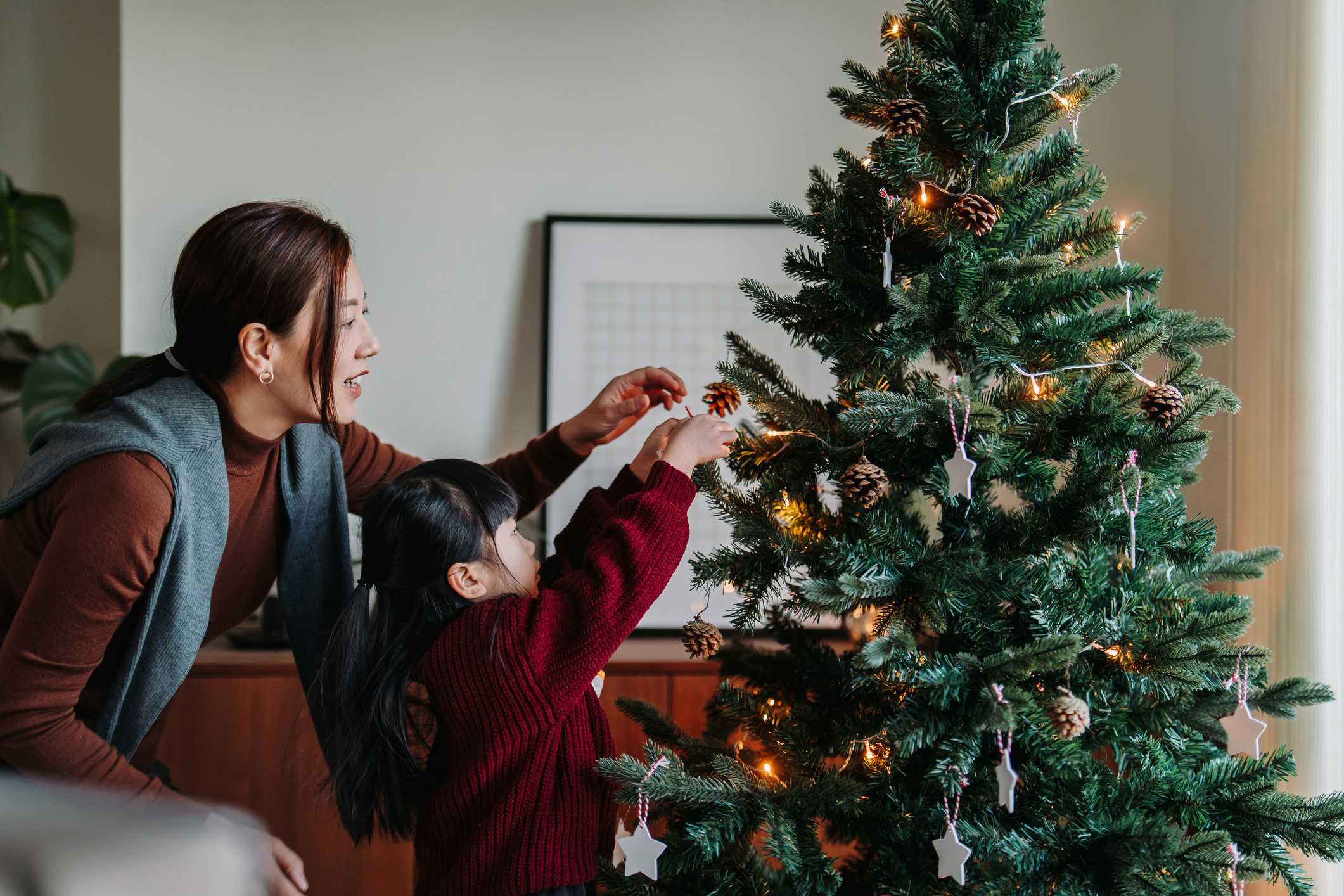
On a recent day in December, Mark Latino and his team at Lee Display in Fairfield, California, were busy crafting tinsel for artificial Christmas trees. The company, founded by Latino’s great-grandfather in 1902, is one of the few remaining manufacturers of artificial trees in the United States, producing around 10,000 each year. Despite their local production, American consumers overwhelmingly prefer artificial trees, which are primarily sourced from overseas.
The impact of tariffs on imported Christmas decorations has prompted significant changes in the industry this year. According to the American Christmas Tree Association, prices for artificial trees increased by 10% to 15% due to new import taxes. This adjustment has led retailers to reduce their orders and absorb higher costs for the stock they bring into the country. Despite these challenges, many manufacturers do not anticipate moving large-scale production back to the U.S., as the labor-intensive nature of artificial tree production relies heavily on components that are not produced domestically.
Chris Butler, CEO of the National Tree Co., which sells over 1 million artificial trees annually, emphasized that American consumers are price-sensitive when it comes to holiday decorations. “Putting a ‘Made in the U.S.A.’ sticker on the box won’t do any good if it’s twice as expensive,” Butler stated. Approximately 80% of U.S. households that set up Christmas trees this year opted for artificial varieties, a trend that has remained stable for at least the last 15 years.
The convenience of artificial trees contributes to their popularity. Many consumers prefer pre-lit models, with 80% of artificial trees sold each year featuring lights already strung. This demand has driven production away from the U.S., with manufacturing first shifting to Thailand in the early 1990s and later to China. According to Butler, “Winding lights around the branches is time-consuming and tedious.”
Artificial trees take one to two hours to assemble, from molding and cutting the needles to attaching the lights. In China, where 90% of artificial trees are produced, workers earn between $1.50 and $2 per hour. The efficiency of these workers is notable; Harman, CEO of Balsam Brands, remarked that watching them work is “like watching an Olympian.”
Balsam Brands, based in Redwood City, California, explored the possibility of relocating some manufacturing to Ohio during the initial tariff discussions of the Trump administration. After consulting experts and analyzing costs, the company determined that a tree currently priced at $800 would cost $3,000 if produced in the United States. The search for local suppliers for even minor components proved equally challenging.
Lee Display’s operations are modest, employing three to four people year-round, with additional staff brought on during the holiday rush. The company generates half its revenue from custom displays for retailers like Macy’s and the other half from direct sales. Latino highlighted the advantage of local production, saying, “You have more control over it.”
Despite this, Lee Display has also felt the effects of tariffs. Latino’s son, James, reported that the company opted not to import lights or decorations from China this year, relying instead on existing stock. As supplies dwindle, they will face higher import costs in the coming year.
Some companies are actively seeking to diversify their production sources to mitigate reliance on China. National Tree Co. has begun shifting some manufacturing to Cambodia and could potentially source all its trees from outside China by next year. However, these shifts do not insulate them from the impact of tariffs. Tariffs on artificial trees from China currently average 20%, while a proposed 49% tariff on products from Cambodia was eventually lowered to 19%.
As a result of these economic pressures, Butler indicated that his company has imported fewer trees this year and raised prices by 10%, using some of the revenue to offer discounts to customers concerned about the economy.
Balsam Brands also felt the pinch, cutting its workforce by 10%, freezing raises, and even stopping weekly office lunches to manage costs. Harman reported a 5% to 10% decline in U.S. sales, while international sales increased by over 10% in markets like Germany, Australia, Canada, and France.
“The impact of tariffs has clearly reduced U.S. demand,” Harman concluded. “If a merry Christmas is measured by the number of decorations people put up, this year may be slightly less merry.”

Nancy Cartwright Celebrates Special Bond With Niece Sabrina Carpenter

Insights from J.P. Morgan Healthcare Conference 2026

Save 50% on Ninja Foodi NeverStick Cookware: A Kitchen Revolution

Congress Approves Initial Funding Bills Following Shutdown

Researchers Unveil Breakthrough in Perovskite Display Technology

Pierce Johnson Joins Reds Bullpen, Teams Up with Emilio Pagan

United Airlines Launches Nonstop Flights from Maine to California

Urgent Events This Week: Gasparilla Tennis Classic & Bo Jackson Speaks

Harmony Korine Launches ‘Katch’ Webtoon Through EDGLRD Studio

University of Hawaiʻi Joins $25.6M AI Initiative to Monitor Disasters

Interstellar Object 3I/ATLAS Emits Unprecedented Metal Alloy

Toledo City League Announces Hall of Fame Inductees for 2024

DOJ Seizes $15 Billion in Bitcoin from Major Crypto Fraud Network

Western Executives Confront Harsh Realities of China’s Manufacturing Edge

Sharp Launches Five New Aquos QLED 4K Ultra HD Smart TVs

Mutual Advisors LLC Increases Stake in SPDR Portfolio ETF

Celtics Coach Joe Mazzulla Dominates Local Media in Scrimmage

Community Unites for 7th Annual Walk to Raise Mental Health Awareness
-
Science2 months ago
University of Hawaiʻi Joins $25.6M AI Initiative to Monitor Disasters
-
 Science3 months ago
Interstellar Object 3I/ATLAS Emits Unprecedented Metal Alloy
-
 Lifestyle3 months ago
Toledo City League Announces Hall of Fame Inductees for 2024
-
 Business3 months ago
DOJ Seizes $15 Billion in Bitcoin from Major Crypto Fraud Network
-
 Science3 months ago
Western Executives Confront Harsh Realities of China’s Manufacturing Edge
-
 Top Stories3 months ago
Sharp Launches Five New Aquos QLED 4K Ultra HD Smart TVs
-
 Politics3 months ago
Mutual Advisors LLC Increases Stake in SPDR Portfolio ETF
-
 Sports3 months ago
Celtics Coach Joe Mazzulla Dominates Local Media in Scrimmage
-
 Health3 months ago
Community Unites for 7th Annual Walk to Raise Mental Health Awareness
-

 Politics3 months ago
Major Networks Reject Pentagon’s New Reporting Guidelines
-

 World3 months ago
INK Entertainment Launches Exclusive Sofia Pop-Up at Virgin Hotels
-
 Top Stories3 months ago
Microsoft Releases Urgent Windows 11 25H2 Update for All Users