
Business
JaMarcus Shephard Takes Helm at Oregon State Amid Challenges

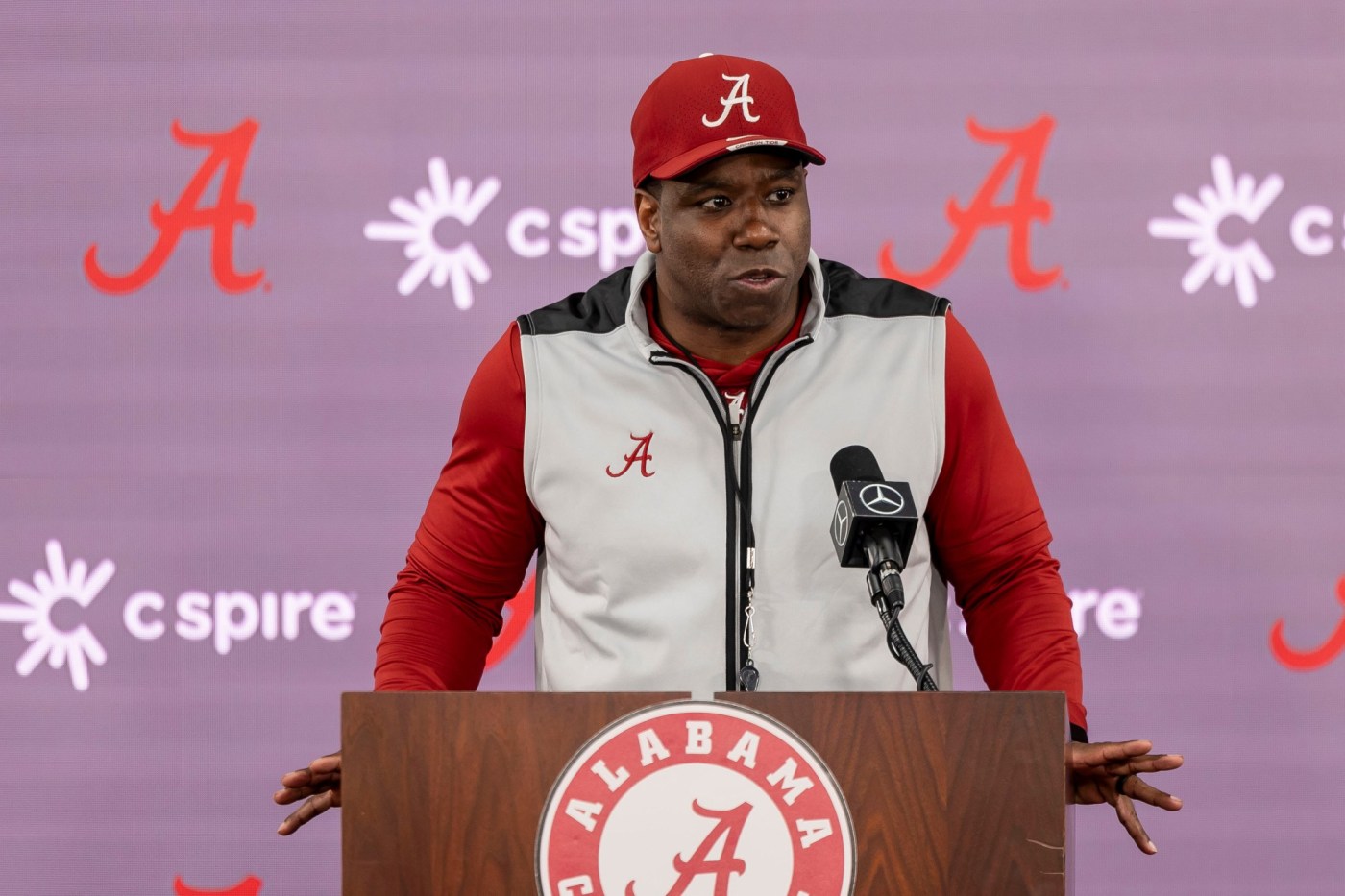
JaMarcus Shephard has been appointed as the 33rd head coach of Oregon State University, stepping into a role filled with both promise and significant challenges. During his introductory press conference, Shephard expressed his commitment to transforming the program, sharing personal reflections on his upbringing in Indiana and his desire for a “special” opportunity at Oregon State.
The 42-year-old Shephard arrives at a pivotal moment for the Beavers, who are grappling with the aftermath of a tumultuous period that included the dismissal of his predecessor, Trent Bray, after just 19 games. With the new Pac-12 landscape set to take shape on July 1, 2026, featuring the addition of six new football schools, Shephard’s task is to elevate a program that has struggled in recent seasons.
Oregon State’s situation has drastically changed since September 2024, when the Beavers appeared well-positioned under Bray. However, a dismal record of 3 wins and 13 losses over their last 16 games led to Bray’s exit and a subsequent coaching search that ultimately resulted in Shephard’s hiring.
The competitive atmosphere within the newly formed Pac-12 will be fierce. Notable programs such as San Diego State and Boise State have bolstered their coaching staffs, while Oregon State seeks to regain its footing. Shephard is aware that roster economics and staff expertise will be crucial in determining the program’s future success.
In his remarks, Shephard emphasized the importance of collaboration among all stakeholders in the program. He stated, “Each one of us has to take our different blocks and set them next to each other… Those building blocks need to talk to one another.” He highlighted two critical components for success: financial investment in recruiting and surrounding himself with experienced coaching staff.
Oregon State’s commitment to revenue sharing will be vital. Competing schools in the power conference are expected to invest at least $13 million into their football programs annually. In contrast, the Pac-12’s financial landscape is anticipated to provide significantly less, potentially around $5 million to $7 million. The question remains: how will Oregon State position itself financially in this new environment?
Shephard’s ability to recruit top talent will depend heavily on the resources made available to him. While he brings a wealth of experience from his time at Alabama, where he served as an assistant coach, he is stepping into a head coaching role for the first time. His choice of offensive coordinator, Mitch Dahlen, also lacks primary playcalling experience, which raises questions about their preparation for the upcoming challenges.
The most critical decision for Shephard will be appointing a defensive coordinator. This position could dictate the Beavers’ performance, and he faces a choice between hiring a seasoned veteran or a fresh talent. As he moves forward, the success of Oregon State hinges on both financial backing and the caliber of his staff.
With Shephard’s strong vision and ambition, there is potential for growth within the program. However, passion alone will not lead to victories in the increasingly competitive Pac-12. The Beavers will need both strategic planning and robust resources to navigate this new chapter successfully. The coming months will be pivotal as Shephard lays the groundwork for Oregon State’s future.

Boys Swimming Regular Season Heats Up: Champions Crowned Now

Nancy Cartwright Celebrates Special Bond With Niece Sabrina Carpenter

Insights from J.P. Morgan Healthcare Conference 2026

Save 50% on Ninja Foodi NeverStick Cookware: A Kitchen Revolution

Congress Approves Initial Funding Bills Following Shutdown

Researchers Unveil Breakthrough in Perovskite Display Technology

Pierce Johnson Joins Reds Bullpen, Teams Up with Emilio Pagan

United Airlines Launches Nonstop Flights from Maine to California

Urgent Events This Week: Gasparilla Tennis Classic & Bo Jackson Speaks

University of Hawaiʻi Joins $25.6M AI Initiative to Monitor Disasters

Interstellar Object 3I/ATLAS Emits Unprecedented Metal Alloy

Toledo City League Announces Hall of Fame Inductees for 2024

DOJ Seizes $15 Billion in Bitcoin from Major Crypto Fraud Network

Western Executives Confront Harsh Realities of China’s Manufacturing Edge

Sharp Launches Five New Aquos QLED 4K Ultra HD Smart TVs

Mutual Advisors LLC Increases Stake in SPDR Portfolio ETF

Community Unites for 7th Annual Walk to Raise Mental Health Awareness

Celtics Coach Joe Mazzulla Dominates Local Media in Scrimmage
-
Science2 months ago
University of Hawaiʻi Joins $25.6M AI Initiative to Monitor Disasters
-
 Science3 months ago
Interstellar Object 3I/ATLAS Emits Unprecedented Metal Alloy
-
 Lifestyle3 months ago
Toledo City League Announces Hall of Fame Inductees for 2024
-
 Business3 months ago
DOJ Seizes $15 Billion in Bitcoin from Major Crypto Fraud Network
-
 Science3 months ago
Western Executives Confront Harsh Realities of China’s Manufacturing Edge
-
 Top Stories3 months ago
Sharp Launches Five New Aquos QLED 4K Ultra HD Smart TVs
-
 Politics3 months ago
Mutual Advisors LLC Increases Stake in SPDR Portfolio ETF
-
 Health3 months ago
Community Unites for 7th Annual Walk to Raise Mental Health Awareness
-
 Sports3 months ago
Celtics Coach Joe Mazzulla Dominates Local Media in Scrimmage
-

 Politics3 months ago
Major Networks Reject Pentagon’s New Reporting Guidelines
-

 World3 months ago
INK Entertainment Launches Exclusive Sofia Pop-Up at Virgin Hotels
-

 Top Stories3 months ago
Microsoft Releases Urgent Windows 11 25H2 Update for All Users