
Business
Texas Service Sector Faces Decline as Sentiment Hits Low Point

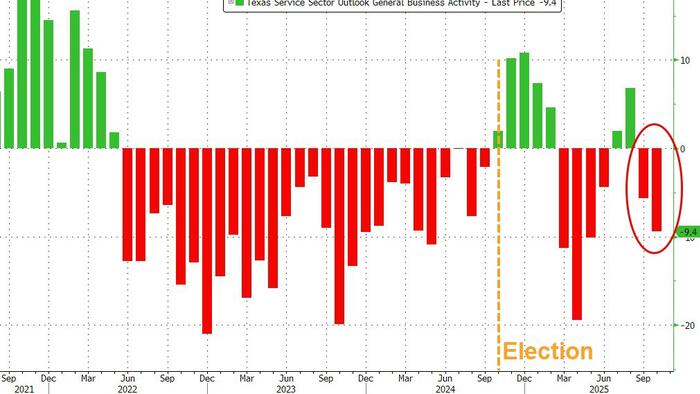
Texas’ service sector experienced a significant downturn in October 2023, as revealed by a survey conducted by the Dallas Federal Reserve. The revenue index, which is a critical measure of service sector performance, dropped four points to -6.4, marking its lowest level since July 2020. This contraction indicates mounting challenges for businesses operating in the region, reflecting broader economic concerns.
The survey results highlight a worrying trend in employment. The employment index fell to -5.8, down from -3.6 in September. Although the number of hours worked remained stable, the overall sentiment surrounding job creation and stability has dampened. Business leaders expressed anxiety over the impact of high interest rates, tariffs, and decreased consumer demand, contributing to a general economic malaise felt throughout the state.
Decline in Service Sector Activity
Several respondents provided candid insights into their experiences, illustrating the harsh conditions faced by Texas businesses. An executive in the accommodation sector noted that the ongoing government shutdown is adversely affecting hotel and travel demand. Another leader in administrative and support services described the current hiring landscape as “impossible to predict,” citing challenges such as candidates failing background checks and hiring delays.
“The level of uncertainty has increased due to higher interest rates and borrowing costs,” the executive stated. “Business has felt recessionary for over a year.” This sentiment resonates across various sectors, illustrating a widespread apprehension about future prospects.
Comments from leaders in ambulatory health care services also reflect growing concerns about escalating prices and declining consumer confidence. Some sectors, such as credit intermediation, are beginning to see renewed interest from clients, but uncertainty remains the overwhelming sentiment.
Impact of Economic Factors
The energy sector appears particularly vulnerable, with layoffs beginning to ripple through the industry. Many service companies that rely on the oil and gas sector are grappling with falling commodity prices and a lack of clarity on future drilling activities. “Commodity prices are down, and there is no real cause to anticipate an upturn,” said one professional in the technical services sector.
In the real estate market, the situation is similarly dire. Homebuilders face declining sales despite offering incentives, while existing homes linger on the market. “We need a major adjustment in home pricing or a significant reduction in interest rates to stimulate movement,” commented a local real estate professional.
The uncertainty is compounded by political dynamics, including the impact of tariffs and potential government actions. Many business owners have indicated they are holding off on spending, with over 80 percent of respondents stating they will refrain from marketing expenditures until at least 2026.
As Texas grapples with these economic challenges, the outlook remains bleak for many businesses. Executives across sectors are calling for clarity and action to navigate this turbulent environment. With the Federal Reserve’s ongoing monitoring of economic data, the situation continues to evolve, leaving many in the state uncertain about what lies ahead.

Bitcoin Plummets Below $88K Amid Tether Concerns and Warnings

Designers Unveil 5 Urgent Tricks to Transform Outdoor Eyesores

Shark Teeth Research Reveals Urgent Need to Protect Species

Church Members Unite in Resilience After Thanksgiving Fire

Community Unites to Attempt World Record for Largest Cookie Exchange

Mayor Lurie Appoints Alan Wong to District 4 Seat Amid Controversy

Mayor Appoints Alan Wong as New Supervisor for District 4

UK Report Reveals AI’s Role in Evaluating University Research Quality

Gabriela Jaquez Shines as No. 3 UCLA Dominates No. 14 Tennessee

University of Hawaiʻi Joins $25.6M AI Initiative to Monitor Disasters

Toledo City League Announces Hall of Fame Inductees for 2024

DOJ Seizes $15 Billion in Bitcoin from Major Crypto Fraud Network

Sharp Launches Five New Aquos QLED 4K Ultra HD Smart TVs

Celtics Coach Joe Mazzulla Dominates Local Media in Scrimmage

Community Unites for 7th Annual Walk to Raise Mental Health Awareness

Mutual Advisors LLC Increases Stake in SPDR Portfolio ETF

Western Executives Confront Harsh Realities of China’s Manufacturing Edge

INK Entertainment Launches Exclusive Sofia Pop-Up at Virgin Hotels
-
Science4 weeks ago
University of Hawaiʻi Joins $25.6M AI Initiative to Monitor Disasters
-
 Lifestyle2 months ago
Toledo City League Announces Hall of Fame Inductees for 2024
-
 Business2 months ago
DOJ Seizes $15 Billion in Bitcoin from Major Crypto Fraud Network
-
 Top Stories2 months ago
Sharp Launches Five New Aquos QLED 4K Ultra HD Smart TVs
-
 Sports2 months ago
Celtics Coach Joe Mazzulla Dominates Local Media in Scrimmage
-
 Health2 months ago
Community Unites for 7th Annual Walk to Raise Mental Health Awareness
-
 Politics2 months ago
Mutual Advisors LLC Increases Stake in SPDR Portfolio ETF
-
 Science2 months ago
Western Executives Confront Harsh Realities of China’s Manufacturing Edge
-
 World2 months ago
INK Entertainment Launches Exclusive Sofia Pop-Up at Virgin Hotels
-

 Politics2 months ago
Major Networks Reject Pentagon’s New Reporting Guidelines
-

 Science1 month ago
Astronomers Discover Twin Cosmic Rings Dwarfing Galaxies
-

 Top Stories1 month ago
Randi Mahomes Launches Game Day Clothing Line with Chiefs