
Business
U.S. Immigration Updates: New Guidelines Emerge for H-1B Visas

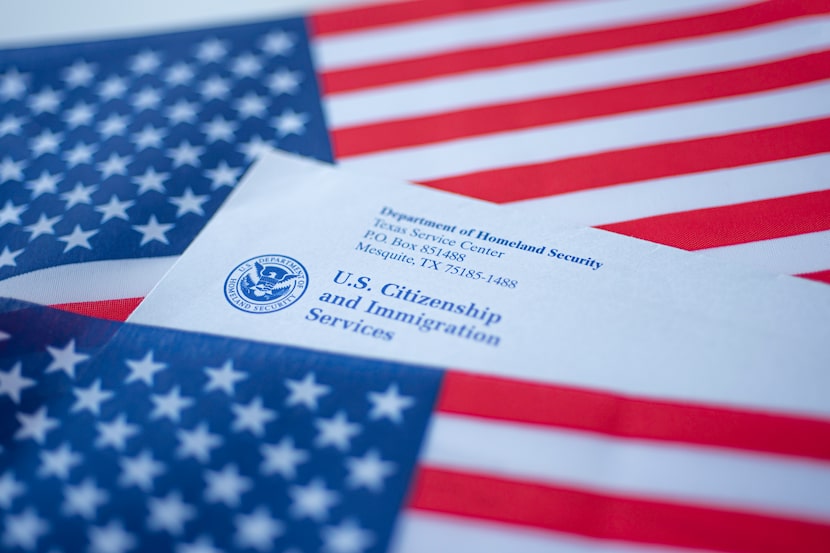
The U.S. immigration landscape for skilled foreign workers has shifted with the introduction of new guidelines for H-1B visas, which are vital for filling skilled positions across various sectors. In September, the Trump administration proposed a controversial fee of $100,000 for these visas, prompting concerns among employers about potential negative impacts on the U.S. labor market. Recent announcements indicate a more nuanced approach, particularly regarding applicants who are already in the United States.
The newly released guidelines clarify that the $100,000 fee will only apply to skilled workers applying from outside the United States. Those already residing in the country, such as international students transitioning to work visas, will be exempt from this charge. This adjustment acknowledges the significant role of international talent educated at U.S. universities and is seen as a positive development for maintaining a crucial pipeline of skilled workers. In 2023, approximately half of all H-1B visas were granted to individuals already in the U.S., with around 75% of this group being international students.
Despite these improvements, some employers express concern over the restrictions that new policies may impose. For instance, certain school districts and hospitals that rely on foreign workers to fill bilingual teaching and nursing positions may find the new fees prohibitive. This could exacerbate existing labor shortages in critical fields.
The introduction of the $100,000 fee was largely a response to reported abuses of the H-1B visa program, especially in the tech sector, where American workers in STEM fields have faced challenges. A notable case involved Apple, which agreed to a settlement of $25 million in 2023 after a federal investigation revealed discriminatory recruitment practices favoring foreign workers over qualified American candidates.
Legal challenges to the Trump administration’s proposed fee are already underway, with lawsuits arguing that the president lacks authority to impose such requirements. The underlying intent of the H-1B program is to address labor shortages, not to replace American workers. Careful scrutiny of the program is warranted, but reforms should aim to protect American jobs while allowing for the influx of necessary talent.
With approximately 85,000 skilled worker visas issued annually, demand continues to outstrip supply. Congressional action may be required to revisit the H-1B program, ensuring that it provides adequate safeguards while meeting the evolving needs of the U.S. workforce. Employers, lawmakers, and stakeholders must collaborate to strike a balance that fosters growth and innovation without compromising domestic job opportunities.
In light of these developments, feedback from the public is encouraged. Readers can share their thoughts through letters to the editor, following the publication’s guidelines.

Bitcoin Plummets Below $88K Amid Tether Concerns and Warnings

Designers Unveil 5 Urgent Tricks to Transform Outdoor Eyesores

Shark Teeth Research Reveals Urgent Need to Protect Species

Church Members Unite in Resilience After Thanksgiving Fire

Community Unites to Attempt World Record for Largest Cookie Exchange

Mayor Lurie Appoints Alan Wong to District 4 Seat Amid Controversy

Mayor Appoints Alan Wong as New Supervisor for District 4

UK Report Reveals AI’s Role in Evaluating University Research Quality

Gabriela Jaquez Shines as No. 3 UCLA Dominates No. 14 Tennessee

University of Hawaiʻi Joins $25.6M AI Initiative to Monitor Disasters

Toledo City League Announces Hall of Fame Inductees for 2024

DOJ Seizes $15 Billion in Bitcoin from Major Crypto Fraud Network

Sharp Launches Five New Aquos QLED 4K Ultra HD Smart TVs

Celtics Coach Joe Mazzulla Dominates Local Media in Scrimmage

Mutual Advisors LLC Increases Stake in SPDR Portfolio ETF

Community Unites for 7th Annual Walk to Raise Mental Health Awareness

Western Executives Confront Harsh Realities of China’s Manufacturing Edge

INK Entertainment Launches Exclusive Sofia Pop-Up at Virgin Hotels
-
Science4 weeks ago
University of Hawaiʻi Joins $25.6M AI Initiative to Monitor Disasters
-
 Lifestyle2 months ago
Toledo City League Announces Hall of Fame Inductees for 2024
-
 Business2 months ago
DOJ Seizes $15 Billion in Bitcoin from Major Crypto Fraud Network
-
 Top Stories2 months ago
Sharp Launches Five New Aquos QLED 4K Ultra HD Smart TVs
-
 Sports2 months ago
Celtics Coach Joe Mazzulla Dominates Local Media in Scrimmage
-
 Politics2 months ago
Mutual Advisors LLC Increases Stake in SPDR Portfolio ETF
-
 Health2 months ago
Community Unites for 7th Annual Walk to Raise Mental Health Awareness
-
 Science2 months ago
Western Executives Confront Harsh Realities of China’s Manufacturing Edge
-
 World2 months ago
INK Entertainment Launches Exclusive Sofia Pop-Up at Virgin Hotels
-

 Politics2 months ago
Major Networks Reject Pentagon’s New Reporting Guidelines
-

 Science1 month ago
Astronomers Discover Twin Cosmic Rings Dwarfing Galaxies
-

 Top Stories1 month ago
Randi Mahomes Launches Game Day Clothing Line with Chiefs