
Health
Bioengineers Develop First Fully Synthetic Human Brain Model

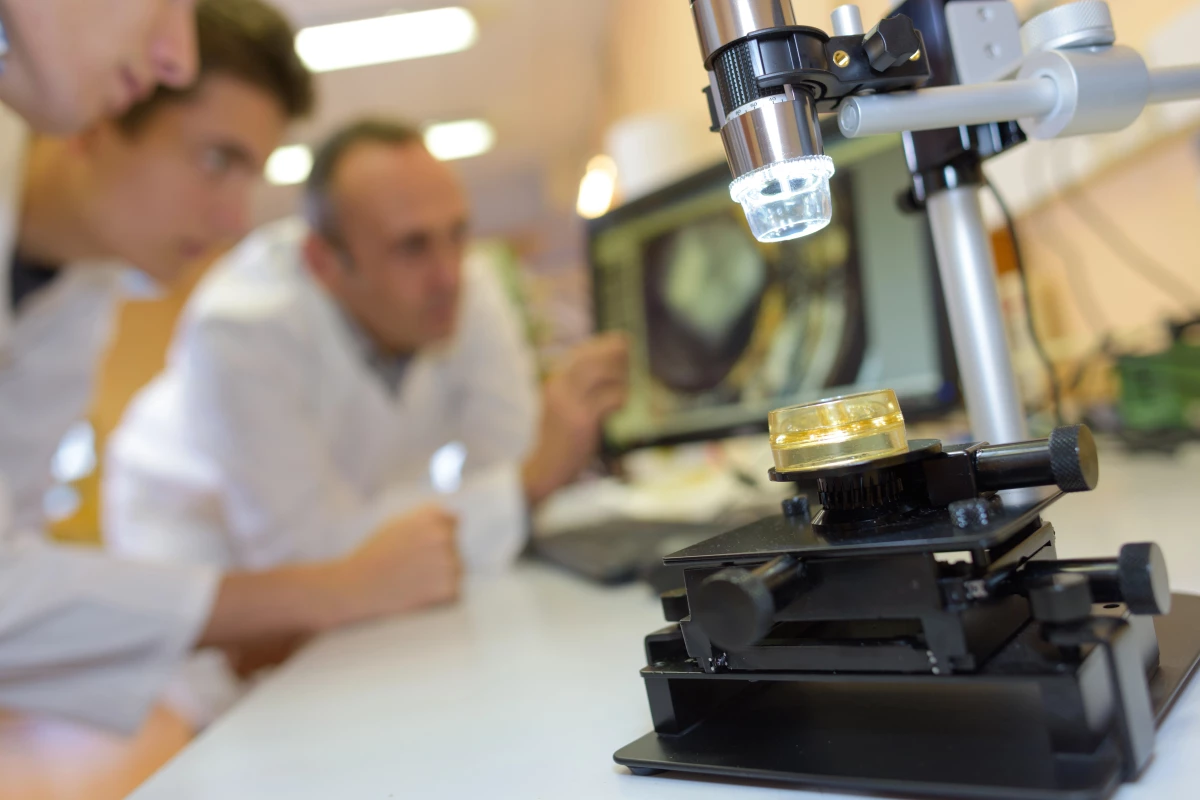
Researchers at the **University of California, Riverside** have achieved a significant milestone by creating the first fully synthetic model of human brain tissue. This breakthrough, known as the **Bijel-Integrated PORous Engineered System (BIPORES)**, eliminates the need for animal-derived materials, representing a major advancement in neural tissue engineering.
The aim of neural tissue engineering is to replicate the brain’s complex extracellular matrix, which is essential for supporting the growth and connectivity of nerve cells. Traditional lab techniques have struggled to accurately reproduce the brain’s intricate design, often overlooking crucial details that influence cell behavior. The new BIPORES system offers a promising alternative by providing a fully synthetic platform for researchers.
Prince David Okoro, the lead author of the study, emphasized the implications of this innovation, stating, “Since the engineered scaffold is stable, it permits longer-term studies.” This stability is particularly vital for studying mature brain cells, which are more representative of actual tissue function during investigations of diseases and traumas.
The BIPORES material is primarily composed of **polyethylene glycol (PEG)**, a chemically neutral polymer that typically repels cells. To address this challenge, the research team employed a novel technique called **STrIPS**, which allows for the continuous production of tiny particles and fibers with sponge-like internal structures. Previous attempts were limited to creating materials only up to **200 micrometers** thick, constrained by the movement of molecules during formation.
To enhance the thickness and functionality of the synthetic brain model, the researchers designed the BIPORES system by integrating large-scale fibrous shapes with complex pore patterns inspired by bicontinuous interfacially jammed emulsion gels, known as bijels. This innovative design employs a gel-like PEG solution, which is transformed into a porous network and stabilized with silica nanoparticles.
Using a custom microfluidic setup combined with a bioprinter, the team constructed 3D structures featuring interconnected pores that facilitate the movement of nutrients and waste, essential for cell survival. When tested with neural stem cells, the BIPORES material showed promising results, encouraging strong cell attachment and growth, as well as the formation of active nerve connections.
Iman Noshadi, an associate professor of bioengineering at UCR, remarked on the potential of the BIPORES system, stating, “The material ensures cells get what they need to grow, organize, and communicate with each other in brain-like clusters.” This capability allows for greater control in designing tissue models, paving the way for more accurate studies of brain function and disease.
At present, the scaffold measures just **two millimeters** across, but the research team is actively working to scale up the model. They have submitted additional research exploring the application of this approach to liver tissue as part of a broader vision to develop interconnected lab-grown mini-organs that can interact like real organs in the human body.
Noshadi highlighted the significance of this interconnected system, explaining, “It would let us see how different tissues respond to the same treatment and how a problem in one organ may influence another.” This research represents a step forward in understanding human biology and disease in a more integrated manner.
From a biomimicry perspective, the layered fabrication approach of the BIPORES system significantly enhances the mimicry of real brain tissue behavior. This advancement positions it as a powerful tool for studying neurological diseases, testing new drugs, and potentially developing future treatments to repair or replace damaged neural tissue.
The findings of this groundbreaking study have been published in the journal **Advanced Functional Materials**, marking a significant contribution to the field of bioengineering and neuroscience.

Japan’s PM Takaichi Confirms Continued Fiscal Management Strategy

Bitcoin Plummets Below $88K Amid Tether Concerns and Warnings

Designers Unveil 5 Urgent Tricks to Transform Outdoor Eyesores

Shark Teeth Research Reveals Urgent Need to Protect Species

Church Members Unite in Resilience After Thanksgiving Fire

Community Unites to Attempt World Record for Largest Cookie Exchange

Mayor Lurie Appoints Alan Wong to District 4 Seat Amid Controversy

Mayor Appoints Alan Wong as New Supervisor for District 4

UK Report Reveals AI’s Role in Evaluating University Research Quality

University of Hawaiʻi Joins $25.6M AI Initiative to Monitor Disasters

Toledo City League Announces Hall of Fame Inductees for 2024

DOJ Seizes $15 Billion in Bitcoin from Major Crypto Fraud Network

Sharp Launches Five New Aquos QLED 4K Ultra HD Smart TVs

Celtics Coach Joe Mazzulla Dominates Local Media in Scrimmage

Mutual Advisors LLC Increases Stake in SPDR Portfolio ETF

Community Unites for 7th Annual Walk to Raise Mental Health Awareness

Western Executives Confront Harsh Realities of China’s Manufacturing Edge

Major Networks Reject Pentagon’s New Reporting Guidelines
-
Science4 weeks ago
University of Hawaiʻi Joins $25.6M AI Initiative to Monitor Disasters
-
 Lifestyle2 months ago
Toledo City League Announces Hall of Fame Inductees for 2024
-
 Business2 months ago
DOJ Seizes $15 Billion in Bitcoin from Major Crypto Fraud Network
-
 Top Stories2 months ago
Sharp Launches Five New Aquos QLED 4K Ultra HD Smart TVs
-
 Sports2 months ago
Celtics Coach Joe Mazzulla Dominates Local Media in Scrimmage
-
 Politics2 months ago
Mutual Advisors LLC Increases Stake in SPDR Portfolio ETF
-
 Health2 months ago
Community Unites for 7th Annual Walk to Raise Mental Health Awareness
-
 Science2 months ago
Western Executives Confront Harsh Realities of China’s Manufacturing Edge
-
 Politics2 months ago
Major Networks Reject Pentagon’s New Reporting Guidelines
-

 World2 months ago
INK Entertainment Launches Exclusive Sofia Pop-Up at Virgin Hotels
-

 Science1 month ago
Astronomers Discover Twin Cosmic Rings Dwarfing Galaxies
-

 Top Stories1 month ago
Randi Mahomes Launches Game Day Clothing Line with Chiefs