
Health
Physician Attends Anti-Vaccine Conference, Calls for Understanding

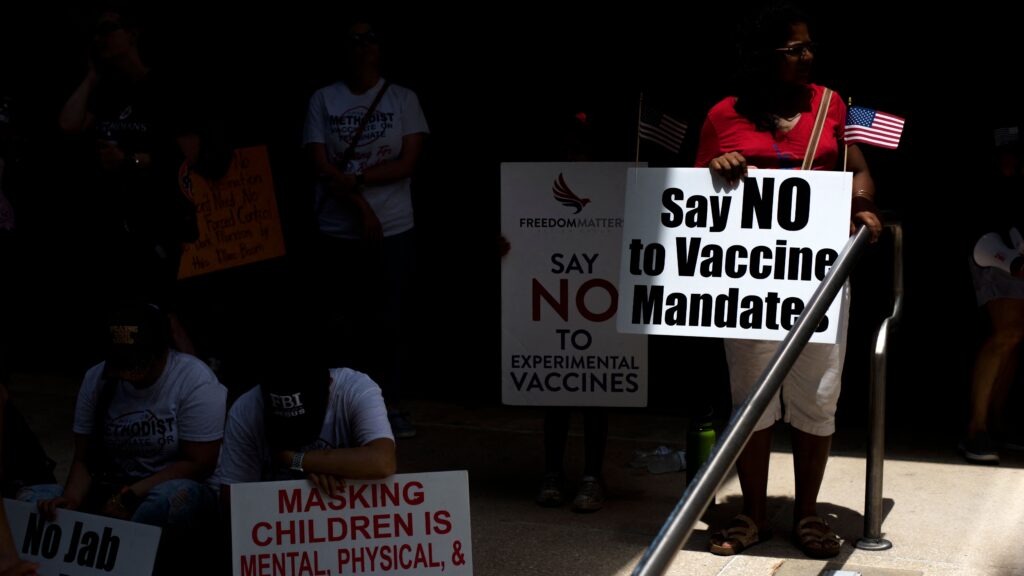
A physician recently attended the Children’s Health Defense (CHD) conference in Austin, Texas, to explore the motivations behind the anti-vaccine movement. Craig Spencer, a public health professor and emergency medicine physician at Brown University, found a community deeply engaged in promoting their perspective on vaccine safety, despite his own pro-vaccine stance. Over two days, Spencer spoke with attendees and observed the pervasive sense of mission among them, as well as their grievances, which were often transformed into organizing efforts.
The CHD conference, held over the weekend, marked a significant moment for the organization, especially following the appointment of its founder, Robert F. Kennedy Jr., as the Secretary of Health and Human Services. The event featured a variety of speakers, including Del Bigtree, CEO of the Informed Consent Action Network, who boldly declared, “God is an anti-vaxxer.” This sentiment echoed throughout the conference as attendees demonstrated confidence in their cause, while also expressing concern about the need to sustain momentum against complacency.
Spencer noted that the event’s title, “A Moment of Truth,” encapsulated the dual themes of triumph and caution. Speakers highlighted recent victories for the anti-vaccine movement but warned that any slacking of efforts could lead to setbacks. Bigtree urged the audience to “keep the pedal to the metal,” emphasizing a proactive approach to advocacy.
Among the nearly 1,000 attendees, the atmosphere was charged with energy. Many were older and predominantly white, united in their skepticism of government and pharmaceutical companies. Despite Spencer’s curiosity-driven attendance, the conference lacked opportunities for audience engagement, as there were no microphones passed for questions during the sessions. Nevertheless, the attendees appeared to share a collective identity and purpose.
Throughout the conference, speakers recounted personal narratives of adversity faced for their beliefs, further solidifying their commitment to the cause. Spencer observed that the conference prioritized emotional resonance over empirical data, often citing medical journals to undermine their credibility rather than to support claims. The emotional weight of personal stories, such as that of Peter Hildebrand, who shared his daughter’s tragic death from measles, powerfully impacted the audience.
The CHD is not just focused on public awareness; it also aims to reshape public health policy through legislative efforts. A recent analysis by the Associated Press identified over 420 anti-science and “medical freedom” bills introduced in state legislatures across the United States, a trend speakers at the conference sought to amplify. Bigtree encouraged attendees to advocate for “truckloads of medical freedom bills” at their local capitals, highlighting the movement’s strategic focus on legislation.
Supporters, including Sen. Rand Paul and Sen. Ron Johnson, offered their backing via video messages, emphasizing the importance of anecdotal evidence in shifting public perception. The speakers framed their experiences as pivotal moments in the fight for “medical freedom,” urging attendees to become proactive in sharing their narratives and shaping public discourse.
Spencer recognized that the CHD’s organized and disciplined approach should not be underestimated. While many in the public health sphere believe that factual data is sufficient to counter misinformation, the conference illustrated that emotional connections and community engagement are equally, if not more, important.
By the time Spencer left Austin, he felt compelled to advocate for greater understanding among public health professionals. He emphasized the need for colleagues to engage with movements like CHD, not to agree with their views, but to comprehend the factors contributing to their influence. Understanding how trust is built and how beliefs are formed is crucial for public health officials seeking to effectively communicate with a population that increasingly distrusts established institutions.
In closing, Spencer highlighted a speaker’s poignant remark: “This is only a moment if we don’t do anything with it.” This sentiment serves as a call to action for public health professionals to actively participate in conversations surrounding vaccine safety and to work towards rebuilding trust with communities that feel marginalized.

Hallmark’s ‘Christmas at the Catnip Café’ Premieres Tonight!

Millville Woman Arrested for Threatening U-Haul Worker with Baton

Japan’s PM Takaichi Confirms Continued Fiscal Management Strategy

Bitcoin Plummets Below $88K Amid Tether Concerns and Warnings

Designers Unveil 5 Urgent Tricks to Transform Outdoor Eyesores

Shark Teeth Research Reveals Urgent Need to Protect Species

Church Members Unite in Resilience After Thanksgiving Fire

Community Unites to Attempt World Record for Largest Cookie Exchange

Mayor Lurie Appoints Alan Wong to District 4 Seat Amid Controversy

University of Hawaiʻi Joins $25.6M AI Initiative to Monitor Disasters

Toledo City League Announces Hall of Fame Inductees for 2024

DOJ Seizes $15 Billion in Bitcoin from Major Crypto Fraud Network

Sharp Launches Five New Aquos QLED 4K Ultra HD Smart TVs

Celtics Coach Joe Mazzulla Dominates Local Media in Scrimmage

Community Unites for 7th Annual Walk to Raise Mental Health Awareness

Mutual Advisors LLC Increases Stake in SPDR Portfolio ETF

Western Executives Confront Harsh Realities of China’s Manufacturing Edge

INK Entertainment Launches Exclusive Sofia Pop-Up at Virgin Hotels
-
Science4 weeks ago
University of Hawaiʻi Joins $25.6M AI Initiative to Monitor Disasters
-
 Lifestyle2 months ago
Toledo City League Announces Hall of Fame Inductees for 2024
-
 Business2 months ago
DOJ Seizes $15 Billion in Bitcoin from Major Crypto Fraud Network
-
 Top Stories2 months ago
Sharp Launches Five New Aquos QLED 4K Ultra HD Smart TVs
-
 Sports2 months ago
Celtics Coach Joe Mazzulla Dominates Local Media in Scrimmage
-
 Health2 months ago
Community Unites for 7th Annual Walk to Raise Mental Health Awareness
-
 Politics2 months ago
Mutual Advisors LLC Increases Stake in SPDR Portfolio ETF
-
 Science2 months ago
Western Executives Confront Harsh Realities of China’s Manufacturing Edge
-
 World2 months ago
INK Entertainment Launches Exclusive Sofia Pop-Up at Virgin Hotels
-

 Politics2 months ago
Major Networks Reject Pentagon’s New Reporting Guidelines
-

 Science1 month ago
Astronomers Discover Twin Cosmic Rings Dwarfing Galaxies
-

 Top Stories1 month ago
Randi Mahomes Launches Game Day Clothing Line with Chiefs