
Health
Study Reveals CTE Rare in Individuals With Isolated Brain Injuries

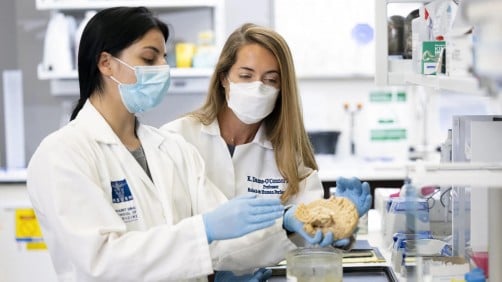
A recent study from the Mount Sinai Health System has found that Chronic Traumatic Encephalopathy (CTE) is rare among individuals who have experienced isolated brain injuries. The research, published in the Journal of Neuropathology & Experimental Neurology on October 18, 2025, highlights the relationship between the frequency of head impacts and the prevalence of CTE, a neurodegenerative disease often linked to repeated head trauma.
The findings emerge from an analysis conducted by the Brain Injury Research Center at Mount Sinai. Researchers examined postmortem brain tissue from 47 donors involved in the Late Effects of Traumatic Brain Injury Project, which focuses on individuals living with traumatic brain injuries (TBIs). According to Kristen Dams-O’Connor, PhD, Director of the Center and senior author of the study, the research challenges previous assumptions about CTE’s prevalence, particularly among those with less extensive head trauma exposure.
CTE is characterized by abnormal accumulations of tau protein in the brain and has been predominantly identified in athletes suffering from repeated head impacts, such as American football players. While some cases of CTE have also been reported in individuals who experienced head-banging, military service, or intimate partner violence, this new study indicates that the disease is less common in those with isolated injuries.
The research team conducted a thorough analysis of each donor’s lifetime trauma history, utilizing medical records, autopsy reports, and structured family interviews. Out of the 47 cases examined, only seven were confirmed to have CTE upon autopsy. Of these, six had histories of extensive repetitive head impacts, while one case involved two severe isolated TBIs without known repeated impacts. This suggests that extensive exposure to repetitive head impacts is a significant risk factor for developing CTE.
“Most prior CTE studies have focused on selected samples of male American football players, which limits our understanding of the disease’s frequency in those with varied head trauma histories,” Dams-O’Connor explained. “Our study underscores that CTE is rare among individuals with lower amounts of repetitive head impact and highlights the need for community-based research.”
The research also aims to clarify terminology often misrepresented in public discussions. The team provided definitions for key terms related to brain injuries, including:
– **Traumatic brain injury (TBI)**: A blow to the head causing loss or alteration of consciousness or acute symptoms like nausea.
– **Blow to the head**: An isolated injury that does not meet the criteria for TBI.
– **Repetitive head impacts**: Series of impacts sustained in close succession that may or may not cause acute TBI symptoms.
– **Extensive repetitive head impacts**: Defined as five or more years of exposure to such impacts.
The Mount Sinai team employed rigorous neuropathologic methods, including tau immunohistochemistry and postmortem MRI scanning, to examine brain tissue and identify subtle long-term injury patterns that could explain CTE’s development in certain individuals.
According to Enna Selmanovic, PhD candidate at the Icahn School of Medicine and the study’s first author, the findings emphasize the need for further investigation into how different types of head trauma contribute to CTE risk. “Our research contributes to understanding the conditions under which CTE develops, advocating for a broader examination of diverse populations beyond previously studied groups,” Selmanovic stated.
The Mount Sinai Health System, one of the largest academic medical systems in the New York area, remains committed to advancing health through research and education. Its comprehensive approach addresses complex healthcare challenges while ensuring that patient needs are prioritized.
The study represents a significant step in understanding CTE, aiming to move beyond assumptions and towards evidence-based conclusions that can guide future research and public understanding of brain injuries.

Fire Erupts at Indigo Apartments in OKC, Residents Fearful

Arlene Hartman, Beloved Community Member, Passes at 87

Urgent: Vehicle Fire Closes Two Lanes on I-215 in Salt Lake City

Knicks Dominate Raptors 116-94 at Home, Extend Winning Streak

Hallmark’s ‘Christmas at the Catnip Café’ Premieres Tonight!

Millville Woman Arrested for Threatening U-Haul Worker with Baton

Japan’s PM Takaichi Confirms Continued Fiscal Management Strategy

Bitcoin Plummets Below $88K Amid Tether Concerns and Warnings

Designers Unveil 5 Urgent Tricks to Transform Outdoor Eyesores

University of Hawaiʻi Joins $25.6M AI Initiative to Monitor Disasters

Toledo City League Announces Hall of Fame Inductees for 2024

DOJ Seizes $15 Billion in Bitcoin from Major Crypto Fraud Network

Sharp Launches Five New Aquos QLED 4K Ultra HD Smart TVs

Celtics Coach Joe Mazzulla Dominates Local Media in Scrimmage

Mutual Advisors LLC Increases Stake in SPDR Portfolio ETF

Community Unites for 7th Annual Walk to Raise Mental Health Awareness

Western Executives Confront Harsh Realities of China’s Manufacturing Edge

INK Entertainment Launches Exclusive Sofia Pop-Up at Virgin Hotels
-
Science4 weeks ago
University of Hawaiʻi Joins $25.6M AI Initiative to Monitor Disasters
-
 Lifestyle2 months ago
Toledo City League Announces Hall of Fame Inductees for 2024
-
 Business2 months ago
DOJ Seizes $15 Billion in Bitcoin from Major Crypto Fraud Network
-
 Top Stories2 months ago
Sharp Launches Five New Aquos QLED 4K Ultra HD Smart TVs
-
 Sports2 months ago
Celtics Coach Joe Mazzulla Dominates Local Media in Scrimmage
-
 Politics2 months ago
Mutual Advisors LLC Increases Stake in SPDR Portfolio ETF
-
 Health2 months ago
Community Unites for 7th Annual Walk to Raise Mental Health Awareness
-
 Science2 months ago
Western Executives Confront Harsh Realities of China’s Manufacturing Edge
-
 World2 months ago
INK Entertainment Launches Exclusive Sofia Pop-Up at Virgin Hotels
-

 Politics2 months ago
Major Networks Reject Pentagon’s New Reporting Guidelines
-

 Science1 month ago
Astronomers Discover Twin Cosmic Rings Dwarfing Galaxies
-

 Top Stories1 month ago
Randi Mahomes Launches Game Day Clothing Line with Chiefs