
Health
Trump Administration Pushes for Increased Birth Rate Amid Criticism

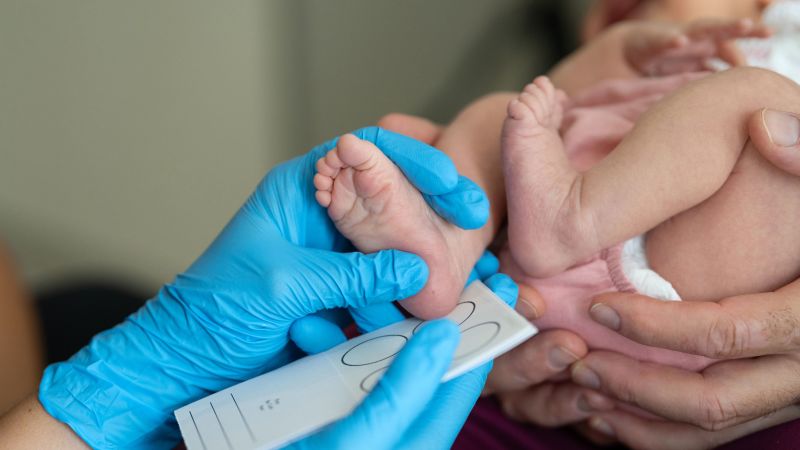
The Trump administration is actively promoting policies aimed at increasing the U.S. birth rate, presenting initiatives such as a $1,000 “baby bonus” and enhanced access to in vitro fertilization (IVF) treatments. However, critics argue that these measures do not adequately address the broader socio-economic challenges that families face, which may ultimately deter parenthood.
Maddy Olcott, a junior at the State University of New York-Purchase College, expressed skepticism about the effectiveness of the proposed incentives. “Our country wants us to be birthing machines, but they’re cutting what resources there already are,” the 20-year-old stated. She pointed out that the proposed baby bonus would barely cover her monthly rent, reflecting a sentiment shared by many young Americans who prioritize career aspirations over starting families.
In mid-October, the White House unveiled its plan to increase access to IVF, with President Donald Trump declaring himself “the fertilization president.” Despite this rhetoric, reproductive rights advocates criticize the administration’s focus on boosting birth rates while simultaneously targeting essential federal programs that benefit women and children. These cuts include reductions to Medicaid and the Children’s Health Insurance Program, both of which provide critical assistance to families.
“The real danger is the constant whittling down of reproductive rights,”
stated Marian Starkey, a spokesperson for Population Connection, a nonprofit advocating for population stabilization. Starkey emphasized that the push for increased births primarily serves a conservative agenda that threatens women’s health and reproductive rights.
The administration’s policies include new work requirements for Medicaid recipients, potentially resulting in millions losing coverage. This is significant given that Medicaid covers more than 40% of births in the United States. Additionally, cuts to the national food benefits program disproportionately affect children, who made up nearly 40% of recipients in fiscal year 2023.
The administration’s approach to family support has also raised concerns about access to critical services. Allyson Crays, a public health law and policy analyst at the Milken Institute School of Public Health, noted that there is an apparent bias in public assistance policies that overlooks the needs of single mothers.
The pronatalist movement, advocating for policies that encourage procreation, is gaining traction within the federal government. Supporters argue that such measures are economically necessary due to a declining birth rate, which has been falling since 2007. The Centers for Disease Control and Prevention reported an average decline of 2% in births per year from 2015 to 2020.
Central to this movement is Project 2025, a political initiative led by the conservative Heritage Foundation, which promotes the idea that children thrive best in a traditional family structure. The project advocates for policies that critics claim undermine women’s health, such as restricting access to mifepristone, a medication used in abortions and miscarriage management.
As the administration continues to advance its pronatalist agenda, Vice President JD Vance has publicly expressed the desire for more American babies. His comments reflect a broader commitment within the administration to align with the pronatalist movement, which many observers find concerning.
Recent announcements include a new website, TrumpRx.gov, aimed at reducing the cost of certain IVF drugs, alongside proposals for employers to offer fertility benefits. While these initiatives are framed as supportive measures, they may fall short of addressing the financial burdens that families face when considering having children.
Angel Albring, a mother of six, shared her perspective on family planning, emphasizing the importance of financial stability. Many of her friends, however, worry about the rising costs of childcare, groceries, and housing, which complicate their family planning decisions.
The One Big Beautiful Bill Act, which establishes a tax-advantaged “Trump Account” for eligible American children, is set to start in 2026. This program aims to provide a financial boost for families but raises questions about its long-term viability in supporting child-rearing.
Transportation Secretary Sean Duffy’s directive to prioritize federal funding for communities with high marriage and birth rates further underscores the administration’s focus on promoting family structures that align with conservative values.
Despite these initiatives, experts warn that policies alone may not lead to increased birth rates. Countries like Israel, which have long offered free IVF treatments, have not seen significant improvements in fertility rates. Similarly, nations such as France and Sweden, known for extensive family support programs, are also experiencing declining birth rates.
Some experts suggest that enhancing immigration could be a viable solution to reverse the declining population trend in the U.S. However, the Trump administration has pursued policies that restrict immigration, contributing to a drop in the immigrant population for the first time since the 1960s, as reported by the Pew Research Center.
Critics argue that the administration’s focus on increasing childbirth serves as a façade to mask a lack of substantial support for families. Amy Matsui, vice president at the National Women’s Law Center, remarked, “You’re not seeing policies that support families with children.” Instead, she contends that the administration promotes a narrow definition of family that aligns with specific ideological beliefs.
As the Trump administration continues to champion initiatives aimed at boosting the birth rate, the effectiveness and implications of these policies remain under scrutiny. The challenge lies not only in encouraging childbirth but also in ensuring that families have the necessary resources and support to thrive.

Shark Teeth Research Reveals Urgent Need to Protect Species

Church Members Unite in Resilience After Thanksgiving Fire

Community Unites to Attempt World Record for Largest Cookie Exchange

Mayor Lurie Appoints Alan Wong to District 4 Seat Amid Controversy

Mayor Appoints Alan Wong as New Supervisor for District 4

UK Report Reveals AI’s Role in Evaluating University Research Quality

Gabriela Jaquez Shines as No. 3 UCLA Dominates No. 14 Tennessee

Trump Promises to Release MRI Results Despite Uncertainty on Scan

Japan’s Q3 Capital Expenditure Slows Despite Surge in Profits

University of Hawaiʻi Joins $25.6M AI Initiative to Monitor Disasters

Toledo City League Announces Hall of Fame Inductees for 2024

DOJ Seizes $15 Billion in Bitcoin from Major Crypto Fraud Network

Sharp Launches Five New Aquos QLED 4K Ultra HD Smart TVs

Celtics Coach Joe Mazzulla Dominates Local Media in Scrimmage

Community Unites for 7th Annual Walk to Raise Mental Health Awareness

Mutual Advisors LLC Increases Stake in SPDR Portfolio ETF

Western Executives Confront Harsh Realities of China’s Manufacturing Edge

INK Entertainment Launches Exclusive Sofia Pop-Up at Virgin Hotels
-
Science4 weeks ago
University of Hawaiʻi Joins $25.6M AI Initiative to Monitor Disasters
-
 Lifestyle2 months ago
Toledo City League Announces Hall of Fame Inductees for 2024
-
 Business2 months ago
DOJ Seizes $15 Billion in Bitcoin from Major Crypto Fraud Network
-
 Top Stories2 months ago
Sharp Launches Five New Aquos QLED 4K Ultra HD Smart TVs
-
 Sports2 months ago
Celtics Coach Joe Mazzulla Dominates Local Media in Scrimmage
-
 Health2 months ago
Community Unites for 7th Annual Walk to Raise Mental Health Awareness
-
 Politics2 months ago
Mutual Advisors LLC Increases Stake in SPDR Portfolio ETF
-
 Science2 months ago
Western Executives Confront Harsh Realities of China’s Manufacturing Edge
-
 World2 months ago
INK Entertainment Launches Exclusive Sofia Pop-Up at Virgin Hotels
-

 Politics2 months ago
Major Networks Reject Pentagon’s New Reporting Guidelines
-

 Science1 month ago
Astronomers Discover Twin Cosmic Rings Dwarfing Galaxies
-

 Top Stories1 month ago
Randi Mahomes Launches Game Day Clothing Line with Chiefs