
Lifestyle
Taos Pueblo Proposes ‘Red Willow Park’ Name Change for Community Healing

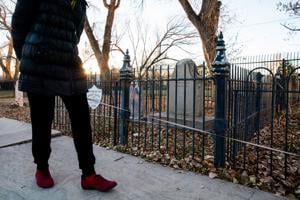
The leadership of Taos Pueblo has officially proposed renaming Kit Carson Park to “Red Willow Park,” a significant step towards recognizing the cultural heritage of the Indigenous community in Taos, New Mexico. This recommendation was made during a meeting of the town’s Kit Carson Renaming Committee, which plans to present the name change to the town council at a special meeting scheduled for November 17, 2023.
Efforts to rename the park have been ongoing since 2011, as the current name honors Kit Carson, a frontiersman whose legacy is marred by his involvement in violent campaigns against various Native American tribes, including the Navajo and Mescalero Apache. Carson lived in Taos for a significant portion of his life, and his former home and grave have become both tourist attractions and targets for vandalism.
The Taos Pueblo, known as the Red Willow people, previously rejected a proposal to adopt the new name due to a lack of involvement in the decision-making process. However, during the committee’s meeting on October 23, tribal leaders submitted a letter outlining six specific conditions for the acceptance of the new name.
Genevieve Oswald, chair of the renaming committee and town councilor, expressed optimism, stating, “All six of those points can be met. This was just the door opening.” The letter was read by Jeremy Lujan, the Tribal Secretary, who emphasized the deep connection the Tiwa people have to the land, saying, “This valley is not a place we occupy — it is who we are.”
Lujan’s address highlighted the importance of acknowledging the historical context of the land, stating, “When we say this land is unceded Tiwa land, we mean what words cannot fully capture: We did not lawfully transfer our homeland to another nation.” He criticized the current renaming process for failing to include the voices of Indigenous people, asserting that decisions made without their input perpetuate a pattern of erasure.
The letter from the Tribal Council criticized the way discussions around renaming have often sidelined the original inhabitants. It noted, “Well-meaning actors — activists, scholars, neighboring tribes, and municipal commissions step forward and frame the narrative. They speak of justice while leaving the original people on the margins.”
While Kit Carson’s name is prominent throughout the American West, the legacy associated with it has sparked significant debate. The recent removal of an obelisk dedicated to Carson in Santa Fe reflects a growing recognition of the need to address historical injustices. Oswald acknowledged that changing the park’s name would not be sufficient on its own, stating, “If we really want this to be good work, this has to go deeper and enable deeper, longer, social-relational change.”
Members of Taos Pueblo, including Dr. Christina M. Castro and Turquoise Chenoa Velarde, echoed the sentiment that a name change must be accompanied by genuine efforts to rectify historical wrongs. Castro suggested “The People’s Park” as an alternative name and emphasized the need for a broader examination of names that dehumanize Indigenous peoples.
Velarde shared her family’s connection to the legacy of Kit Carson, noting that her ancestors experienced the Long Walk, a forced relocation of the Navajo people. She asserted the importance of taking action beyond symbolic gestures, stating, “We need people who are ready to do more than clap for justice. We need people willing to fight for it.”
The committee also addressed a common argument against renaming parks like Kit Carson Park, which posits that removing the names of controversial figures eliminates opportunities for discussion about their actions. Velarde countered that educational efforts could still focus on Carson’s legacy while changing the park’s name. “For it to stand as a priority means that we are not the priority, and then our story isn’t and our history isn’t,” she asserted.
The Tribal Council’s letter further outlined the significance of names in public spaces, stating, “When a name is given to a place in the public sphere it frames what people remember, who is visible, and whose authority is assumed.” The council highlighted that colonial names often honor conquest while obscuring the suffering of Indigenous peoples, and called for a shift towards truly inclusive narratives.
As the town prepares for the upcoming council meeting, the proposed name change to “Red Willow Park” represents not just a shift in nomenclature, but an opportunity for healing and greater understanding between the Taos Pueblo and the wider community. The discussions surrounding this change reflect a broader movement towards acknowledging and rectifying historical injustices faced by Indigenous peoples across the globe.

Knicks Dominate Raptors 116-94 at Home, Extend Winning Streak

Hallmark’s ‘Christmas at the Catnip Café’ Premieres Tonight!

Millville Woman Arrested for Threatening U-Haul Worker with Baton

Japan’s PM Takaichi Confirms Continued Fiscal Management Strategy

Bitcoin Plummets Below $88K Amid Tether Concerns and Warnings

Designers Unveil 5 Urgent Tricks to Transform Outdoor Eyesores

Shark Teeth Research Reveals Urgent Need to Protect Species

Church Members Unite in Resilience After Thanksgiving Fire

Community Unites to Attempt World Record for Largest Cookie Exchange

University of Hawaiʻi Joins $25.6M AI Initiative to Monitor Disasters

Toledo City League Announces Hall of Fame Inductees for 2024

DOJ Seizes $15 Billion in Bitcoin from Major Crypto Fraud Network

Sharp Launches Five New Aquos QLED 4K Ultra HD Smart TVs

Celtics Coach Joe Mazzulla Dominates Local Media in Scrimmage

Mutual Advisors LLC Increases Stake in SPDR Portfolio ETF

Community Unites for 7th Annual Walk to Raise Mental Health Awareness

Western Executives Confront Harsh Realities of China’s Manufacturing Edge

INK Entertainment Launches Exclusive Sofia Pop-Up at Virgin Hotels
-
Science4 weeks ago
University of Hawaiʻi Joins $25.6M AI Initiative to Monitor Disasters
-
 Lifestyle2 months ago
Toledo City League Announces Hall of Fame Inductees for 2024
-
 Business2 months ago
DOJ Seizes $15 Billion in Bitcoin from Major Crypto Fraud Network
-
 Top Stories2 months ago
Sharp Launches Five New Aquos QLED 4K Ultra HD Smart TVs
-
 Sports2 months ago
Celtics Coach Joe Mazzulla Dominates Local Media in Scrimmage
-
 Politics2 months ago
Mutual Advisors LLC Increases Stake in SPDR Portfolio ETF
-
 Health2 months ago
Community Unites for 7th Annual Walk to Raise Mental Health Awareness
-
 Science2 months ago
Western Executives Confront Harsh Realities of China’s Manufacturing Edge
-
 World2 months ago
INK Entertainment Launches Exclusive Sofia Pop-Up at Virgin Hotels
-

 Politics2 months ago
Major Networks Reject Pentagon’s New Reporting Guidelines
-

 Science1 month ago
Astronomers Discover Twin Cosmic Rings Dwarfing Galaxies
-

 Top Stories1 month ago
Randi Mahomes Launches Game Day Clothing Line with Chiefs