
Politics
Mexican Mayor Carlos Manzo Gunned Down During Day of the Dead Celebration

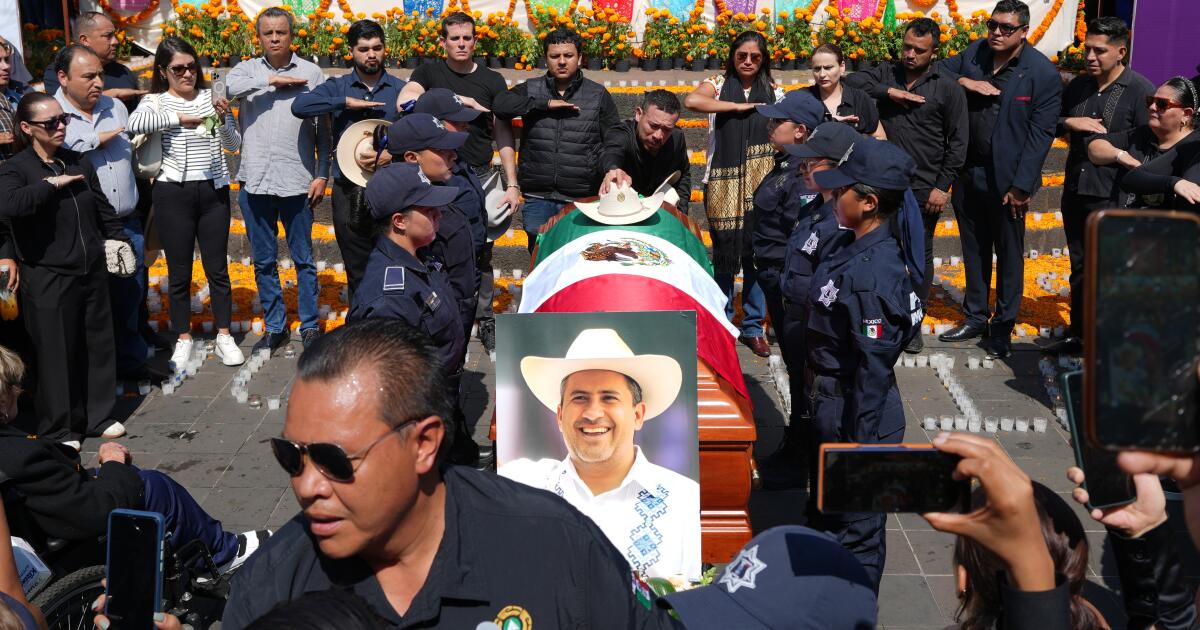
Carlos Manzo, the mayor of Uruapan, was assassinated on the evening of November 4, 2023, while presiding over a public celebration of the Day of the Dead. The incident occurred in the central square of Uruapan, a city with a population of approximately 300,000 located in the western state of Michoacán, known for its avocado production and ongoing violence linked to drug cartels.
Manzo, aged 40, was known for his outspoken criticism of organized crime, advocating for a confrontational approach against cartels that he claimed operated with impunity. His provocative rhetoric, which included calls for law enforcement to use lethal force against criminals, garnered both support and animosity. He once remarked, “I don’t want to be just another murdered mayor,” acknowledging the risks associated with his position.
The assassination unfolded amidst a crowded public event that Manzo attended with his family. In a video captured during the celebration, he can be seen engaging with attendees and broadcasting the event live on social media. Just moments after assuring a journalist of the event’s security, gunfire erupted, resulting in Manzo being shot. One suspected assailant was killed at the scene, while two others were apprehended.
The slaying has sparked widespread condemnation across Mexico, with reactions from prominent figures such as Mexican President Claudia Sheinbaum, who referred to the incident as an “irreparable loss.” U.S. Deputy Secretary of State Christopher Landau also expressed his condolences, sharing a photograph of Manzo with his young son shortly before the attack and emphasizing the U.S. commitment to enhancing security cooperation with Mexico to combat organized crime.
Manzo’s approach to combating crime aligned him with a growing faction of leaders throughout the Americas advocating for aggressive measures against criminal organizations. This group includes leaders like El Salvador’s President Nayib Bukele, known for his controversial policies that have led to the mass incarceration of individuals suspected of gang affiliations, often without due process.
The violent stance taken by Manzo contrasts sharply with the security strategies promoted by Sheinbaum and her predecessor, Andrés Manuel López Obrador, who pushed for addressing the root causes of crime, such as poverty and social disintegration. López Obrador famously advocated for a policy of “hugs, not bullets,” which Manzo openly criticized. He claimed that such an approach was ineffective against hardened criminals, stating, “Criminals, assassins … they deserve beatings and the full force of the Mexican state.”
Despite concerns regarding his confrontational tactics, Manzo’s tenure as mayor began with a promise to reduce violence in a city plagued by drug war atrocities, including kidnappings and bombings. His calls for police to adopt a more aggressive stance in confronting crime were seen as a desperate attempt to regain control in a region where criminal groups vie for dominance over trafficking routes.
Security consultant David Saucedo, who described the attack as a “kamikaze attack,” noted that Manzo’s methods, while courageous, lacked the necessary resources to effectively challenge the cartels. He stated, “Carlos lacked the human, financial, and material resources to defeat the cartels,” emphasizing the daunting challenges faced by local leaders in the fight against organized crime.
The assassination of Carlos Manzo adds to a troubling trend of violence in Michoacán. Just last month, the body of Bernardo Bravo Manríquez, the head of a local lime growers association, was discovered after he had publicly denounced extortion attempts against agricultural producers.
Manzo’s death serves as a grim reminder of the pervasive threat posed by organized crime in Mexico and the ongoing struggles faced by those in positions of authority who dare to confront it. As the nation mourns the loss of yet another public figure, the question remains: how will Mexico address the complex interplay of crime, governance, and security in the future?

Community Unites to Attempt World Record for Largest Cookie Exchange

Mayor Lurie Appoints Alan Wong to District 4 Seat Amid Controversy

Mayor Appoints Alan Wong as New Supervisor for District 4

UK Report Reveals AI’s Role in Evaluating University Research Quality

Gabriela Jaquez Shines as No. 3 UCLA Dominates No. 14 Tennessee

Trump Promises to Release MRI Results Despite Uncertainty on Scan

Japan’s Q3 Capital Expenditure Slows Despite Surge in Profits

South Korea Announces Urgent FX Oversight Measures to Stabilize Won

Tampa’s Annual Tree Lighting Ignites Holiday Spirit Tonight

University of Hawaiʻi Joins $25.6M AI Initiative to Monitor Disasters

Toledo City League Announces Hall of Fame Inductees for 2024

DOJ Seizes $15 Billion in Bitcoin from Major Crypto Fraud Network

Sharp Launches Five New Aquos QLED 4K Ultra HD Smart TVs

Celtics Coach Joe Mazzulla Dominates Local Media in Scrimmage

Mutual Advisors LLC Increases Stake in SPDR Portfolio ETF

Community Unites for 7th Annual Walk to Raise Mental Health Awareness

Western Executives Confront Harsh Realities of China’s Manufacturing Edge

INK Entertainment Launches Exclusive Sofia Pop-Up at Virgin Hotels
-
Science4 weeks ago
University of Hawaiʻi Joins $25.6M AI Initiative to Monitor Disasters
-
 Lifestyle2 months ago
Toledo City League Announces Hall of Fame Inductees for 2024
-
 Business2 months ago
DOJ Seizes $15 Billion in Bitcoin from Major Crypto Fraud Network
-
 Top Stories2 months ago
Sharp Launches Five New Aquos QLED 4K Ultra HD Smart TVs
-
 Sports2 months ago
Celtics Coach Joe Mazzulla Dominates Local Media in Scrimmage
-
 Politics2 months ago
Mutual Advisors LLC Increases Stake in SPDR Portfolio ETF
-
 Health2 months ago
Community Unites for 7th Annual Walk to Raise Mental Health Awareness
-
 Science2 months ago
Western Executives Confront Harsh Realities of China’s Manufacturing Edge
-

 Politics2 months ago
Major Networks Reject Pentagon’s New Reporting Guidelines
-
 World2 months ago
INK Entertainment Launches Exclusive Sofia Pop-Up at Virgin Hotels
-

 Science1 month ago
Astronomers Discover Twin Cosmic Rings Dwarfing Galaxies
-

 Top Stories1 month ago
Randi Mahomes Launches Game Day Clothing Line with Chiefs