
Politics
Moynihan’s Legacy Resurfaces in New York’s Mayoral Race

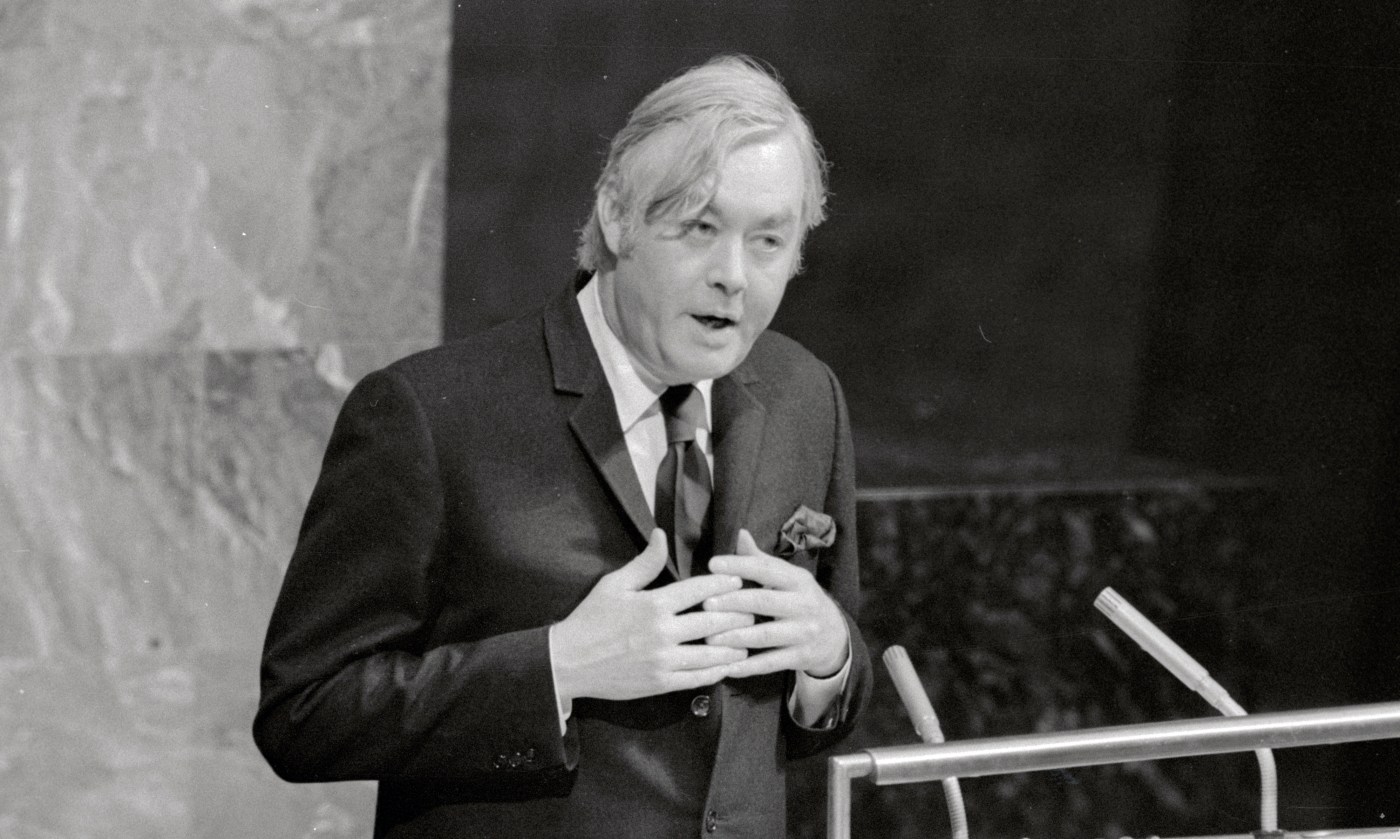
On November 10, 1975, former United States Ambassador to the United Nations Daniel Patrick Moynihan led a significant opposition against the UN’s controversial resolution labeling Zionism as racism. Moynihan characterized this resolution as an affront to democracy and decency, stating that it not only targeted Israel but also endangered the principles of liberal democracy. His actions resonated deeply with Americans, reflecting a widespread rejection of the resolution that ultimately tarnished the UN’s credibility.
Fast forward to 2023, New York City finds itself on the brink of electing a new mayor, Zohran Mamdani, whose political ascent has been closely tied to his anti-Zionist rhetoric. The parallels between Moynihan’s fight against the UN resolution and the current political climate raise critical questions about the implications of Mamdani’s views for the city’s future. With the mayoral election set for November 4, many hope history does not repeat itself, marking another significant decline in New York’s political reputation.
Moynihan, a prominent figure from New York’s Hell’s Kitchen, articulated a clear distinction between nationalism and racism. He argued that singling out Jewish nationalism, or Zionism, for condemnation was inherently antisemitic. During his tenure, he emphasized that the conflict between Israel and the Palestinians was fundamentally national rather than racial, challenging the narrative that equated Zionism with biological hatred. His passionate defense highlighted a critical concern: the erosion of meaningful discourse surrounding human rights, which could ultimately undermine democratic values.
At the UN, Israeli Ambassador Chaim Herzog poignantly noted the timing of the resolution, coinciding with the anniversary of Kristallnacht, a brutal pogrom against Jews in Nazi Germany. Herzog expressed that the discussions surrounding the resolution would have resonated with the ideologies of historical oppressors, including Adolf Hitler. This context frames the debate around Mamdani’s candidacy, as voters ponder which candidate aligns more closely with America’s values and its allies.
Many prominent figures, including civil rights leaders, have voiced concerns about the redefinition of racism in political discourse. Vernon Jordan, former president of the National Urban League, criticized the misuse of the term “racism” to describe Zionism, asserting that it trivializes the experiences of those who have suffered genuine racial discrimination. Jordan questioned how the UN could endorse a notion that denies national self-determination to Jews while advocating it for others.
In 1946, New Yorkers celebrated the UN’s decision to establish its headquarters in Manhattan, recognizing it as a symbol of post-war optimism. However, the credibility of the UN has since waned, especially after the adoption of Resolution 3379. In response to the resolution, a rally against racism and antisemitism drew over 100,000 participants in Manhattan, demonstrating a unifying front among diverse communities.
Prominent civil rights activist Bayard Rustin warned against the political weaponization of the term “racism,” underscoring its potential to cause harm to the broader fight against discrimination. Rustin echoed the sentiments of Martin Luther King Jr., who recognized that critiques of Zionism often concealed deeper antisemitic sentiments.
Moynihan’s bold stance against the resolution garnered public support, with polls indicating that a majority of Americans backed his position. Editorials from leading newspapers condemned the UN’s resolution, establishing Moynihan as a defender of democratic values at a time when the nation was grappling with crises, including the fallout from Watergate and economic challenges.
Reflecting on the significance of Moynihan’s legacy, it is crucial to consider how contemporary political figures address similar issues. Mamdani’s alignment with anti-Zionist rhetoric raises questions about his potential impact on New York’s relationship with Israel and the Jewish community. His failure to unequivocally condemn violence from groups like Hamas further complicates his position in the eyes of many voters.
As the election approaches, the echoes of Moynihan’s fight against the UN resolution resonate within the larger narrative of political discourse surrounding Israel and its critics. The challenges of addressing antisemitism in modern politics are compounded by the rise of anti-Zionism, which some argue serves as a contemporary guise for age-old prejudices.
In summary, the upcoming mayoral election in New York City marks a critical juncture for voters who must navigate the legacy of Moynihan’s principled stance against bigotry and the emerging political landscape represented by candidates like Mamdani. The implications of this election extend beyond the city, reflecting broader societal attitudes towards nationalism, racism, and the ongoing conflict in the Middle East.

Hallmark’s ‘Christmas at the Catnip Café’ Premieres Tonight!

Millville Woman Arrested for Threatening U-Haul Worker with Baton

Japan’s PM Takaichi Confirms Continued Fiscal Management Strategy

Bitcoin Plummets Below $88K Amid Tether Concerns and Warnings

Designers Unveil 5 Urgent Tricks to Transform Outdoor Eyesores

Shark Teeth Research Reveals Urgent Need to Protect Species

Church Members Unite in Resilience After Thanksgiving Fire

Community Unites to Attempt World Record for Largest Cookie Exchange

Mayor Lurie Appoints Alan Wong to District 4 Seat Amid Controversy

University of Hawaiʻi Joins $25.6M AI Initiative to Monitor Disasters

Toledo City League Announces Hall of Fame Inductees for 2024

DOJ Seizes $15 Billion in Bitcoin from Major Crypto Fraud Network

Sharp Launches Five New Aquos QLED 4K Ultra HD Smart TVs

Celtics Coach Joe Mazzulla Dominates Local Media in Scrimmage

Mutual Advisors LLC Increases Stake in SPDR Portfolio ETF

Community Unites for 7th Annual Walk to Raise Mental Health Awareness

Western Executives Confront Harsh Realities of China’s Manufacturing Edge

INK Entertainment Launches Exclusive Sofia Pop-Up at Virgin Hotels
-
Science4 weeks ago
University of Hawaiʻi Joins $25.6M AI Initiative to Monitor Disasters
-
 Lifestyle2 months ago
Toledo City League Announces Hall of Fame Inductees for 2024
-
 Business2 months ago
DOJ Seizes $15 Billion in Bitcoin from Major Crypto Fraud Network
-
 Top Stories2 months ago
Sharp Launches Five New Aquos QLED 4K Ultra HD Smart TVs
-
 Sports2 months ago
Celtics Coach Joe Mazzulla Dominates Local Media in Scrimmage
-
 Politics2 months ago
Mutual Advisors LLC Increases Stake in SPDR Portfolio ETF
-
 Health2 months ago
Community Unites for 7th Annual Walk to Raise Mental Health Awareness
-
 Science2 months ago
Western Executives Confront Harsh Realities of China’s Manufacturing Edge
-
 World2 months ago
INK Entertainment Launches Exclusive Sofia Pop-Up at Virgin Hotels
-

 Politics2 months ago
Major Networks Reject Pentagon’s New Reporting Guidelines
-

 Science1 month ago
Astronomers Discover Twin Cosmic Rings Dwarfing Galaxies
-

 Top Stories1 month ago
Randi Mahomes Launches Game Day Clothing Line with Chiefs