
Politics
Trump Faces Legal Challenges Over National Guard Deployments

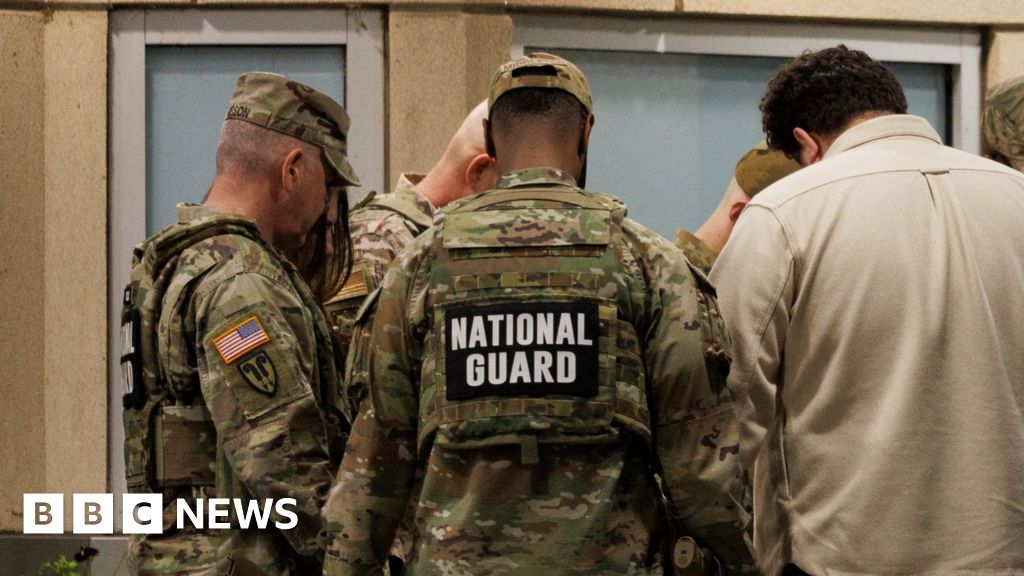
President Donald Trump is facing significant legal challenges as he seeks to deploy the National Guard to various cities across the United States. He argues that this measure is essential to address violence in Democratic-controlled areas, combat crime, and support his immigration policies. The situation escalated following a gun attack on November 26 in Washington DC, which resulted in injuries to two National Guard members.
Several Democratic governors have publicly opposed Trump’s deployment strategy, claiming it is unnecessary and could heighten tensions. Legal actions have already been initiated in states like Illinois and Oregon to contest the federal government’s authority in these deployments.
The National Guard, consisting primarily of state-based troops, is typically mobilised for emergencies such as natural disasters or large-scale protests. Each of the 50 states, along with the District of Columbia and territories like Guam and Puerto Rico, maintains its own National Guard units. These troops can be federalised under certain circumstances, allowing the President to take control, but requests for deployment usually originate at the state level.
Governors usually activate National Guard troops in response to emergencies, and they can request additional support from the President. However, the powers of National Guard members are limited. They are not authorised to enforce the law or conduct arrests, searches, or seizures due to the Posse Comitatus Act, which restricts the federal government’s use of military force in domestic situations.
Trump has previously attempted to bypass established protocols for deploying the National Guard. In June, he took control of the California National Guard to manage protests against immigration raids in Los Angeles, despite opposition from Governor Gavin Newsom. This prompted California to file two lawsuits against the Trump administration, one of which resulted in a federal judge ruling that the President’s actions violated the Posse Comitatus Act.
The summer also saw the deployment of hundreds of National Guard troops in Washington DC, which Trump described as necessary due to what he termed “complete and total lawlessness.” He cited rising crime rates and homelessness as justifications for this action. Following the recent attack on National Guard members, Defense Secretary Pete Hegseth confirmed that Trump requested an additional 500 troops for Washington DC.
In Chicago, Trump authorised the deployment of National Guard members in response to protests related to immigration enforcement. Governor JB Pritzker expressed that Trump was attempting to “manufacture a crisis” and has initiated his own legal proceedings against the federal government’s actions.
Legal complexities have also emerged regarding attempts to send National Guard members from other states to Portland, Oregon. A federal judge temporarily halted Trump’s efforts to federalise the Oregon National Guard. Nonetheless, a later ruling by a US appeals court allowed the deployment to proceed, despite local officials’ objections.
The law governing the President’s authority to deploy the National Guard is rarely invoked. It permits the President to call troops into service during a foreign invasion or domestic rebellion. In June, Trump invoked this law to mobilise 2,000 National Guard troops for support during Immigration and Customs Enforcement (ICE) raids.
Press Secretary Karoline Leavitt expressed confidence in the legality of Trump’s actions, stating on October 6, “We’re very confident in the president’s legal authority to do this, and we’re very confident we will win on the merits of the law.”
Since the National Guard’s presence in Washington DC, crime rates have reportedly decreased. Between May 25 and November 25 of this year, police recorded 62 homicides in the capital, down from 107 during the same period in 2022. Following the attack on National Guard members, Trump’s administration has sought further troop deployments to Portland to address protests against immigration policies.
Despite Trump’s assertions that Portland is experiencing widespread chaos, Governor Tina Kotek has stated, “There is no insurrection in Portland, no threat to national security.” The ongoing legal battle will determine the future of these deployments and set precedents for federal involvement in local law enforcement issues.

Community Unites to Attempt World Record for Largest Cookie Exchange

Mayor Lurie Appoints Alan Wong to District 4 Seat Amid Controversy

Mayor Appoints Alan Wong as New Supervisor for District 4

UK Report Reveals AI’s Role in Evaluating University Research Quality

Gabriela Jaquez Shines as No. 3 UCLA Dominates No. 14 Tennessee

Trump Promises to Release MRI Results Despite Uncertainty on Scan

Japan’s Q3 Capital Expenditure Slows Despite Surge in Profits

South Korea Announces Urgent FX Oversight Measures to Stabilize Won

Tampa’s Annual Tree Lighting Ignites Holiday Spirit Tonight

University of Hawaiʻi Joins $25.6M AI Initiative to Monitor Disasters

Toledo City League Announces Hall of Fame Inductees for 2024

DOJ Seizes $15 Billion in Bitcoin from Major Crypto Fraud Network

Sharp Launches Five New Aquos QLED 4K Ultra HD Smart TVs

Celtics Coach Joe Mazzulla Dominates Local Media in Scrimmage

Mutual Advisors LLC Increases Stake in SPDR Portfolio ETF

Community Unites for 7th Annual Walk to Raise Mental Health Awareness

Western Executives Confront Harsh Realities of China’s Manufacturing Edge

INK Entertainment Launches Exclusive Sofia Pop-Up at Virgin Hotels
-
Science4 weeks ago
University of Hawaiʻi Joins $25.6M AI Initiative to Monitor Disasters
-
 Lifestyle2 months ago
Toledo City League Announces Hall of Fame Inductees for 2024
-
 Business2 months ago
DOJ Seizes $15 Billion in Bitcoin from Major Crypto Fraud Network
-
 Top Stories2 months ago
Sharp Launches Five New Aquos QLED 4K Ultra HD Smart TVs
-
 Sports2 months ago
Celtics Coach Joe Mazzulla Dominates Local Media in Scrimmage
-
 Politics2 months ago
Mutual Advisors LLC Increases Stake in SPDR Portfolio ETF
-
 Health2 months ago
Community Unites for 7th Annual Walk to Raise Mental Health Awareness
-
 Science2 months ago
Western Executives Confront Harsh Realities of China’s Manufacturing Edge
-
 World2 months ago
INK Entertainment Launches Exclusive Sofia Pop-Up at Virgin Hotels
-
 Politics2 months ago
Major Networks Reject Pentagon’s New Reporting Guidelines
-

 Science1 month ago
Astronomers Discover Twin Cosmic Rings Dwarfing Galaxies
-

 Top Stories1 month ago
Randi Mahomes Launches Game Day Clothing Line with Chiefs