
Politics
Trump Strengthens US Ties with Central Asia at Historic Summit

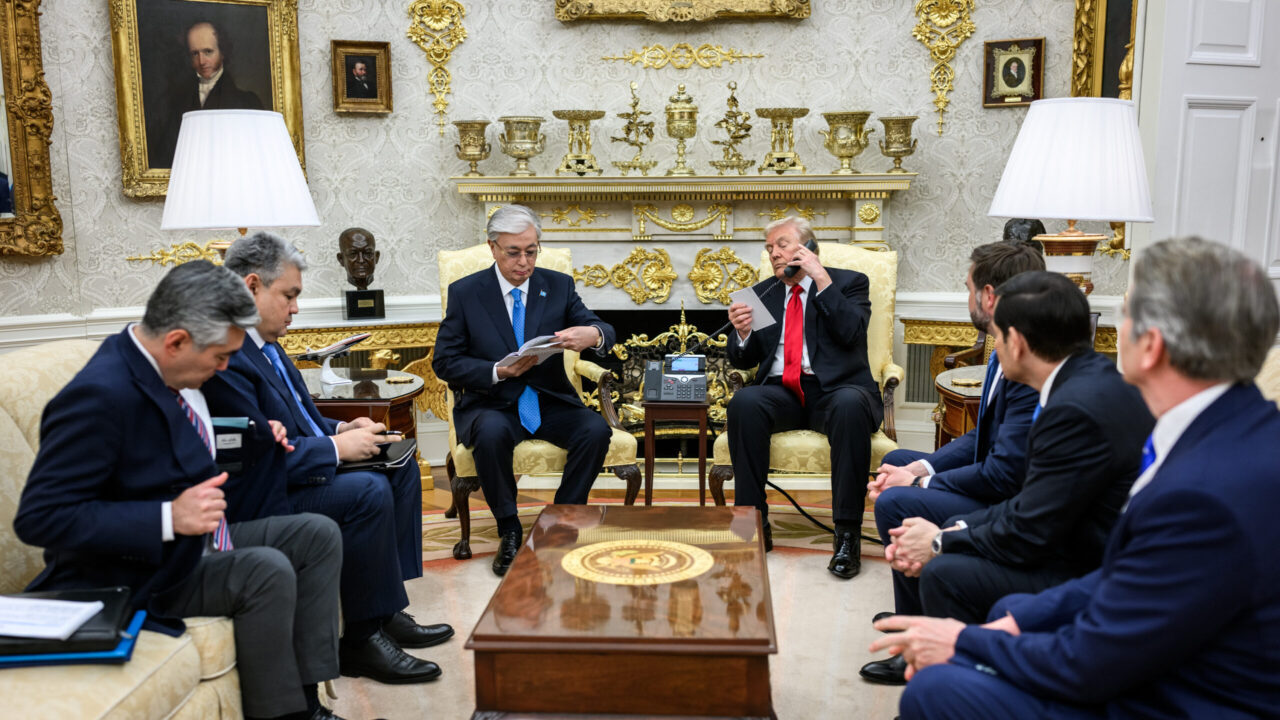
President Donald Trump recently convened a landmark summit in Washington, D.C., gathering the leaders of the five Central Asian states to commemorate the tenth anniversary of the C5+1 Summit. This unprecedented meeting marked a shift in U.S. foreign policy towards a region that has historically received limited attention. Attending the summit were the presidents of Kazakhstan, Uzbekistan, Kyrgyzstan, Tajikistan, and Turkmenistan, who discussed various initiatives aimed at enhancing economic cooperation.
The initiative comes as part of the Trump administration’s broader strategy to explore opportunities in regions previously overlooked by U.S. policymakers. In a statement, Deputy Secretary of State Christopher Landau emphasized the importance of strengthening ties with Central Asia, highlighting this summit as a strategic and economic priority. The administration has already taken steps to engage with the region, including a meeting between Trump and Uzbekistan’s president Shavkat Mirziyoyev in September, and visits from U.S. diplomats to Kazakhstan and Uzbekistan in late October.
Economic Opportunities in Central Asia
The focus of the summit was primarily on economic opportunities, particularly in the realm of hydrocarbon resources and critical minerals. Since the dissolution of the Soviet Union, the U.S. has been active in developing the region’s vast oil and gas reserves. Notably, companies like Chevron have played a significant role in exploring and extracting resources in Kazakhstan.
However, the growing importance of rare earth minerals has also captured the attention of U.S. officials. Central Asia is rich in these critical resources, with Kazakhstan alone reportedly identifying significant deposits. The U.S. has fallen behind China in the mining and processing of rare earth elements, a situation the Trump administration aims to address. During the summit, agreements worth over $100 billion were announced, with potential deals that could significantly bolster economic ties.
Particularly noteworthy was the agreement signed by Cove Capital regarding the privatization of a tungsten company in Kazakhstan, underscoring the potential for a wider range of investments in the region, including artificial intelligence and agricultural machinery.
Connecting Central Asia to Global Markets
While the summit highlighted business opportunities, it also addressed the critical geoeconomic aspect of enhancing transportation routes. The leaders endorsed the development of the Trans-Caspian Trade Route, a vital initiative aimed at facilitating access to European markets. This route is expected to strengthen regional economic ties and lessen dependency on larger neighbors like China and Russia.
Additionally, Trump’s administration has been proactive in stabilizing the geopolitical landscape of the region. Earlier in August, he facilitated discussions between the Presidents of Armenia and Azerbaijan, leading to the establishment of a transportation corridor known as the Trump Route for International Peace and Prosperity (TRIPP). This corridor is set to connect with the Trans-Caspian route, promoting the movement of goods and energy across the region.
Kazakhstan’s President Kassym-Jomart Tokayev also announced during the summit that Kazakhstan would be joining the Abraham Accords, a significant diplomatic gesture that enhances the ties between Central Asia and Israel.
Despite the positive momentum, sensitive geopolitical issues remain. The summit did not address major security questions, although Central Asia is bordered by three significant U.S. adversaries: China, Russia, and Iran. The United States aims to prevent these nations from establishing decisive influence in the region. Central Asian leaders are increasingly aware of the need for cooperation as a buffer against external pressures.
In conclusion, the recent C5+1 summit represents a substantial step forward in U.S.-Central Asian relations. The focus on economic cooperation and the development of critical infrastructure could reshape the region’s geopolitical landscape in the coming years. The growing U.S. presence in Central Asia not only aligns with American strategic interests but also supports the region’s aspirations for greater independence from larger powers.

Japan’s PM Takaichi Confirms Continued Fiscal Management Strategy

Bitcoin Plummets Below $88K Amid Tether Concerns and Warnings

Designers Unveil 5 Urgent Tricks to Transform Outdoor Eyesores

Shark Teeth Research Reveals Urgent Need to Protect Species

Church Members Unite in Resilience After Thanksgiving Fire

Community Unites to Attempt World Record for Largest Cookie Exchange

Mayor Lurie Appoints Alan Wong to District 4 Seat Amid Controversy

Mayor Appoints Alan Wong as New Supervisor for District 4

UK Report Reveals AI’s Role in Evaluating University Research Quality

University of Hawaiʻi Joins $25.6M AI Initiative to Monitor Disasters

Toledo City League Announces Hall of Fame Inductees for 2024

DOJ Seizes $15 Billion in Bitcoin from Major Crypto Fraud Network

Sharp Launches Five New Aquos QLED 4K Ultra HD Smart TVs

Celtics Coach Joe Mazzulla Dominates Local Media in Scrimmage

Mutual Advisors LLC Increases Stake in SPDR Portfolio ETF

Community Unites for 7th Annual Walk to Raise Mental Health Awareness

Western Executives Confront Harsh Realities of China’s Manufacturing Edge

INK Entertainment Launches Exclusive Sofia Pop-Up at Virgin Hotels
-
Science4 weeks ago
University of Hawaiʻi Joins $25.6M AI Initiative to Monitor Disasters
-
 Lifestyle2 months ago
Toledo City League Announces Hall of Fame Inductees for 2024
-
 Business2 months ago
DOJ Seizes $15 Billion in Bitcoin from Major Crypto Fraud Network
-
 Top Stories2 months ago
Sharp Launches Five New Aquos QLED 4K Ultra HD Smart TVs
-
 Sports2 months ago
Celtics Coach Joe Mazzulla Dominates Local Media in Scrimmage
-
 Politics2 months ago
Mutual Advisors LLC Increases Stake in SPDR Portfolio ETF
-
 Health2 months ago
Community Unites for 7th Annual Walk to Raise Mental Health Awareness
-
 Science2 months ago
Western Executives Confront Harsh Realities of China’s Manufacturing Edge
-
 World2 months ago
INK Entertainment Launches Exclusive Sofia Pop-Up at Virgin Hotels
-

 Politics2 months ago
Major Networks Reject Pentagon’s New Reporting Guidelines
-

 Science1 month ago
Astronomers Discover Twin Cosmic Rings Dwarfing Galaxies
-

 Top Stories1 month ago
Randi Mahomes Launches Game Day Clothing Line with Chiefs