
Science
3D Printing Revolutionizes Food Production and Nutrition

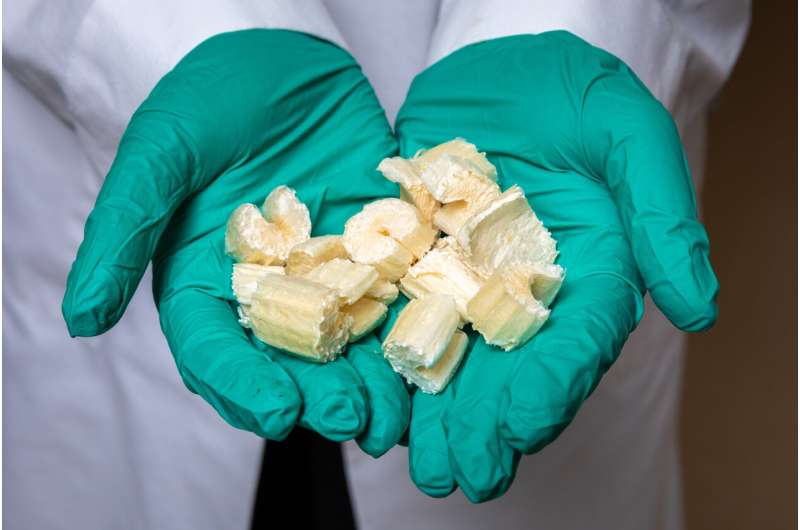
A groundbreaking approach to food production is emerging from the University of Arkansas, where assistant professor Ali Ubeyitogullari is exploring the potential of 3D printing to revolutionize the way we consume and interact with food. This innovative technology aims to address critical issues such as food waste, nutritional deficiencies, and accessibility, while offering creative solutions for those with dietary restrictions.
Ubeyitogullari, who holds a joint position within the Food Science and Biological and Agricultural Engineering departments, has dedicated his research to improving diets through cutting-edge food engineering. “We work at the intersection of food engineering and human health to improve people’s diets,” he stated. With a background rooted in Turkey’s olive orchards, Ubeyitogullari’s journey into food engineering began during his studies at Middle East Technical University, where he discovered a passion for the field.
While 3D printing may initially evoke skepticism, often associated with ultra-processed food, Ubeyitogullari envisions its potential to enhance efficiency and nutrition in food production. Unlike traditional manufacturing, which is more advanced in its application of 3D printing, the food sector is still developing these technologies. Currently, Ubeyitogullari’s lab is experimenting with 3D printing cookie doughs and various flours, signaling a promising future for this technique in food creation.
Transforming Waste into Nourishment
One of the primary advantages of 3D printing is its capacity to repurpose imperfect produce that might otherwise go to waste. For instance, carrots that are misshapen or too large for retail can be transformed into “bioink” through processes like freeze-drying or pulping. This bioink can then be extruded into appealing shapes, making vegetables more enticing to children and potentially reducing food waste.
Ubeyitogullari’s research also aims to support individuals with conditions such as dysphagia, which affects an estimated 300,000 to 700,000 Americans annually. By 3D printing food that retains its original appearance while being modified for easier consumption, this technology could enhance the eating experience for those who struggle with swallowing. “You really lose your sense of food,” he remarked, emphasizing the importance of visual appeal in dietary enjoyment.
Moreover, the flexibility of 3D printing allows for customization based on individual dietary requirements, making it suitable for diverse populations, including soldiers in the field, astronauts combating muscle atrophy, and displaced individuals facing malnutrition. Ultimately, Ubeyitogullari believes that enhancing nutritional value will be the key driving force behind the adoption of 3D food printing.
Enhancing Nutrition Through Innovation
A significant area of focus in Ubeyitogullari’s research is improving the bioavailability of bioactive compounds found in fruits and vegetables. These naturally occurring chemicals contribute to disease prevention and overall health but often suffer from low absorption rates in the body. His team aims to encapsulate these compounds within a protective matrix to enhance their stability and effectiveness.
In collaboration with postdoctoral fellow Sorour Barekat, Ubeyitogullari is developing a 3D printable gel from sorghum flour, a gluten-free ingredient known for its high fiber and protein content. This research not only explores the nutritional benefits of sorghum but also its potential as a bioink.
The team is also examining methods to increase the bioavailability of lutein and anthocyanins, compounds linked to eye and neurological health, by utilizing a combination of starch and zein in their formulations. Current experiments focus on the optimal ratios and processing speeds to achieve the desired outcomes.
While 3D printing is not intended to replace fresh produce, it offers an alternative for those unable to access or afford healthy options. Ubeyitogullari likens the emergence of 3D food printing to past innovations, such as the microwave, which faced initial public skepticism. “I think people will see that a 3D printer is just another kitchen tool to process food,” he suggested.
As research continues and technology advances, the vision of a future where customized, nutritious meals can be easily produced is becoming increasingly tangible. The potential for this technology to impact food production, reduce waste, and improve public health is both exciting and necessary in a world where food access remains a pressing issue.

Designers Unveil 5 Urgent Tricks to Transform Outdoor Eyesores

Shark Teeth Research Reveals Urgent Need to Protect Species

Church Members Unite in Resilience After Thanksgiving Fire

Community Unites to Attempt World Record for Largest Cookie Exchange

Mayor Lurie Appoints Alan Wong to District 4 Seat Amid Controversy

Mayor Appoints Alan Wong as New Supervisor for District 4

UK Report Reveals AI’s Role in Evaluating University Research Quality

Gabriela Jaquez Shines as No. 3 UCLA Dominates No. 14 Tennessee

Trump Promises to Release MRI Results Despite Uncertainty on Scan

University of Hawaiʻi Joins $25.6M AI Initiative to Monitor Disasters

Toledo City League Announces Hall of Fame Inductees for 2024

DOJ Seizes $15 Billion in Bitcoin from Major Crypto Fraud Network

Sharp Launches Five New Aquos QLED 4K Ultra HD Smart TVs

Celtics Coach Joe Mazzulla Dominates Local Media in Scrimmage

Mutual Advisors LLC Increases Stake in SPDR Portfolio ETF

Community Unites for 7th Annual Walk to Raise Mental Health Awareness

Western Executives Confront Harsh Realities of China’s Manufacturing Edge

INK Entertainment Launches Exclusive Sofia Pop-Up at Virgin Hotels
-
Science4 weeks ago
University of Hawaiʻi Joins $25.6M AI Initiative to Monitor Disasters
-
 Lifestyle2 months ago
Toledo City League Announces Hall of Fame Inductees for 2024
-
 Business2 months ago
DOJ Seizes $15 Billion in Bitcoin from Major Crypto Fraud Network
-
 Top Stories2 months ago
Sharp Launches Five New Aquos QLED 4K Ultra HD Smart TVs
-
 Sports2 months ago
Celtics Coach Joe Mazzulla Dominates Local Media in Scrimmage
-
 Politics2 months ago
Mutual Advisors LLC Increases Stake in SPDR Portfolio ETF
-
 Health2 months ago
Community Unites for 7th Annual Walk to Raise Mental Health Awareness
-
 Science2 months ago
Western Executives Confront Harsh Realities of China’s Manufacturing Edge
-
 World2 months ago
INK Entertainment Launches Exclusive Sofia Pop-Up at Virgin Hotels
-

 Politics2 months ago
Major Networks Reject Pentagon’s New Reporting Guidelines
-

 Science1 month ago
Astronomers Discover Twin Cosmic Rings Dwarfing Galaxies
-

 Top Stories1 month ago
Randi Mahomes Launches Game Day Clothing Line with Chiefs