
Science
Archaeologists Map Extensive Roman Road Network, Surpassing 300,000 km

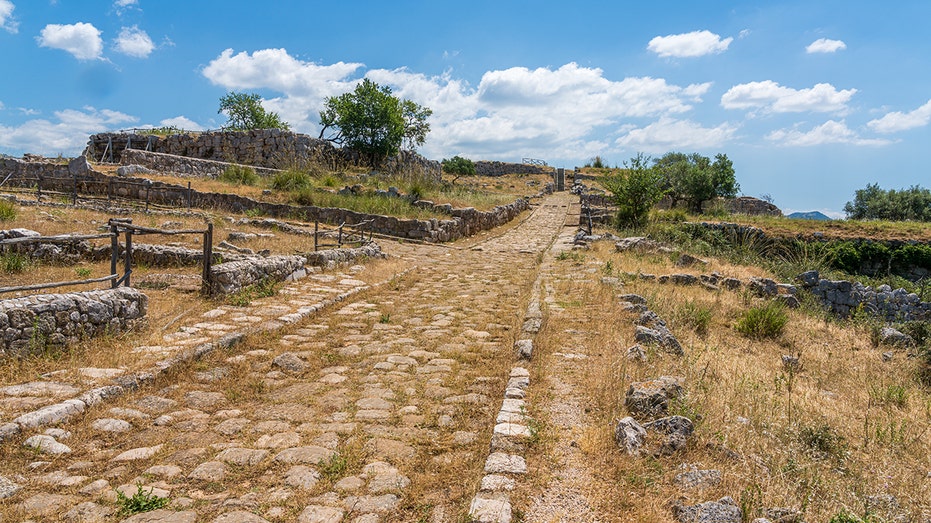
A recent discovery by amateur metal detectorists in Gloucestershire has unveiled a remarkable 2,000-year-old Roman settlement, prompting archaeologists to reassess the extent of the Roman road network. This new research indicates that the network spans over 300,000 kilometers (approximately 186,000 miles), significantly longer than previous estimates. The findings were detailed in a digital atlas known as Itiner-e, published this week.
The Cotswold Archaeology and Historic England teams found the remains of a villa and other structures while investigating the area. This digital atlas expands the known Roman road system by more than 100,000 kilometers, updating the last comprehensive atlas that was published 25 years ago, which relied on incomplete records and analog maps.
Advanced Techniques Reveal Hidden Routes
Researchers utilized modern technologies, including satellite imagery and aerial photography, to identify previously obscured routes. Over the course of five years, a dedicated team combed through ancient texts, historical documents, and the locations of Roman milestones to piece together the vast network. Insights gained from World War II aerial photographs were particularly instrumental in mapping these ancient pathways.
According to Tom Brughmans, an archaeologist and co-author of the study published in Scientific Data, the process resembled “a massive game of connecting the dots on a continental scale.” Subtle differences in vegetation, soil variations, and ancient engineering remnants such as raised mounds provided critical clues about where Roman lanes once existed.
The newly compiled atlas provides a comprehensive look at routes linking over 5,000 ancient settlements, from Spain to Syria. Prior estimates had placed the length of Roman roads at about 188,000 kilometers, primarily focusing on major highways of the Roman Empire. The current study reveals a wealth of secondary roads that connected villas, farms, and military outposts, enhancing our understanding of daily life in ancient times.
Implications for Historical Research
This groundbreaking research not only enriches archaeological knowledge but also holds the potential to reshape scholarly discussions on trade networks, imperial logistics, and cultural diffusion. Adam Pažout, a co-author from the Autonomous University of Barcelona, emphasized that the Roman road network laid the groundwork for modern transportation routes still in use today.
The atlas, named Itiner-e in homage to ancient Roman itineraria—travel registers listing road stations and distances—employs a combination of historical documents, Geographic Information System (GIS) analysis, and crowdsourced archaeological data. The study notes that only 2% to 3% of the mapped routes have “high certainty,” indicating clear, physical traces remain, while the rest are inferred from historical and environmental indicators.
As researchers delve into these ancient pathways, they hope to gain insights into significant historical trends, including the spread of Christianity and ancient pandemics. The comprehensive dataset is freely accessible to scholars, educators, and the public at itiner-e.org, allowing users to explore routes, milestones, and ancient settlements in detail.
The recent findings underscore the enduring legacy of the Roman Empire and its impact on contemporary infrastructure. As archaeologists continue to uncover remnants of this ancient civilization, they provide valuable context not only for academics but also for anyone interested in the fascinating history of human civilization.

Knicks Dominate Raptors 116-94 at Home, Extend Winning Streak

Hallmark’s ‘Christmas at the Catnip Café’ Premieres Tonight!

Millville Woman Arrested for Threatening U-Haul Worker with Baton

Japan’s PM Takaichi Confirms Continued Fiscal Management Strategy

Bitcoin Plummets Below $88K Amid Tether Concerns and Warnings

Designers Unveil 5 Urgent Tricks to Transform Outdoor Eyesores

Shark Teeth Research Reveals Urgent Need to Protect Species

Church Members Unite in Resilience After Thanksgiving Fire

Community Unites to Attempt World Record for Largest Cookie Exchange

University of Hawaiʻi Joins $25.6M AI Initiative to Monitor Disasters

Toledo City League Announces Hall of Fame Inductees for 2024

DOJ Seizes $15 Billion in Bitcoin from Major Crypto Fraud Network

Sharp Launches Five New Aquos QLED 4K Ultra HD Smart TVs

Celtics Coach Joe Mazzulla Dominates Local Media in Scrimmage

Mutual Advisors LLC Increases Stake in SPDR Portfolio ETF

Community Unites for 7th Annual Walk to Raise Mental Health Awareness

Western Executives Confront Harsh Realities of China’s Manufacturing Edge

INK Entertainment Launches Exclusive Sofia Pop-Up at Virgin Hotels
-
Science4 weeks ago
University of Hawaiʻi Joins $25.6M AI Initiative to Monitor Disasters
-
 Lifestyle2 months ago
Toledo City League Announces Hall of Fame Inductees for 2024
-
 Business2 months ago
DOJ Seizes $15 Billion in Bitcoin from Major Crypto Fraud Network
-
 Top Stories2 months ago
Sharp Launches Five New Aquos QLED 4K Ultra HD Smart TVs
-
 Sports2 months ago
Celtics Coach Joe Mazzulla Dominates Local Media in Scrimmage
-
 Politics2 months ago
Mutual Advisors LLC Increases Stake in SPDR Portfolio ETF
-
 Health2 months ago
Community Unites for 7th Annual Walk to Raise Mental Health Awareness
-
 Science2 months ago
Western Executives Confront Harsh Realities of China’s Manufacturing Edge
-
 World2 months ago
INK Entertainment Launches Exclusive Sofia Pop-Up at Virgin Hotels
-

 Politics2 months ago
Major Networks Reject Pentagon’s New Reporting Guidelines
-

 Science1 month ago
Astronomers Discover Twin Cosmic Rings Dwarfing Galaxies
-

 Top Stories1 month ago
Randi Mahomes Launches Game Day Clothing Line with Chiefs