
Science
Australian Biologist Jeremy Griffith Challenges Human Condition Understanding

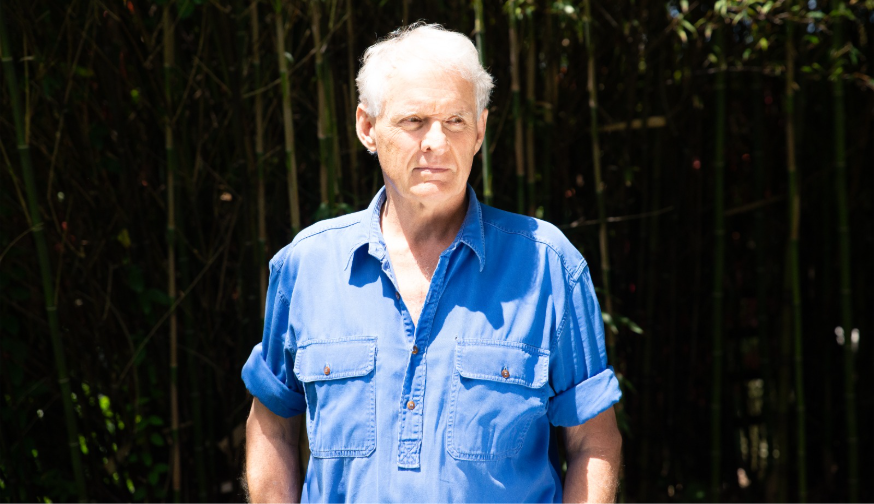
Australian biologist Jeremy Griffith is generating significant discussion with his theory of the human condition, which seeks to explain the underlying motivations behind human behavior. His work has attracted attention from both academic circles and online communities, as it proposes a fresh perspective on long-standing questions about human conflict and self-awareness.
The Challenge of Understanding Human Behavior
In the words of Harvard biologist E.O. Wilson, the human condition represents “the most important frontier of the natural sciences.” This assertion highlights a critical dilemma: despite our intelligence, humanity often finds itself mired in cycles of anger, conflict, and self-doubt. If Griffith’s theory provides the long-sought clarity on this issue, it could signal a transformative shift in how we approach human behavior.
Griffith contends that the feelings of anxiety, anger, and insecurity that many individuals experience are not signs of personal failure but rather symptoms of a deeper, intrinsic conflict. Renowned figures like Professor Harry Prosen, a former President of the Canadian Psychiatric Association, have praised Griffith’s writings, suggesting that they unlock profound insights into our existence. Prosen stated, “The great impasse to a full understanding of our existence has finally been breached.”
Unpacking Griffith’s Theory: Instinct Versus Intellect
At the heart of Griffith’s theory lies the idea that the psychological struggles humans face stem from an internal clash between instinct and intellect. He posits that this conflict began when our ancestors became fully conscious around two million years ago. Prior to this awakening, human behavior was largely governed by instincts shaped by natural selection. As the brain evolved to understand cause and effect, humans began navigating life through conscious reasoning, which inadvertently set the stage for conflict with their instinctual drives.
Griffith uses the analogy of a migrating bird to illustrate this concept. He invites readers to imagine a bird that has developed consciousness while following an instinctual migratory path. When the bird decides to deviate from this route to explore unknown territory, its instincts resist, leading to an internal struggle. This scenario mirrors the human experience, where the conscious mind feels criticized by instinctual drives, resulting in defensive behaviors such as anger and egocentricity.
Griffith argues that this struggle is not merely a personal flaw but a fundamental aspect of the human condition. He emphasizes that understanding this conflict can alleviate the need for defensive behaviors, offering a biological rationale for the feelings of anger, egocentricity, and alienation that many people experience.
Academic Reception and Broader Impact
Griffith’s work, particularly outlined in his book FREEDOM: The End of the Human Condition, has garnered significant academic attention. Professor Stuart Hurlbert, a long-time Professor of Biology at San Diego State University, expressed his astonishment at witnessing what he terms “Darwin II.” Similarly, Professor David Chivers, a primatologist and former President of the Primate Society of Great Britain, described the logical progression of ideas in FREEDOM as “sensible.”
Other influential figures have also shown interest in Griffith’s theories. Professor Mihaly Csikszentmihalyi, known for the concept of ‘Flow,’ suggested that Griffith’s work might catalyze a paradigm shift in humanity’s self-image. Acclaimed author Ian Frazier commented on the profound nature of the questions Griffith raises, indicating the insights resonate deeply with readers.
Reports indicate that the late theoretical physicist Stephen Hawking found Griffith’s proposals intriguing, reflecting the potential breadth of Griffith’s impact across various fields.
Beyond the academic realm, Griffith’s ideas underpin the activities of the World Transformation Movement (WTM), a not-for-profit organization dedicated to promoting his work. The WTM claims to have established over 80 centers globally, along with an active online community boasting more than 80,000 members on social media platforms. Supporters report increased self-awareness and relief upon engaging with Griffith’s theories, suggesting a significant human impact stemming from his insights.
The Importance of Griffith’s Work
In a time marked by social unrest and personal turmoil, Griffith’s theory offers a lens through which to view human behavior not as a series of individual flaws but as a collective struggle. His approach emphasizes understanding over judgment, aiming to resolve internal conflicts that many individuals face.
While it remains to be seen whether Griffith’s work will gain mainstream acceptance, the attention it has garnered from academics, media, and the general public highlights a strong desire for clarity about human nature. As discussions continue to evolve, Griffith’s contributions could play a pivotal role in shaping future dialogues about the human condition.

Designers Unveil 5 Urgent Tricks to Transform Outdoor Eyesores

Shark Teeth Research Reveals Urgent Need to Protect Species

Church Members Unite in Resilience After Thanksgiving Fire

Community Unites to Attempt World Record for Largest Cookie Exchange

Mayor Lurie Appoints Alan Wong to District 4 Seat Amid Controversy

Mayor Appoints Alan Wong as New Supervisor for District 4

UK Report Reveals AI’s Role in Evaluating University Research Quality

Gabriela Jaquez Shines as No. 3 UCLA Dominates No. 14 Tennessee

Trump Promises to Release MRI Results Despite Uncertainty on Scan

University of Hawaiʻi Joins $25.6M AI Initiative to Monitor Disasters

Toledo City League Announces Hall of Fame Inductees for 2024

DOJ Seizes $15 Billion in Bitcoin from Major Crypto Fraud Network

Sharp Launches Five New Aquos QLED 4K Ultra HD Smart TVs

Celtics Coach Joe Mazzulla Dominates Local Media in Scrimmage

Mutual Advisors LLC Increases Stake in SPDR Portfolio ETF

Community Unites for 7th Annual Walk to Raise Mental Health Awareness

Western Executives Confront Harsh Realities of China’s Manufacturing Edge

Major Networks Reject Pentagon’s New Reporting Guidelines
-
Science4 weeks ago
University of Hawaiʻi Joins $25.6M AI Initiative to Monitor Disasters
-
 Lifestyle2 months ago
Toledo City League Announces Hall of Fame Inductees for 2024
-
 Business2 months ago
DOJ Seizes $15 Billion in Bitcoin from Major Crypto Fraud Network
-
 Top Stories2 months ago
Sharp Launches Five New Aquos QLED 4K Ultra HD Smart TVs
-
 Sports2 months ago
Celtics Coach Joe Mazzulla Dominates Local Media in Scrimmage
-
 Politics2 months ago
Mutual Advisors LLC Increases Stake in SPDR Portfolio ETF
-
 Health2 months ago
Community Unites for 7th Annual Walk to Raise Mental Health Awareness
-
 Science2 months ago
Western Executives Confront Harsh Realities of China’s Manufacturing Edge
-
 Politics2 months ago
Major Networks Reject Pentagon’s New Reporting Guidelines
-

 World2 months ago
INK Entertainment Launches Exclusive Sofia Pop-Up at Virgin Hotels
-

 Science1 month ago
Astronomers Discover Twin Cosmic Rings Dwarfing Galaxies
-

 Top Stories1 month ago
Randi Mahomes Launches Game Day Clothing Line with Chiefs